
Flushing the Sea
Experiments in the Sewage System
Growing up as a Chinese American child of immigrants, I visited my grandparents in China from time to time. I turned up my nose at the toilets there—the ones that didn’t flush properly, the ones you had to squat over, and the thick, un-flushable stacks of toilet paper that came in square packs instead of rolls. But, each time I went back, the toilets changed. In 2025, I visited Qingdao, a coastal city in Shandong Province, my ancestral homeland. There, I learned of a new kind of toilet that works by flushing with seawater.
Incorporating seawater into urban water infrastructure has been a perennially intriguing prospect, promising freshwater conservation against the increasingly water-insecure backdrop of growing urban populations, drought, resource depletion, and climate crisis. Such threats to the freshwater supply are driving researchers to consider appropriating seawater for household toilets in coastal cities. In these initiatives, seawater is recast as “living water,” conscripting it into a speculative vision of sustainability, efficiency, and resource security—all while domesticating the sea.
The Eco-Ethics of the Flush
There’s a strange coherence in the idea that the ocean could be put to work in sewer systems. For much of our history, Western nations have related to the ocean as if it were a sink, or a massive Cloaca Maxima—a place to dump toxic waste, bodies, nuclear bombs, and all manner of undesirable things. What are the consequences of giving seawater this remedial edit? Do seawater toilet flushing systems disrupt or exacerbate existing imaginaries of the sea as a space for waste?
As the great offshore is brought indoors, the gesture of the toilet flush becomes a window into a particular kind of environmental relationality. In drought-prone Western states in the US, toilet flushing habits serve as meaningful signifiers of individual environmental awareness. I think back to my childhood in Colorado, when “water-smartness” was promoted through the normalization of measures like “letting the yellow mellow” in toilets. Flushing toilets are generally estimated to account for some 30 percent or more of domestic wastewater, but even as the flush has become a symbol of environmental recklessness, it endures. Composting toilets are routinely offered up, but social stigmas linger, and flushing remains a performance of hygiene attached to class politics, social hierarchies, and racialized identities.
The Flush of Civilization
“To flush is to waste, and wasting is a form of privilege.”
Historian Christopher Otter traces the mutual histories of water closets and “fecophobia” in nineteenth-century Europe, explaining, “If waterborne systems are regarded as the most ‘civilized’ technology, other forms remain backward, fit only for those lacking Western sensibilities. The Global South thus forever fails to become ‘truly’ sanitary, its subject denied the cleanliness of the water-hungry west.”1 From the Western rebranding of Asian bidets as “smart toilets” to widespread rumors about Donald Trump supposedly owning an opulent gold toilet, flushing toilets continue to be a symbol of luxury in both the East and the West. To flush is to waste, and wasting is a form of privilege.
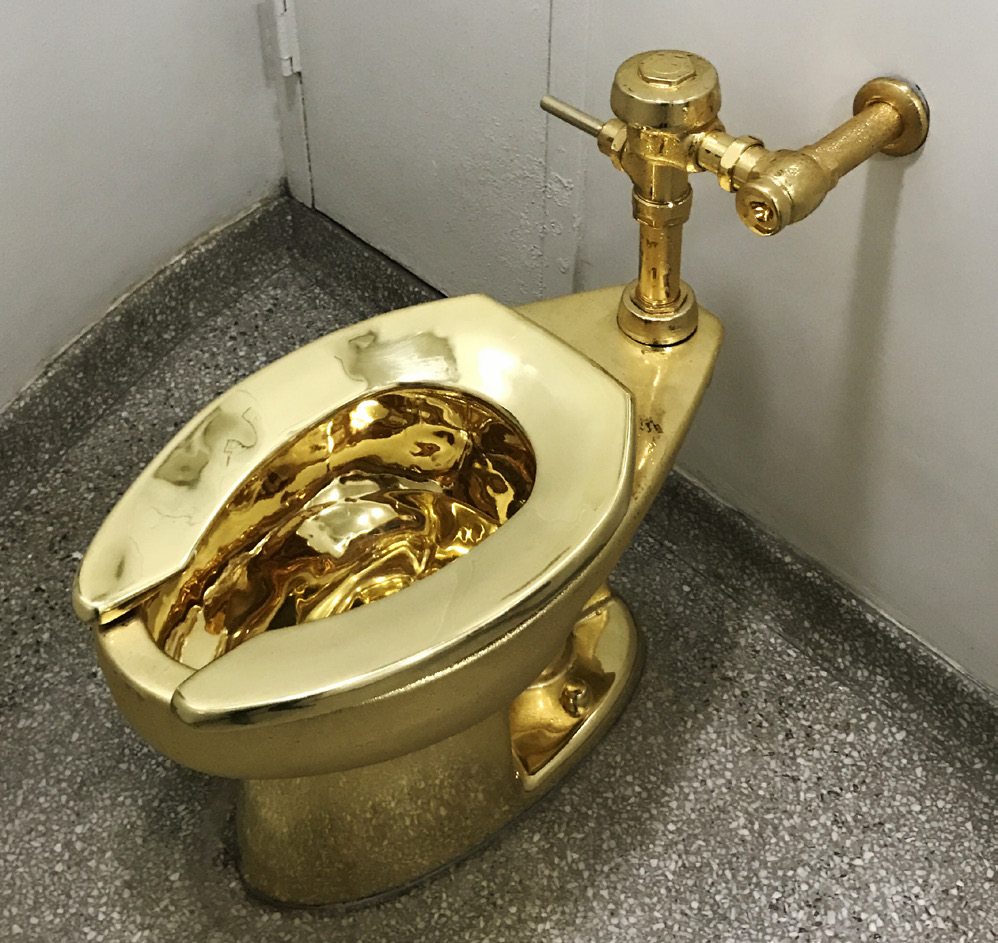

These associations help contextualize the research and implementation of seawater toilet flushing (SWTF) systems in the Asia-Pacific. Qingdao is not the first in the region to explore this option. Hong Kong is considered the global innovator in terrestrial seawater toilets; they developed an SWTF system as early as 1958, which currently serves up to 80 percent of the city’s population. 2Other cities that have implemented this practice include Singapore and Tokyo—some of the most cosmopolitan cities in the region.
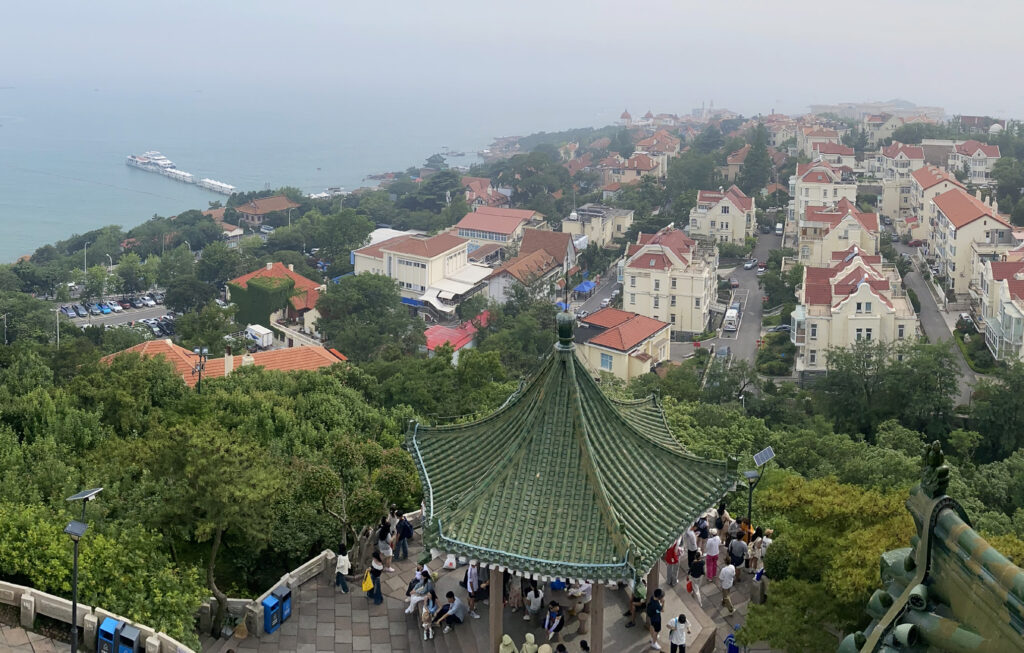
Qingdao’s Little Fish Mountain offers a view of historical German colonial architecture, distinguished by its red roofs. Photo by Lisa Yin Han.
And although the emergence of coastal SWTF systems is concentrated in Asia, seawater toilets were already in use on ships in the early 1900s, including on the infamous RMS Titanic—a mythological symbol to the US and Europe of wealth, class, and hubris. Much later, flushing toilets that use reclaimed gray water (domestic wastewater from sinks, showers, and other streams, excluding toilet water, which is referred to as black water) gained some traction in US states like California, but only since the 1990s.
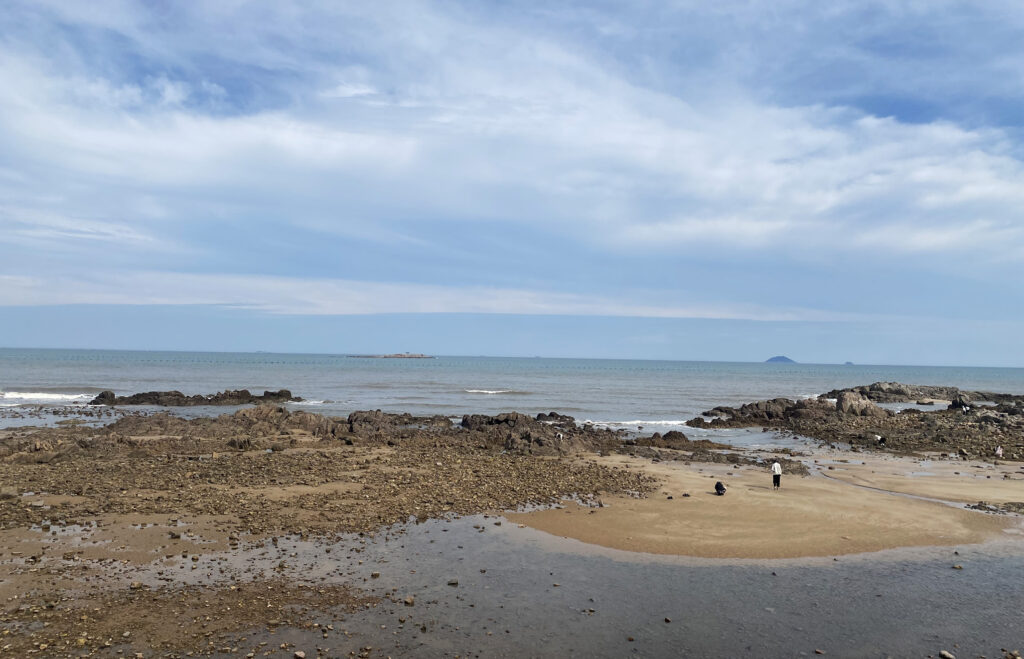
Qingdao was a German colony from 1897 to 1914, and it retains remnants of Western cultural influence through its status as a special economic zone, which orients the city toward foreign business investments. You can still see the social stratifications from the colonial era in the walled-off German settlements, and in the peripheral ghettos where Chinese servants lived. This legacy links longstanding Western colonial ideologies, which denigrate “Orientals” as dirty, to the push for waterborne flushing systems, which signify “development” as defined by Western sensibilities. It is worth noting that most public toilets I saw in Qingdao were Chinese-style squat toilets, while most middle-class and upper-class households had Western-style sit-down toilets. Toilets are a stage on which China performs its modernization in relation to the West.
Flushing the Sea
Despite the high-tech, “green” image of SWTF systems, the use of seawater for flushing is not yet widespread. There are numerous technical and ecological challenges. New infrastructure, built separately from freshwater plumbing systems, must be protected from corrosion due to salt. Seawater is also “living,” containing the larvae of animals like shellfish, which are damaging to sewage systems if seawater is left untreated. Moreover, discharged seawater that is pumped back to the sea, left untreated, can cause eutrophication, the depletion of oxygen in bodies of water due to increased nutrient accumulation.
I first encountered seawater for toilet flushing at the Institute of Oceanology, Chinese Academy of Sciences in Qingdao. There, I met a researcher named Guangce Wang, an expert in experimental marine biology, who is studying the treatment of high-salt wastewater and the implementation of SWTF in Qingdao. Wang explained to me that his work is intended to create a circular economy: providing a safe, cost-effective treatment system would allow cities to reuse organic biomass from seawater for everything from fertilizer to medicine, and then to safely discharge the flushed wastewater. The key to this system is the development of what he calls a “bacterial/algal collaborative treatment system,” a carefully coordinated dance between photosynthetic bacteria and microalgae: living workers applied at different stages of the water treatment process to augment the pH of the water, initiate fermentation, and remove nitrogen and phosphorus.
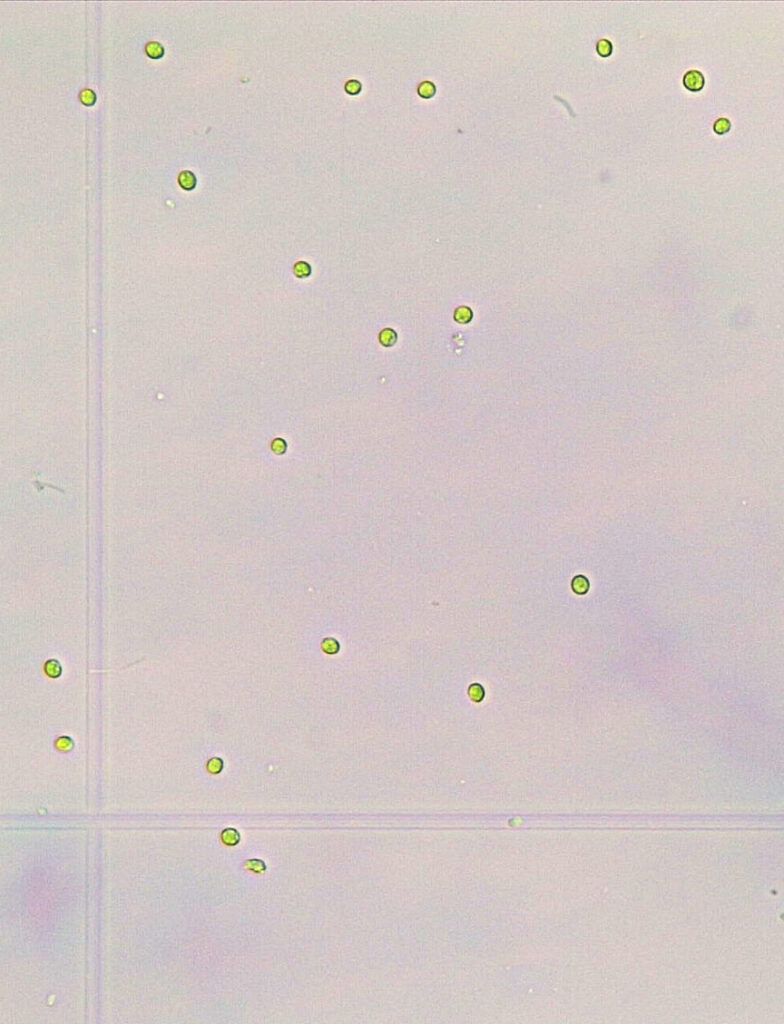
These tiny workers are no ordinary sea creatures—both the bacteria and the algae must be grown in a special pond and adapted to the extreme conditions of salty wastewater. To maximize the efficiency of pollutant removal, the bacteria are then altered using transposon mutagenesis and synthetic genomic engineering. Chlorella sorokiniana, a green microalgae cultivated by Wang to remove nitrogen and phosphorus, is not even derived from seawater; it is a freshwater strain that has been widely cultured since it was first discovered (and named) in 1951 by Dr. Constantine Sorokin at the University of Texas at Austin. Today, cultivation of Chlorella sorokiniana has proliferated, in part due to its rapid growth and its perceived value as a biofuel and dietary supplement.
In considering these living, microscopic workers, one wonders: What is the ontological status of seawater when it has been filtered, fermented, flushed, and processed by beings that are not of the sea? Does the scale at which we imagine seawater—an ocean, a household toilet, a test tube—matter? I must conclude that seawater is defined both by its material and its social composition, and that its meanings are variable across places and times, gathering force and identity like a current gathering minerals from stone.
Ultimately, seawater toilets are but a drop in the ocean when it comes to addressing so many offshore environmental crises looming around the globe. In places like Florida, the enmeshment between seawater and toilets is existential: sea-level rise threatens the functioning of home septic tanks, which can fail when contaminated water seeps into groundwater, bays, and rivers. Yet perhaps it is still worth entertaining what changing how we flush affords us. The flush contributes to the social construction of the sea and our relationships to it. Perhaps, deferring to diverse, decolonial perspectives, we might benefit from an overhaul of what it means to be unclean. ◆
- Christopher Otter, “The Sensory Anthropocene: Disgust, Ecological Sanitation, and Planetary Ecologies,” Environmental Humanities 17, no. 1 (2025), https://doi.org/10.1215/22011919-11543463. ↩︎
- Xiaoming Liu et al., “Sustainable Application of a Novel Water Cycle Using Seawater for Toilet Flushing,” Engineering 2, no. 4 (2016), https://doi.org/10.1016/J.ENG.2016.04.013. ↩︎