
Start-Up State
How to grow a country from scratch
There are, according to venture capitalist and start-up guru Balaji Srinivasan, at least seven ways to start a country. In his self-published 2022 book The Network State, Srinivasan argues that the first three—election, revolution, war—are conventional, but not optimal, since the first requires preordained diplomatic recognition, while the second and third entail violent processes of transition.1 Fourth are micro-nations: aspirational experiments in libertarian statecraft like New Atlantis and the Republic of Minerva. Five and six: sea space and outer space colonization. Both of these are now well established in the cultural imaginary thanks to Patri Friedman’s Seasteading Institute and Elon Musk’s SpaceX, each projecting its own terra nullius for the unencumbered expansion of frontiers.
Still, Srinivasan suggests, Friedman’s and Musk’s projects falter in a key aspect that his final option—the network state—overcomes. A network state stakes its sovereign claim in a shared idea rather than in the exercise of top-down control over a physical location or territory. Citizens of network states are maximally free: they willingly opt in to the network state, they self-organize around a shared value or hobby without the stain of coercion or constraint, and they are free to exit as they see fit.
The network state concept manifests in the form of global start-up society projects: from gated private communities run by foreign capital to temporary pop-up cities intended as labs for infrastructural experimentation. A nebulous betting exercise unifies these otherwise ideologically disparate entities. It presumes that if we let a million societies bloom, then we might find in one of them a good or popular answer to the question of what political form might replace the nation state.
These network state developments expand the very notion of the offshore, which is no longer strictly territorial, logistical, or even political. Here, the offshore is an apparatus through which particular forms of subjectivity are imagined, incubated, hyped, and displaced. In the network state, the unevenly distributed risks of digital capitalism are experienced as opportunities for personal development and future gains. Simultaneously, these risks degrade and devalue the material and social conditions of the present. The popularity of the network state idea among global tech communities is a vivid demonstration of how offshores render extreme precariousness and volatility as the basis for prospective accumulation and upward mobility.
The Network School
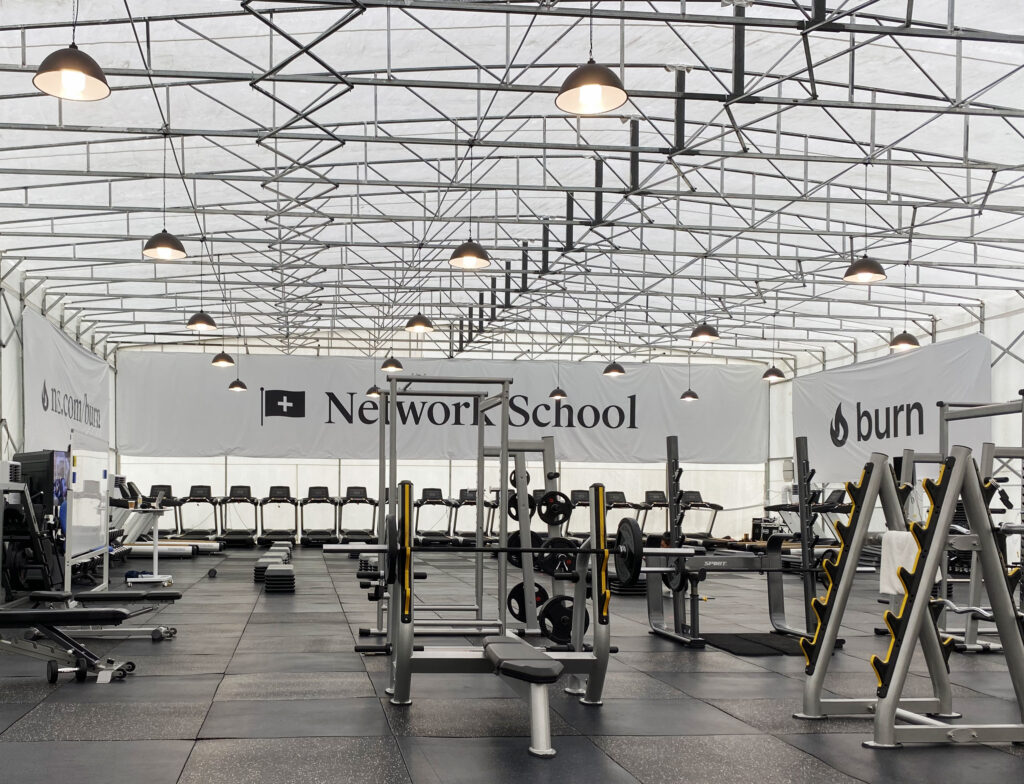
Srinivasan has built one such network state in the form of a live-in incubator for aspiring tech founders to network and share skills. Or, in the words of a coder I met there, a place for like-minded individuals to “lock in and level up.” In 2024, Srinivasan opened the Network School with his partner Bryan Johnson (founder of the Don’t Die movement, best known for his hyper-self-disciplined body longevity practices and Project Blueprint diet plan). The self-proclaimed “frontier community for techno-optimists” pitches a comprehensive offering for its intended audience on its website:
Our members include remote workers, digital nomads, online creators, personal trainers, self-improvers, event organizers, and engineers of all stripes. You should apply if you want to build yourself up while also building a startup society that bootstraps other startup societies … Membership starts at $1500/month with roommates, and includes everything from meals to gym to accommodations. We think of it as society-as-a-service.2
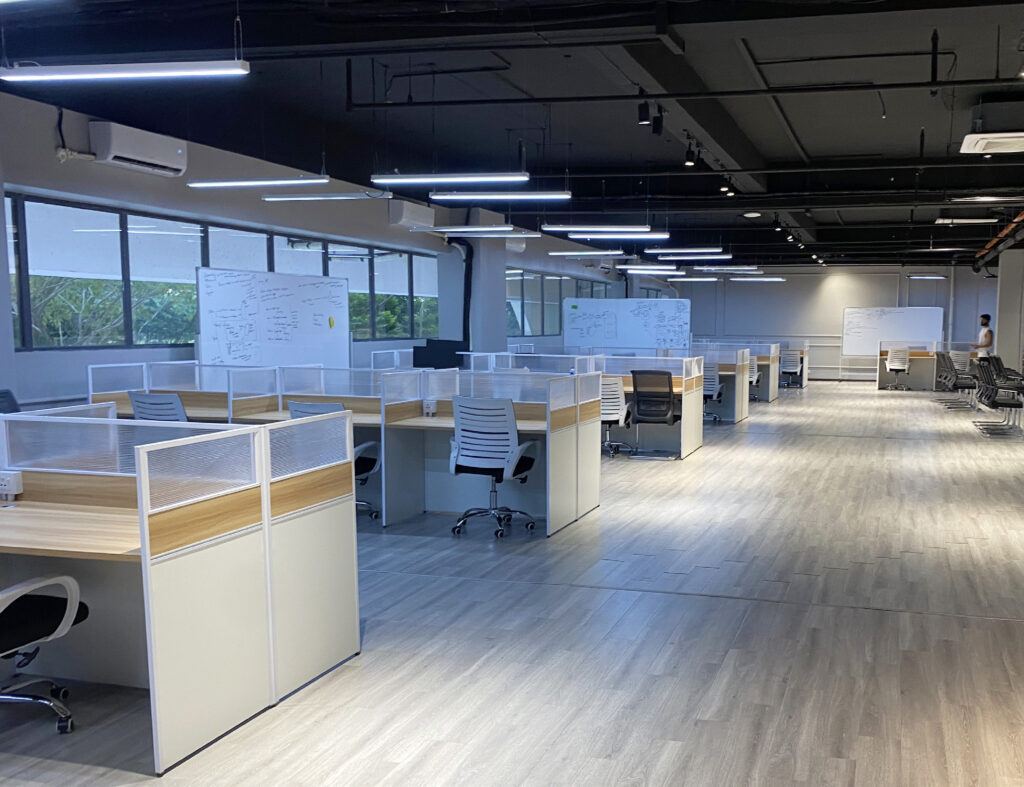
The Network School is no conventional classroom or club or camp or workplace. It is both more encompassing and more abstract. The Network School promises to replace the social function of cities, universities, and communities for “high agency” individuals looking to engage in “daily self-improvement: learning skills, burning calories, and earning currency.”3
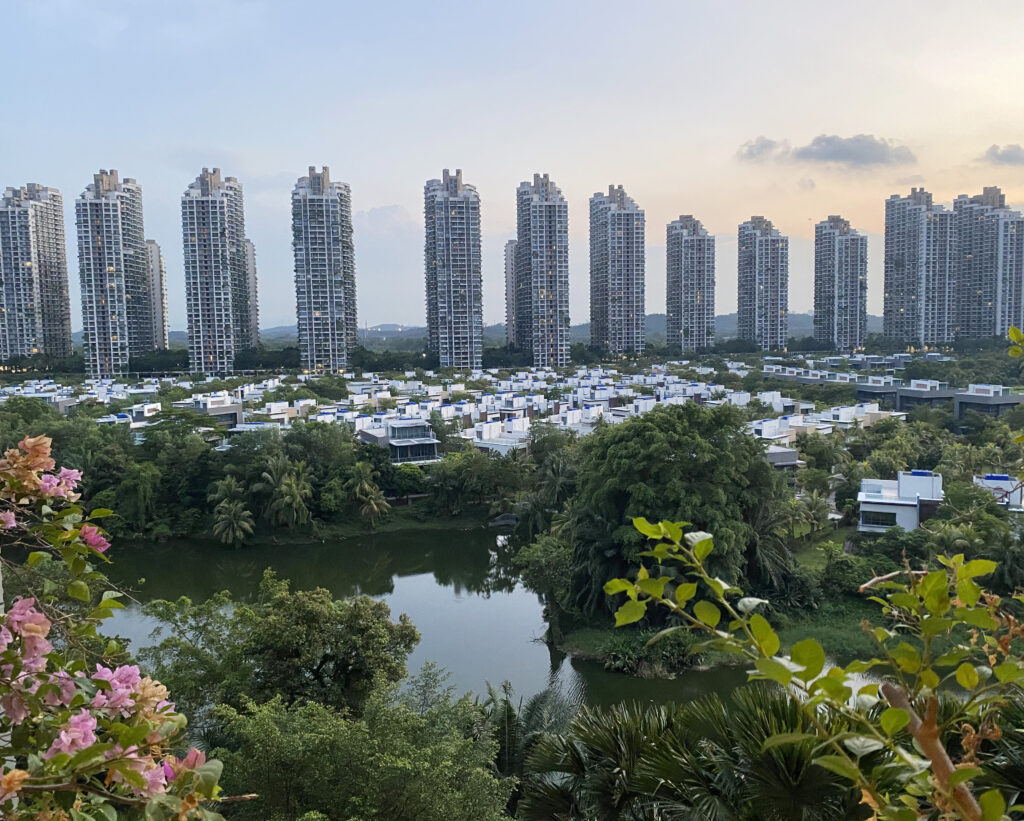
Promotional videos made by participants display spectacular drone-shot footage of Forest City, the Malaysian real estate development ghost town where the Network School was previously situated. “I wake up each morning in a futuristic solar punk utopia,” one member exclaims as they hold our gaze through the phone camera. A series of day-in-the-life Instagram posts show rituals and routines—6:45 a.m. get dressed, 7 a.m. burn, 8 a.m. breakfast, 9 a.m. earn … 5 p.m. sauna, 6 p.m. network, 7 p.m. afternoon run … reset and repeat. These snappily spliced reels are overlaid with text in bold white type like “THIS IS HOW YOU LIVE FREE AND DON’T DIE.”
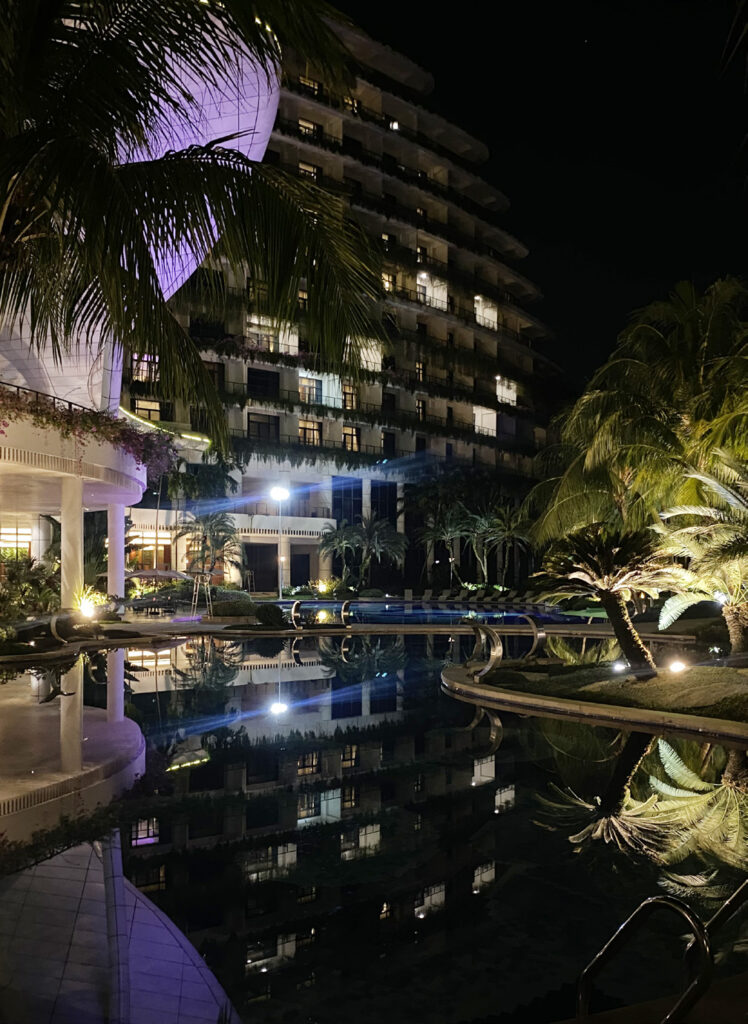
Absent from these videos are the neo-reactionary crypto-libertarian ideas that we have come to associate with the so-called American Tech Right. This could be attributed to the demographic composition of the Network School, referred to internally as NS by its members. NS participants come from over fifty countries. A majority of them either work in crypto-related industries in Southeast Asia or are contingently employed digital nomads from Western countries attracted to the low cost of living in places like Dubai, Bali, and Chiang Mai. Most are single, twenty-something post-graduate men in tech, searching for a community that matches their socially constructed ideal of what the founder lifestyle ought to look like—sigma male, cracked, “dark talent.” One group of girls from the Philippines is particularly sociable. A few of them are customer service representatives for a US-based biotech start-up. They work long night hours in the cavernous hotel lobby and are positively chipper in conversation by the early morning buffet. One of them tells me that her team was recently slashed, and she is currently tasked with training an AI to replace her.
Some NS members follow Srinivasan primarily as a venture capital guru, and they jockey to position themselves closer to the purse strings of his investment arm, the Balaji Fund. But more than a few members have no idea who this Balaji even is—such-and-such went to a conference in Singapore and heard from a friend of a friend that this other guy disappeared to NS for a few months and came back jacked.
Certainly, more than a few NS members could be considered eccentric. There’s a crypto-cowboy who plays guitar and hosts daily rucksacking sessions through Forest City’s artificial beaches and overgrown lots. There’s a transnational e-girl with two marketing start-ups and a recent divorce who runs “vibe coding” parties replete with glow-sticks and swag prizes like at-home genetic testing kits. On the thirteenth-story rooftop of the nearly empty luxury hotel one night, an ex-academic Hegelian philosopher tells me that Balaji is actually a Marxist, and that the proletarian underdogs of the Network School will one day rise and claim their rightfully destined future.
This revolution remains perpetually on the horizon, however, as do many of the Network School’s aspirational promises. The Bryan Johnson Blueprint-inspired fitness meal plan is soggy and flavorless and gives me a chronic stomachache. The “earn” section of the internal NS portal, where I am supposed to complete tasks like “create a high-quality 59-second video explaining Peter Thiel’s Zero to One” to win crypto prizes, never actually works for me.
Offshores To Be Determined
The Network School is an “internet-first society,” but the first thing that impresses me about Forest City is its physical contradictions. When it rains, as it does most afternoons in balmy tropical southern Johor, you will not smell petrichor, the earthy odor caused by the release of plant compounds and organic oils. The highly curated palm tree beds and stone footpaths instead release a chemical odor. It permeates the mostly vacant cookie-cutter high-rises surrounding the hotel, and it wafts through the open-air mall and the water park—which is empty except on weekends when, like clockwork, busloads of middle-class Malay and Chinese tourists pour in to relish the artificial island’s photogenic delights. At the center of the mall sits the Forest City showroom, where colorful banners and flashing installations tell me that the “Prime Model of Future Cities” is at risk of selling out, and that I should buy an apartment unit while I can.
Meanwhile, Forest City’s seven hundred thousand projected residents have yet to fully materialize. Empty lots bear signs that claim “TO BE DEVELOPED” in bold lettering. Several of the planned islands are not even yet constructed. But Forest City is practiced in market volatility. After the Chinese real estate market bubble burst in 2020, and pressure to protect Malaysian sovereignty against foreign capital began to escalate, Forest City investors and local agents reoriented their development targets, pivoting to instead target wealthy Malay consumers. Later, city officials would rebrand Forest City once again, opting for a new “Smart and Green” campaign that highlighted the city’s innovative use of vertical greenery and sewage recycling technologies. Ironically, the campaign belies the development’s toll on surrounding biodiversity and local fishery economies.
Then, there is the issue of maintenance. Just to keep this offshore afloat, Bangladeshi migrant workers tend daily to the hotel rooms occupied by digital nomads and friends of the Sultan of Johor, while uniformed guards commute from the surrounding regions to patrol the empty shop fronts and to fumigate the unoccupied homes against the city’s pressing mold issues. Each day, this cycle is repeated in order to breathe new life into Forest City’s deflated promises.
And there is the problem of providing infrastructure in an inaccessible location. If you need basic groceries or medical care, for instance, unless you book an expensive private shuttle or a rideshare, you have to wait for an intermittent shuttle to bring you to the Tuas Checkpoint, and from there you hope to catch the first of three other buses to connect to the Mass Rapid Transit station in neighboring Singapore.
Due to my Bryan Johnson-induced irritable bowel syndrome, I leave the Network School to see a doctor. On my attempted return, I accidentally board a shuttle headed toward Legoland. It is indistinguishable from the bright green Forest City bus, and is festooned with similar ads: “Malaysia, my second home.” I request a rideshare to take me back; the Grab driver is a friendly woman who tells me about crossing the border daily for over twenty years to work grueling twelve-hour shifts at Changi Airport in Singapore, where salaries are markedly higher than in Johor. She is retired now, but she works for Grab to avoid financially burdening her college-aged children. “Forest City,” she tells me as we weave through the swampy grassland that has now been designated as a golf course, “looks like a city, but it is rural.”
By this, she means that it seems culturally backward; it stands insolently outside of the forces of historical progress despite its futuristic claims. Much like the Network School, Forest City seeks to consolidate an ideal model in which new forms of subjectivity can be articulated and optimized. This is done even against the backdrop of political turmoil, economic uncertainty, environmental collapse, and myriad other markers of unsustainability. But ultimately, the practical economy of Forest City is not dictated by what it can offer residents, but by narratives of the future that enable its flexible development initiatives.
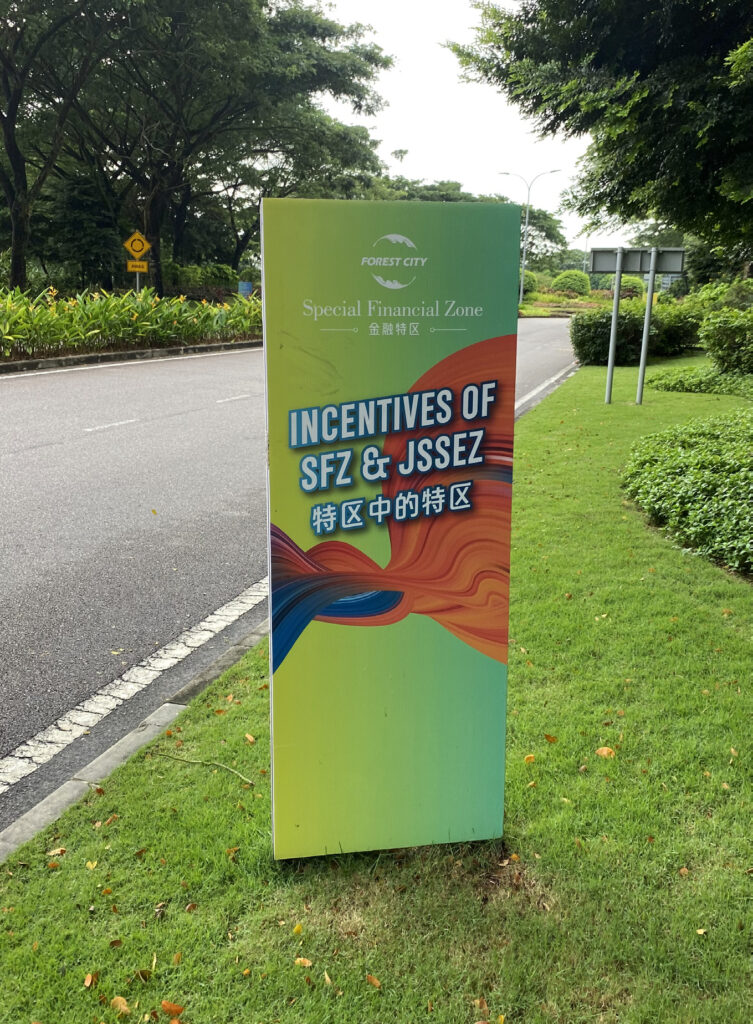
As we enter the Forest City limits, the signs at the gate tell me that 2025 tax incentive programs, rolled out as part of the Johor-Singapore Special Economic Zone (JS-SEZ) “hypergrowth” plan, will target financial managers for the ultra-wealthy and transnational elites in order to expand investment in regional AI and quantum computing. Through its involvement in the JS-SEZ, and based on Malaysia’s accommodating political regime and its relative surplus of labor and land, Forest City will once more foster new opportunities for corporate geoarbitrage. The JS-SEZ extends the plantation developmental schemes of the British colonial empire into the present and the future. But Forest City’s own uncertain development can no longer be considered in merely economic, territorial, or legalistic terms. The digital nomad, the influencer, and the tech guru of the Network School thrive on turbulence, transforming structural dynamics into speculated future gains that can only be realized through their visionary foresight.
Srinivasan writes in The Network State, “as the founder of a startup society you aren’t a technology entrepreneur telling investors why this new innovation is better, faster, and cheaper. You are a moral entrepreneur telling potential future citizens about a better way of life.” Ultimately, what these new offshores materialize is the feeling of manifesting one’s own destiny against the forces of history. It is contradictions like these that make network states not just allegories but ways of giving form to the uncertainties of digital capitalism and its future.
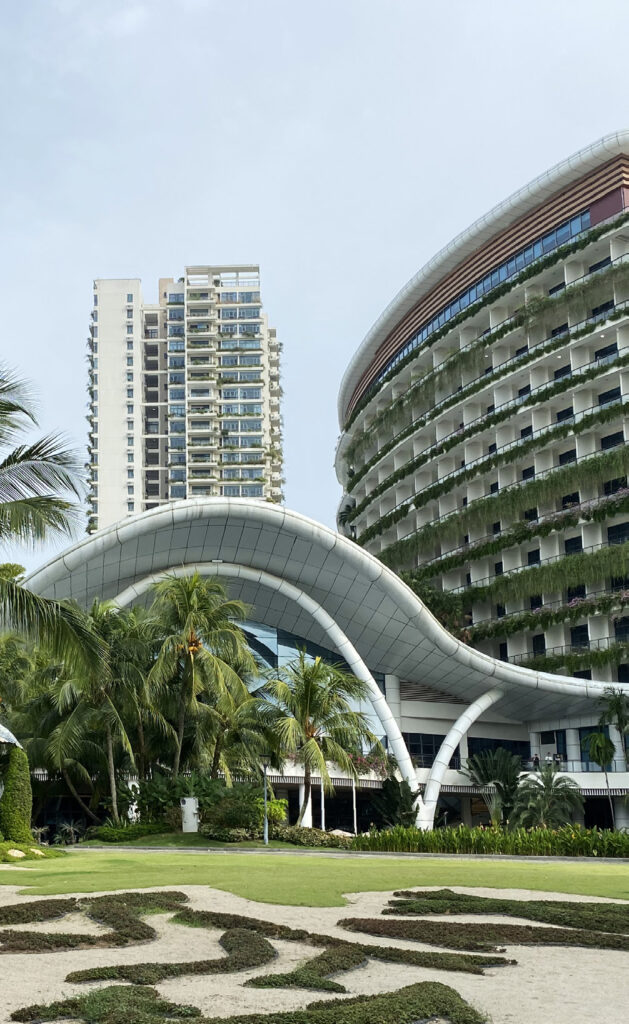
On the thirteenth floor of the hotel, I sing karaoke with digital nomads from around the world. The recurring hit of the summer is, inexplicably, the Red Hot Chili Peppers’ “Californication.” It’s a lyrical exploration of the dark side of a certain ideology—the techno-optimistic libertarian worldview that originated in the American west coast state of California. “It’s the edge of the world and all of Western civilizaaation …” The song alludes to some kind of ending, but it also looks toward what comes after a place of pure possibility comes to an end.
For these new entrepreneurial subjects, short-term failures may as well be more important than success. In July of 2026, Network School Forest City was aborted after a police investigation into allegations that Israeli nationals had entered the country illegally and were among the Network School’s members. Muslim-majority Malaysia does not recognize Israel, and even though the investigation did not yield any positive evidence of immigration violations, the unavoidable matter was that the Network School was necessarily parasitic on the hospitality of the state, and it had overstayed its welcome. Meanwhile, Srinivasan has announced plans to reboot Network School 2.0 in Astana, and he claims to have signed a memorandum of understanding with the Republic of Kazakhstan, which has been bullish on a national strategy to attract foreign tech investment.
During my stay in Forest City, I did not witness the triumph of any tech unicorns. What I did find was more ordinary: a highly contingent workplace organized around a financialized and speculative economy, with particular narratives around future value delimiting the horizon of futures that can be realized. In spaces like the Network School, the core capitalist fantasies of upward mobility and proprietary agency must be rehearsed continuously, and with ever more enthusiasm, all in pursuit of securing the necessary venture capital funding. As untethered from reality as it all might seem, however, even hype has its material basis. After all, the Network School may only occasionally produce founders, but it always produces subjects. ◆
- Balaji Srinivasan, The Network State, (2022). ↩︎
- The Network School, “Network School—Learn, Burn, Earn,” accessed November 25, 2025, https://ns.com/. ↩︎
- Balajis.com, “Network School 2025,” accessed March 15, 2026, https://balajis.com/p/network-school-2025. ↩︎