
For Andy Lakoff
(1970-2026)
In early July 2026, Andy Lakoff, a co-founder and longtime editor of Limn, died of cancer that had been discovered only a few months earlier. For both of us, Andy’s death brought to an end an intense collaboration and a cherished friendship that lasted over thirty years.
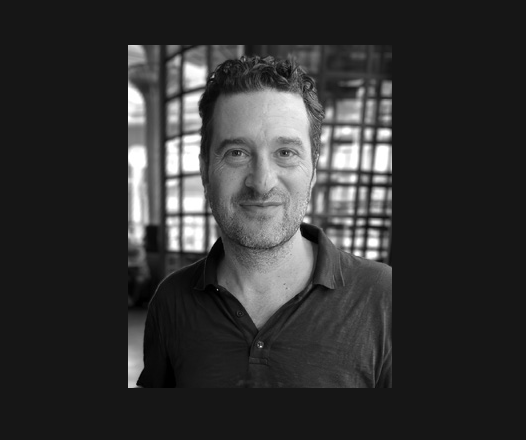
Photo by Daniela Bleichmar.
We both met Andy in graduate school. Through different jobs and cities, through the appearance of families and children, through dinners, hikes, and family visits, and, more than anything, through thinking, writing, and talking together, we experienced with Andy the joys, the frustrations, and the sometimes deep rewards of an academic career and life.
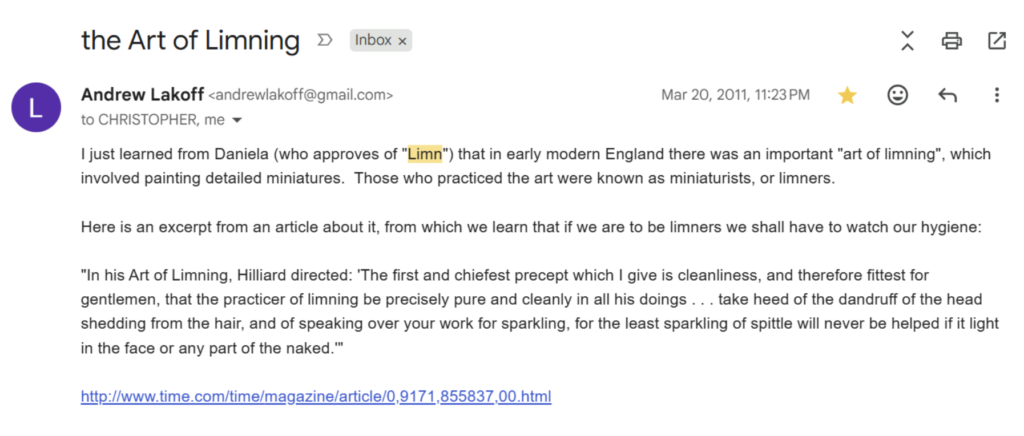
The three of us founded Limn in 2010 and served as general editors over the next decade. In many ways, Andy’s work on Limn reflected who he was as a scholar and a person—and Limn, at its best, reflected what was so wonderful about Andy. He generously supported the work of others, particularly early-career scholars. At the same time, he possessed a sharp critical edge, a wry sense of humor, and a healthy awareness that, while our work was serious, we should not take ourselves too seriously (see image below). His engagement with theory was deep, but he held theoretical cards close to the vest, preferring to let his choice of topics and his artful portrayal of contemporary situations do the talking. And he worked on a broad range of topics and problems, restlessly searching for new answers to the question: What is important to think about and inquire into today?
Limn served as a vehicle through which Andy brought his intellectual interests to life, sustained friendships, and formed scholarly communities. Andy edited Limn 3: Sentinel Devices with longtime collaborator and friend Frédéric Keck. The issue grew out of an exemplary Limn meeting they had assembled in Brittany: organized around a shared concept, but drawing on diverse cases, ranging across health, nuclear risk, and environmental change. Andy’s work on Limn 5: Ebola’s Ecologies realized a collective aspiration that Limn might provide a timely response to, and reflection upon, rapidly unfolding issues. And Andy’s connection to Ashley Carse led to the development of our final issue as general editors—Limn 10: Chokepoints—and to the handover of Limn to its new editorial collective. The magazine’s continued life in new hands is thanks in no small part to Andy’s friendships and collegial networks.
Many aspects of being an academic take a long time to grow into, and there were so many ways that Andy was in his prime when his illness made itself suddenly and shockingly known: in his research and mentorship, in his care for colleagues and students, and in his curiosity and thought. His loss also robs us of a vital inquirer and navigator of a confounding present. Andy was deeply interested in figures of the future (preparedness, sentinels, risk), and the future of the future is today perhaps more interesting and troubling than ever. To lose Andy at this point is thus doubly devastating. There was much more he would have taught us, so much more he would have done, and so many people he would have brought together. But we are also losing urgently needed ideas and approaches to a world that Andy worked hard to understand alongside us. ◆