Out of the Shadows
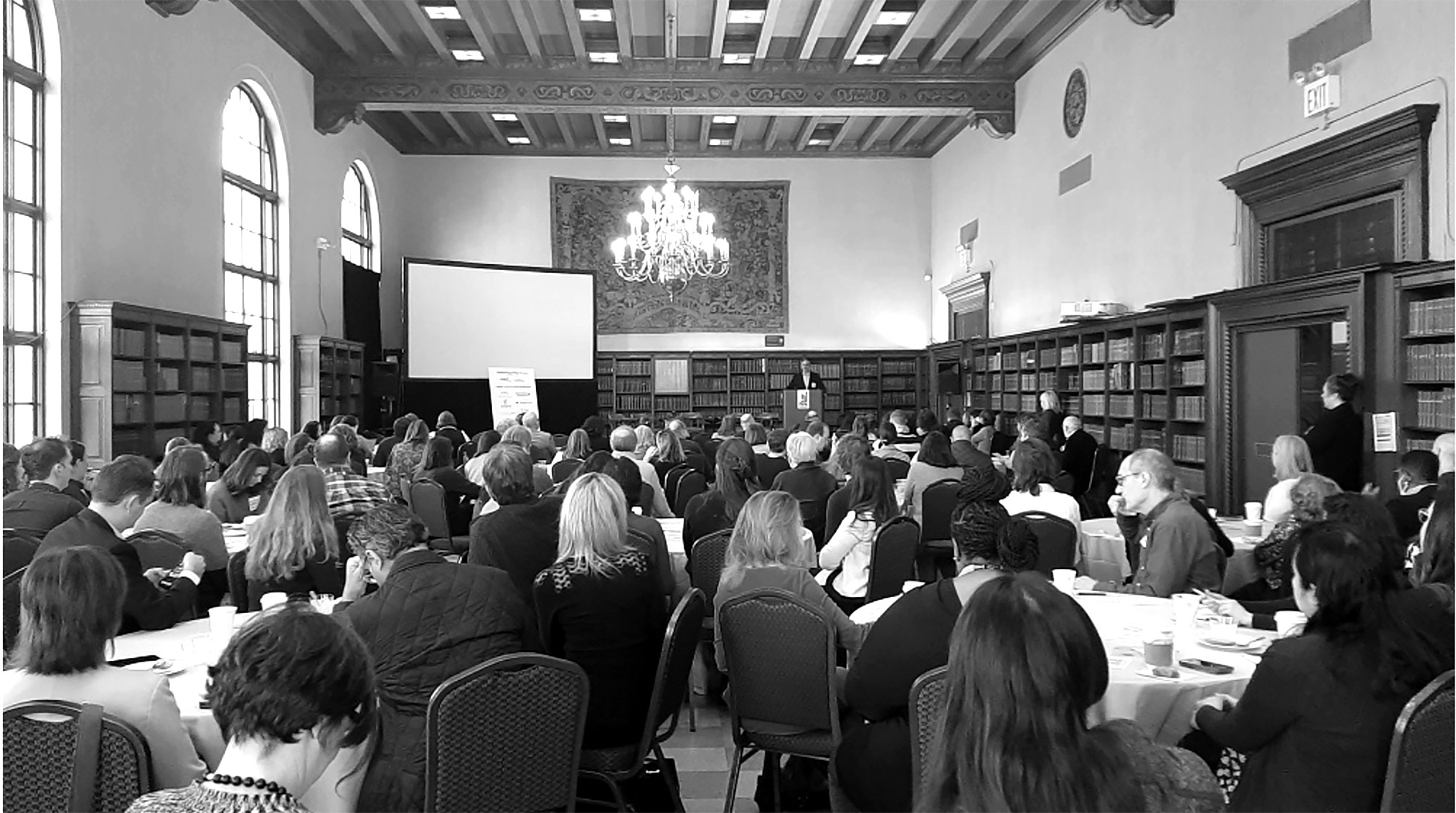
In 2024, New York hosted the first-ever ghostwriters’ convention. The Gathering of the Ghosts, as it was called, was convened by Gotham Ghostwriters, one of the world’s premier ghostwriting agencies. Founded by CEO Dan Gerstein in 2008, the firm specializes in connecting clients to its network of thousands of custom-matched editorial professionals. In finding the right fit between a would-be book author and a ghostwriter, chemistry is key—the North Star of Gotham Ghostwriters’s unique value proposition.1
Before Dan was gathering ghosts, he cut his teeth as a journalist. He then moved into politics, serving as a speechwriter for a US Senator and presidential candidate—always just outside the limelight, but powerful nonetheless. After moving to New York, Dan saw the potential to turn his writerly chops and his connections into a one-of-a-kind business. He has since gone on to pioneer the field and advocate for those who write from the shadows.
Limn editors Jason Cons and Towns Middleton sat down with Dan to discuss the state of the industry, the workaday realities of the craft, and what it takes to be a successful ghostwriter.
Spoiler alert: it’s about much more than writing!

Dan Gerstein: Big picture: the field is in a major transition moment—both in terms of coming out of the shadows and the stigma disappearing, as well as the compensation going through the roof. One thing fueling this substantial growth is the rise of self-publishing. The fastest-growing and largest segment of the ghostwriting industry is new authors who are bypassing traditional publishing. Often, their purpose for writing a book is not primarily to generate revenue from book sales. It’s for their legacy, or to credential themselves as an expert in their field, or to raise the value of their business ahead of an IPO. The barriers to entry have been completely wiped out, and anyone can publish a book. The hard part is producing a quality work and getting impact from it.
Towns Middleton: What precipitated the Gathering of the Ghosts conference?
DG: The inspiration was twofold. First, I am a cofounder of the Professional Speechwriters Association, along with my friend and colleague, David Murray. The genesis for that was that we were at a speechwriting conference run by a PR group called Reagan Communications. But it wasn’t a conference for speechwriters. It was a conference about speechwriting for people who did it as kind of a secondary part of their job. And I was like, we need a home of our own. This is ridiculous—why isn’t there a conference for speechwriters? It was one of the few professions in the US that didn’t have any kind of association representing its interests. So we fleshed out the concept, David bootstrapped the organization and it turned into a huge success. I saw the power and the value of this conference for this subset of the larger, collaborative writing world. And I thought, the book ghostwriting community really needs something like this too.
Second was the trend of ghostwriters coming out of the shadows. The industry was having a moment. One of the watersheds was J. R. Moehringer’s piece in The New Yorker. He was in the news for his collaboration with Prince Harry on his 2023 autobiography, Spare. Part of the story was about his journey from journalist to professional collaborator. Part was about working with one of the most famous, polarizing figures in the world. And so it just seemed like the time was right to come out of the shadows ourselves, as a tribe.
Jason Cons: To have an organization that uses the term “ghostwriter” in its name feels a bit like saying the quiet part out loud. Do the people you work with identify themselves as ghostwriters?
DG: We use “ghostwriter” as an umbrella for a wide range of collaborative writing. It’s an imprecise and imperfect term. I think below the surface, the industry is in a transition with it. There is this whole subgroup of very elite ghostwriters now who don’t view themselves as ghostwriters because they’re star writers in their own right. They see themselves as collaborators. I think if you asked most ghostwriters, they would embrace the term “collaborator.”
I think “collaborators” is a description of not just the role ghostwriters play but the value they provide. They’re not merely taking dictation and then making it look pretty. They’re full-on partners in the creation of a text. That’s the difference maker, and it’s why AI will never replace the role of elite ghostwriters—because the ghostwriter, the collaborator, is doing something that the technology can’t, which is pushing the author to go deeper, to share stories they might not otherwise, and then also leveraging their expertise to help with the conceptualization of the book.
TM: Many professions feel under threat by AI. What’s the feeling among ghostwriters?
DG: I’ll start by saying, stay tuned. We’re in the midst of conducting the largest-ever survey of professional writers about the impact of AI and their work and their livelihood. So we’re going to have some really meaningful data to answer some of those questions in November, ahead of the Gathering of the Ghosts 2.
Anecdotally, and to paint with a broad brush, I’d say AI is going to be massively disruptive for content creation in written word industries. But it’s going to play out differently at different levels. At the basic level of copywriting or formulaic content creation, it’s going to obliterate the professional opportunities for human beings. But at higher levels of the industry, I think it’s going to make what we do far more valuable. Technology just can’t replicate the value proposition that an elite writer and editorial advisor can provide in the formative stages of telling the story.
TM: I’d like to step back and talk about some of the more philosophical issues of ghostwriting—the ghostliness in particular. Ghostwriting requires a certain sublimation of authorship to be successful. How do you see ego informing the practice?
DG: Let’s put this in a larger historical context. Throughout human history, storytelling has been a collaborative endeavor. The very first mode of storytelling was oral storytelling, oftentimes around a fire. It was a shared endeavor. It remains so today. A lot of songs are written by committee. In television, the screenwriter is credited, but often the director and the producer are involved in the script.
The only media that, at least in public perception, is not collaborative is books. This vision of the author as auteur is a recent phenomenon that you can date to the rise of the printing press and the Enlightenment. But this is a myth, right? There’s a fiction and deception to it.
What’s happened over time, however—and I credit this largely to the rise of online storytelling and digital platforms and social media—is that there are no secrets anymore. One of the watershed moments was when Obama became president. It coincided with the explosion of social media as a phenomenon, and his speechwriter was this young, good-looking guy named Jon Favreau, who became a celebrity in his own right.
This showed that the notion of the auteur is a conceit. The idea that elite leaders wrote their own speeches went completely out the window, and it became understood that CEOs and top-level politicians and heads of global organizations employed speechwriters just like they employed Chief Technology Officers and accountants to do their taxes. And the idea that ghostwriting was something that had to be hidden started to fade away.
JC: Do you ever end up with clients who you have to convince to let go of the idea of the auteur and to think more openly about the way that writing and knowledge is produced?
DG: The bigger struggle often is convincing the author to open up and make themselves vulnerable. This is why J. R. Moehringer is so celebrated. His first breakthrough project was writing Andre Agassi’s memoir Open, which is regarded as a classic. He convinced Agassi to go really deep and be very honest about the emotions he struggled with and his complicated relationship with his family, in a way that most athletes never would because they’re afraid it would make them look weak, or that it would besmirch their public image. Not coincidentally, Open came out at the moment when the premium we place on authenticity among public figures was really starting to take off.
JC: What makes a good ghostwriter? Is there an acme that some people have for ghostwriting?
DG: There’s the necessary (though not sufficient) aspect of being a really good writer. But more than 50 percent of the work, and what’s required to be successful, has nothing to do with writing. It’s relationship management. It’s diplomacy. It’s being able to convince the author to tell stories they may be reluctant to share—and sometimes to overcome their instincts that are self-defeating in terms of what should go in the book or what to keep out of the book. The best ghostwriters have that ability.
The other piece is that you have to be able to sublimate your ego. There are some amazing writers who dip their toe in the ghostwriting water and realize that it’s not for them, because they view their writings as their darlings, and they want to be able to choose whether they live or die.
TM: Writing is such an intensely idiosyncratic affair. The ghostwriter has to have the audacity to enter that morass. But I’m imagining that it gets emotionally sticky, and that the ghostwriter can’t help but take on some of that human intensity of telling someone’s story.
DG: There are legions of stories of the tricky emotional land mines that ghostwriters have to navigate, because oftentimes it’s not just the author they’re in bed with. It’s the family, the spouse, the business colleagues. It can get very tricky. The best ghostwriters have a high level of emotional intelligence and are good at maintaining trust and confidence while also being able to draw boundaries.
JC: I can’t imagine what it’d be like to deal with Agassi’s whole family, as opposed to just Agassi himself!
DG: Yeah, it can be a very loaded situation!2
- This interview comprises edited excerpts from our conversation on August 27, 2025. ↩︎
- See Gerstein’s “The Horrors of Being a Ghost: Ghostwriters Share Their Tales of Nightmare Clients,” published in the July/August 2019 edition of Writers Digest, https://www.writersdigest.com/getting-published/the-horrors-of-being-a-ghost-ghostwriters-share-their-tales-of-nightmare-clients. ↩︎