
Tending Tomorrow’s Garden Forests
Learning modules and the possibilities of cross-pollination
In today’s dynamic open educational ecosystems, learning resources can be accessed, adapted, translated, and even transformed—available for free to anyone with an internet connection. The term “open” describes free-to-access textbooks, articles, lectures, and other learning tools that can enable knowledge sharing and make learning more affordable.1 The people who make and maintain these ecosystems conduct work that is carefully documented, decentralized, and oriented toward complex webs of accomplishment rather than individual visions or restrictive intellectual and institutional property rights.2
Most of these exchanges take place over digital platforms that are themselves constantly evolving—platforms like Gala (www.learngala.com), an open-source web application that enables people to collaboratively create and share open educational resources known as OERs.
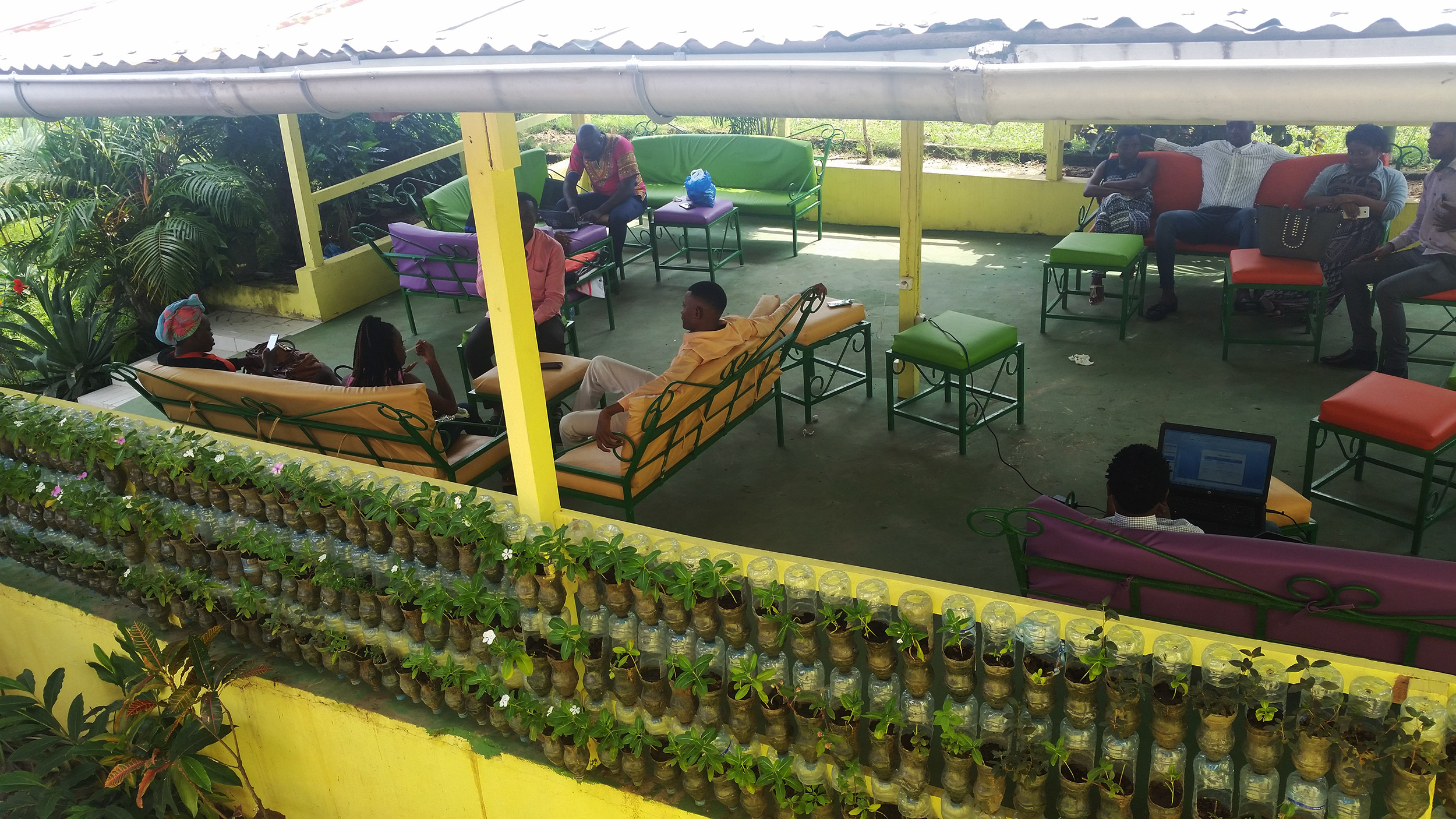
Gala’s first multimodal online case study addressed conflicts over wolf hunting in Michigan. Designed as a role-playing simulation for grad student orientation at the University of Michigan, it was also translated into French by scholars in Gabon, where conflict between wildlife and humans is common, and it was deployed there for both education and conservation.
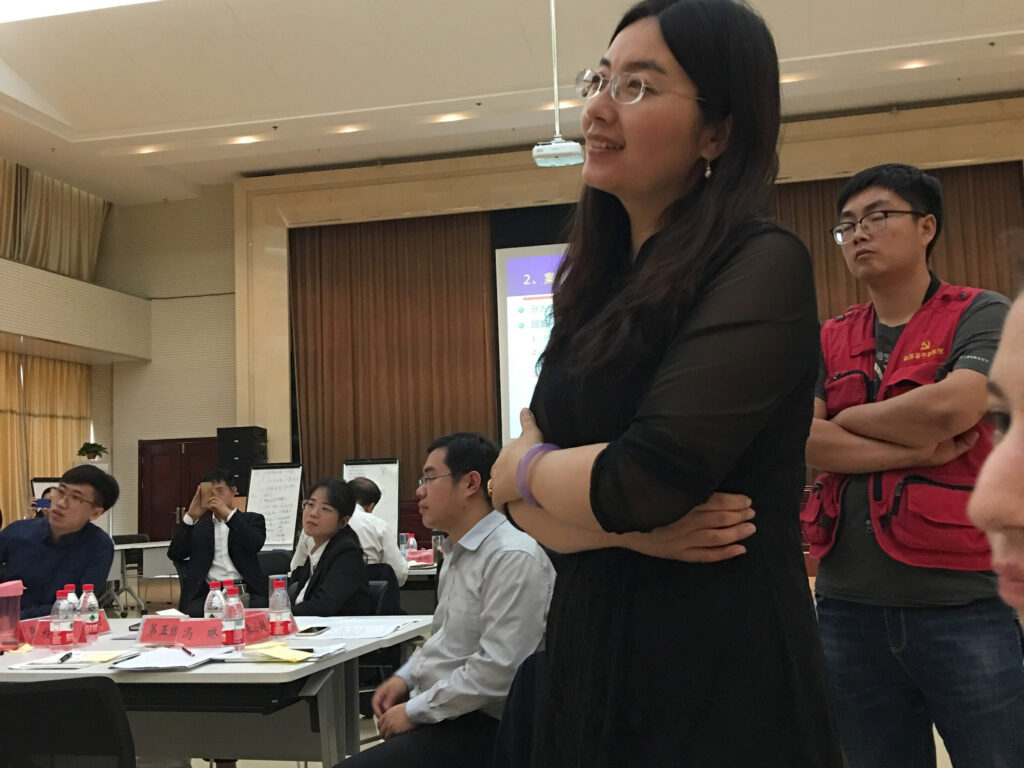
Around that time, Gala also partnered with a case-based learning initiative at Tsinghua University in Beijing to create bilingual OERs and then research their uses in civic, conservation, and campus contexts in China and the United States. OERs thus enable intercultural education practice as well as research integration.
The Garden Forest
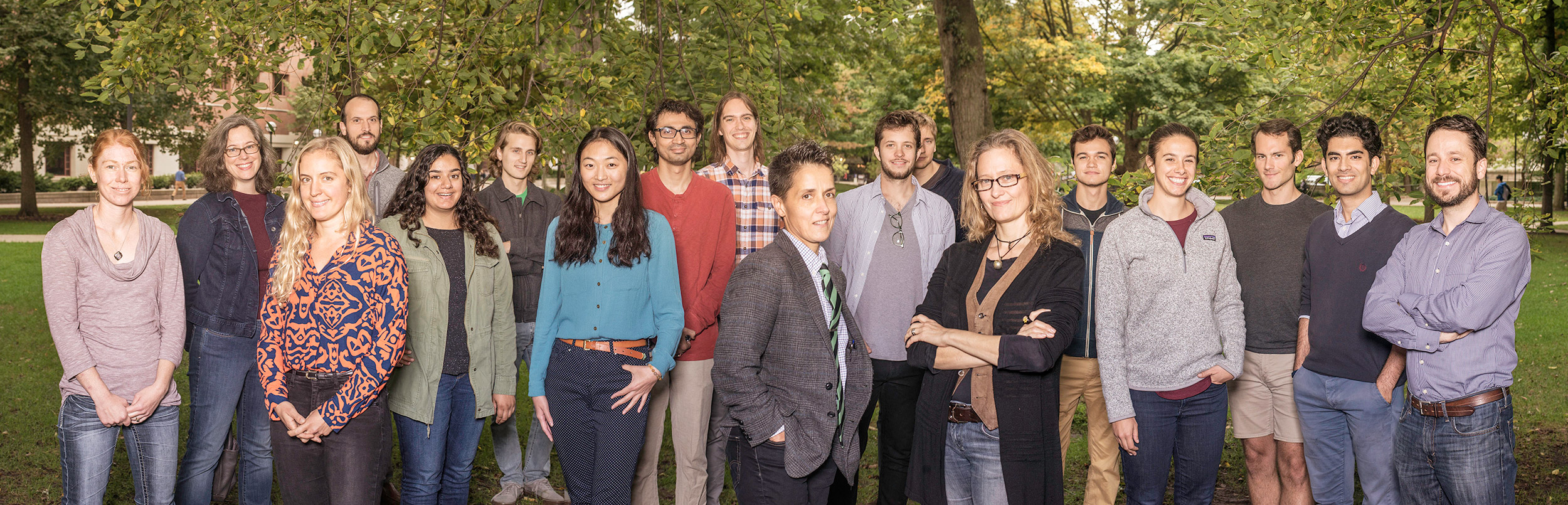
Cofounded around 2017 by Rebecca Hardin with student developers at the University of Michigan (and named after a Michigan apple variety), Gala was created to house and share learning content in the field of sustainability science.3 It has since been used to make learning modules by communities of ecologists, neuroscientists, engineers, and many more. Supported by Ed Waisanen, a former student developer who now oversees platform development and instructional design, Gala has branched out in its capabilities through a multiplicity of slowly maturing partnerships between its makers and its users. Growth is driven not by strategic leadership, but by trends emanating from the collaboratively created content itself, which opens around us like a forest with a myriad of interconnected elements.
Gala features a “nursery” where modules can be shared among collaborators, and an “orchard” where these modules can then be published as OERs under Creative Commons licenses. This licensing ensures retention of the authors’ rights when material is reused, but it also allows for revision, remixing, and redistribution; together, these are the “Five Rs of OERs.” Retention and reuse are common in open learning environments, while revision, remixing, and redistribution are harder to achieve.
Gala’s agility and adaptive structure, however, advance those latter three Rs within and across libraries of content that is created, reviewed, and curated by learning communities. The platform’s culture of development entails frequent conferrals and visits with colleagues in contexts with less stable, more mediated internet access, such as the aforementioned projects with China and Gabon.
One library on Gala is truly open, in the sense that anyone can make and publish material there. Libraries led by learning communities will sometimes, with the authors’ permissions, adopt material from the open library and develop it further. These connected efforts for the circulation of knowledge mimic cross-pollination in an ecosystem—both deriving from it, and driving it.
As forests, fields, and wetlands all around us become sites for data centers—raising questions about the costs of the virtual frontiers in which we work—it is useful, albeit ironic, to think of digital environments as forests. Archaeology and paleoecology have confirmed that, even in prehistoric times, some forests were also a bit like gardens. They were, in a sense, tended by humans who moved through their surroundings, modifying soils and spreading plant species to create more benevolent conditions for our own becoming.
The Bats
Thomas Nagel’s 1974 essay “What Is It Like to Be a Bat?” considers the unknowability of the subjectivities of other beings.4 Nagel illustrated human limitations in understanding by stating:
Our own experience provides the basic material for our imagination, whose range is therefore limited. It will not help to try to imagine that one has webbing on one’s arms, which enables one to fly around at dusk and dawn catching insects in one’s mouth; that one has very poor vision, and perceives the surrounding world by a system of reflected high-frequency sound signals; and that one spends the day hanging upside down by one’s feet in the attic.
Instead, he argued, we must turn to objective facts “that can be observed and understood from many points of view” if we are to make sense of phenomena beyond our experience—“to know what it is like for a bat to be a bat.” More generally, Nagel was musing on the philosophical question of the relationship between consciousness and body, which he summed up by saying, “We have at present no conception of what an explanation of the physical nature of a mental phenomenon would be.”
The essay is poignant to reread at a time when we so closely collaborate with machines—machines not dissimilar to what Nagel calls “robots and automata that behaved like people though they experience nothing.” Fast forward to today, and economic, technological, and epidemiological circumstances have accelerated the proliferation of techniques at our disposal in the pursuit of knowledge sharing.
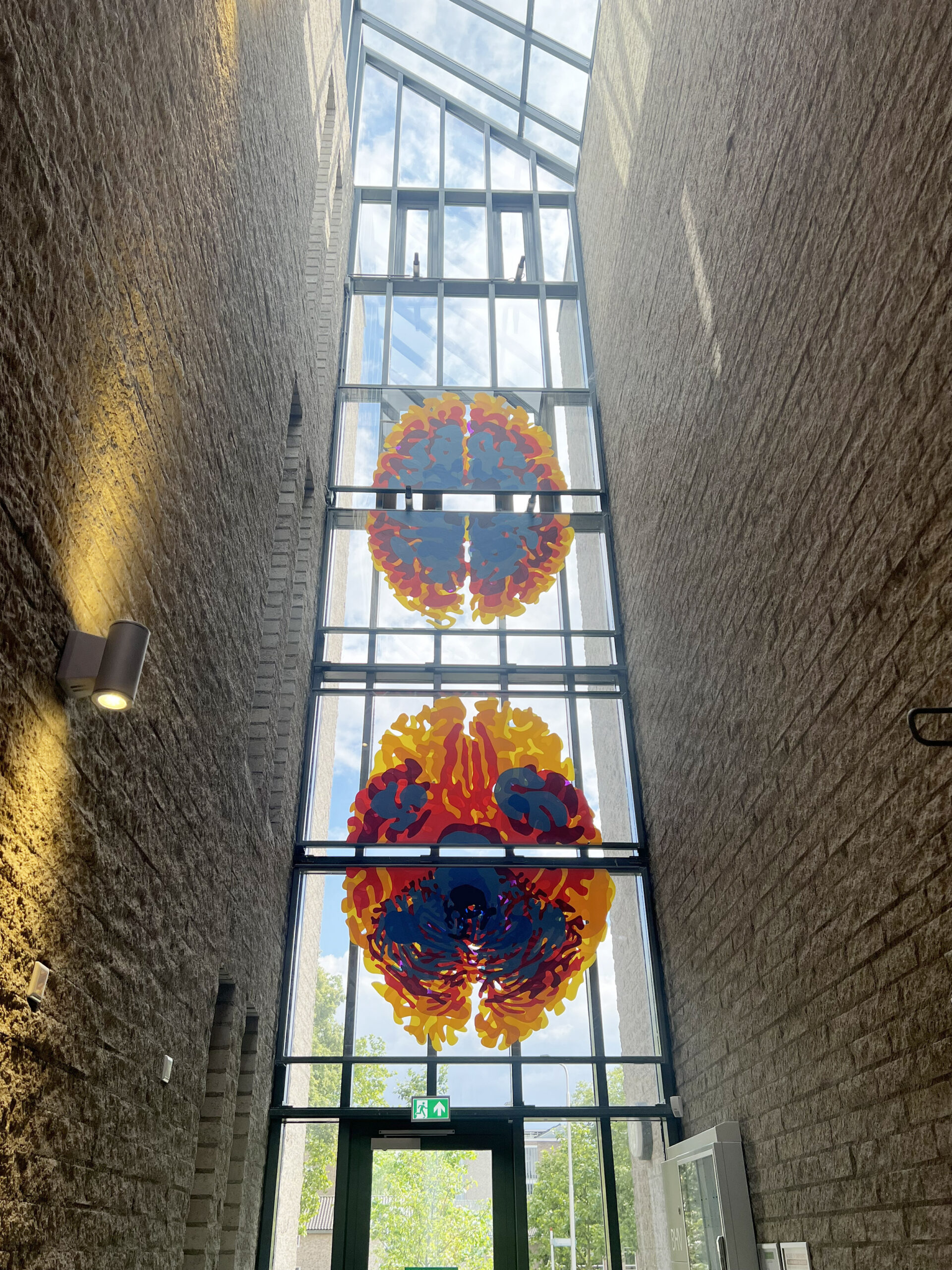
During the COVID-19 pandemic, as people pivoted to virtual learning like online lectures, Nils Kohn (an educator at the Donders Institute for Brain, Cognition, and Behavior at Radboud University Medical Center, in Nijmegen, Netherlands) noticed a gap in interactive communication between students and teachers. To bridge that divide, he worked with his colleague James Cousins at Radboud, which provides curricular support for the NeurotechEU consortium. That group of nine European universities relies on shared digital curricula, and had been considering how to make them more modular and interactive. The “How to fMRI” learning module on Gala was born when, as Nils described it, “We acquired some Oculus Quest 2 headsets, and a 360-degree camera, then used Cenario VR to bring students stuck at home in the pandemic into the lab virtually.”
Functional magnetic resonance imaging, or fMRI, is a technique to measure and map brain activity—in effect, making the unknowable known. However, sharing this knowledge poses certain challenges. Nils noted, “We have to block scanners (ordinarily in use for research) for up to an hour to demo for learners, and even then learners standing in a small control room don’t see as much as when they have an enhanced VR experience.” The physical space constraints meant that only learners standing in front were getting high value. He also realized that his in-person intro to the technology had not been consistent from day to day—“whereas on Gala, consistent content that is good, even incrementally reviewed, is better training.”
To demonstrate to the consortium the viability of integrated digital and actual learning environments, Nils and James conducted a trial run for an introductory fMRI course. Feedback was positive, and personal: “I didn’t know MRIs were so loud,” and “I can virtually get in and lie down!”
Some learners during the trial run still requested supplemental in-person experiences. Nils commented on this mixed approach, noting, “A first MRI is a cortisol production event—less so with the virtual experience as intro.” Now dubbed a “digital twin approach,” content like that on Gala complements lecture-based online courses and conventional in-person trainings but does not replace them—relieving pressure on instructors and medical infrastructures, reinforcing learning at various levels, and reducing costs.
The learning modules thus created can also, in open learning systems, contribute to broader innovation. “How to fMRI” and the other Neurotech modules that Gala offers can also be uploaded on Training Space, a new forum for online courses nested within INCF. INCF is a historic open learning platform based in Sweden with a commitment to high-quality, standards-aligned neuroscience training. When the team behind Training Space met with the Gala team in Aberdeen in 2023 to brainstorm interoperability, it wasn’t just people traveling, but also knowledge objects. Assemblages of text, media, and increasingly interactive elements, Gala modules are complex artifacts with surprising capabilities—why not think of them as bats, improbable flying mammals able to cross watersheds and spread possibilities like pollen?
Cross-Pollination
While the fMRI module was being developed, Wim Scheenen and Gemma Van der Sluijs of the NeurotechEU team reviewed other content available in the Gala libraries. In particular, Wim loved the modules from the Detroit River Story Lab, a campus-civic-community collaboration that creates immersive case studies of urban wetland sites and tributaries on historically Indigenous lands. Wim was curious about the site-specific research and community conferral that undergirded those modules, and how they gave rise not only to learning materials, but also to blueprints for actual boats and boardwalks in increasingly flood-prone areas. This was an exemplar of tethering the virtual and the real.
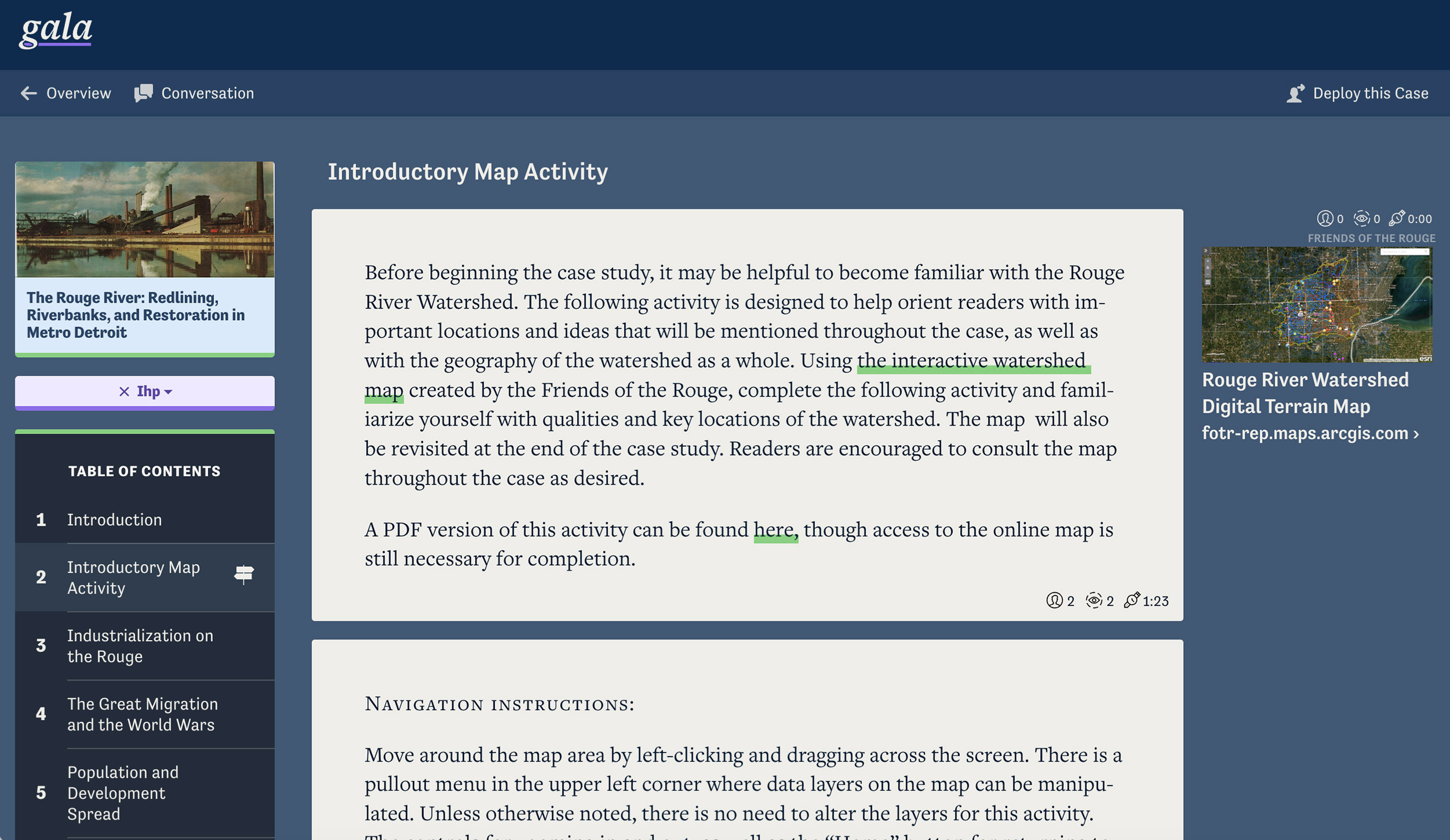
“When Wim shared Detroit River modules, with media corresponding to a walk through real places, I adapted it to our MRI lab,” James explained. The NeurotechEU team also drove innovations that have improved Gala for other user communities, such as better features for writing mathematical equations, and self-testing features that are consistent with best practices for learning retention.
By early fall of 2024, the fMRI module had moved on from review in the Gala nursery to publication in the orchard. Rebecca Hardin visited Nijmegen to facilitate a hybrid “networkshop” with faculty participants from Turkey, Spain, the Netherlands, Germany, and Sweden. All watched James and Nils share the module on-screen, offering guidance for final revisions.
Before long, the “How to fMRI” module caught the eye of Gerd Heber, a researcher from the Socio-Environmental Knowledge Commons project, or SEEKCommons, which is funded by the US National Science Foundation. He noted that the module’s collaborative, iterative development made it a good candidate for what is known as a knowledge graph. By aggregating module data such as software, patents, grants, and publications, a knowledge graph could be a valuable tool to illustrate the diverse contributions to the module and the knowledge represented therein.
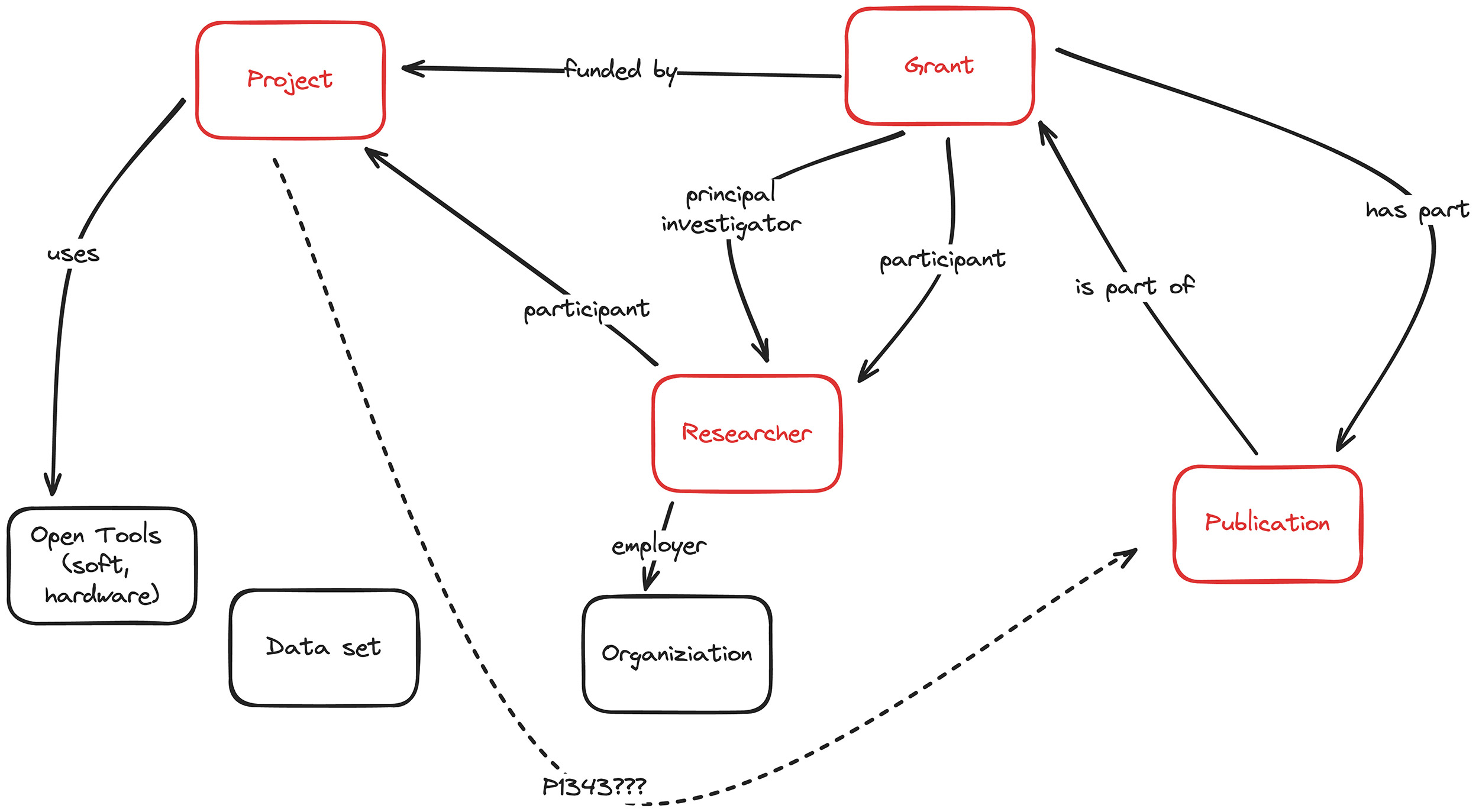
Gerd “borrowed” the fMRI module to demonstrate how a knowledge graph of the kind Wikidata had been developing might be automated for use in Gala. Then he came to Chicago to meet the Gala team and its developers and designers from Atomic Object. Together, the group devised an intuitive user interface.
The resulting prototype was demonstrated at a SEEKCommons network meeting in Berkeley in December of 2024; the feature was then rolled out for a range of Gala content. Authors can now easily enter information that generates interactive Wikidata knowledge graphs. As SEEKCommons lead Rosado Murillo has remarked, this not only supports the struggle to keep web applications like Gala open, but also lets Wikidata “benefit from a simple, delightful user front end.”
Conclusion
The modules on wolf hunting, Chinese lakes, the Detroit River, and fMRI techniques all flutter across oceans and back on currents of hopeful collaborative energy. That such connections occur across such disparate communities through these modules—discoverable as they hang from their feet, trembling with possibilities in their home libraries—seems cause for celebration. Winging their way among classrooms, maker spaces, webinars, and workshops that are connected substantively and socially, not algorithmically, these OER bats and the platforms that shelter and nourish them are shaping ever more integrated open learning ecosystems.
At a time when ecosystems both real and virtual are subject to intensifying dangers, questions about how these platforms can ensure both adequate protection and cross-pollination for their content are only beginning to be asked in practice. We are imagining answers through our ongoing work, co-creating content that is tethered meaningfully to specific lived problems and places, and caring for it as it evolves beyond its original authorship. Embracing connection across both platforms and places, we explore what generosity in education and research can mean for humans seeking to return, in these technology-suffused times, to tending our shared garden forests. ✳
- David Wiley, “Open Education and the Future,” TEDxNYED Talk, March 6, 2010. ↩︎
- Mags Amond, “Embedded, Catalytic, Urgent, Embodied—Interpretative Phenomenological Analysis of Openness in Education Testimonials,” Open Praxis 17, no. 4 (2025): 821–829, https://doi.org/10.55982/openpraxis.17.4.782. ↩︎
- Meghan Wagner et al., “Gala: An Open-Access Platform for Interactive Learning with Sustainability Case Studies,” IEEE Transactions on Learning Technologies 14, no. 6 (2021): 788–801, https://doi.org/10.1109/TLT.2022.3148723. ↩︎
- Thomas Nagel, “What Is It Like to Be a Bat?” Philosophical Review 83, no. 4 (1974): 435–450, https://doi.org/10.2307/2183914. ↩︎