
Waiting for mRNA
Vaccine platforms reveal the limits of global health’s imagination
In 2020, the shot heard round the world sprang not from a musket but from a syringe. The first vaccine against COVID-19—in fact, the first three—received emergency use regulatory authorization before New Year’s Eve, less than a year after the World Health Organization had declared a pandemic. Leaders across sectors and around the world attributed the vaccines’ rapid fabrication and widespread distribution to platform technologies: namely, mRNA and viral vector technologies. Instead of designing a bespoke vaccine from scratch, scientists at the US National Institutes of Health, Germany’s BioNTech, and Oxford University had encoded a genetic snippet of the novel coronavirus into a pre-engineered vaccine backbone.
Each of these platforms involved decades of development, yet research that previously had struggled to gain support found new acclaim through COVID-19. As one Oxford scientist recounted to me, “Nobody would ever fund platform development, and we tried … . But there was just this sudden flip.” For example, in 2023, the Nobel Prize in Physiology or Medicine recognized the 2005 breakthrough behind mRNA vaccine platforms—the synthesis of mRNA molecules through a method that averts an inflammatory immune response. The Nobel Committee emphasized that the “impressive flexibility and speed with which mRNA vaccines can be developed pave the way for using the new platform also for vaccines against other infectious diseases.”1
Indeed, mRNA quickly became a gold standard of pandemic preparedness for politicians and scientists alike. Early demonstrations of support ranged from President Donald J. Trump exalting Operation Warp Speed during his first term in office to Senegalese scientists using the platform to train a “knowledge workforce” for the African continent.
Yet mRNA vaccines have increasingly been shrouded in controversy. US government agencies curtailed several mRNA-related programs in 2025, while more long-standing criticism has decried mRNA’s ultra-cold storage requirements, high costs, and potential side effects such as myocarditis. Dubbed the “Louis Vuitton” of vaccines by its makers, mRNA has been criticized by some as an inaccessible product. For others, “flexibility and speed” has prompted questions about regulatory oversight. The Oxford-AstraZeneca viral vector vaccine has been portrayed as “the people’s vaccine” in contrast with concerns about the usability of mRNA around the world, yet it has also been an object of scrutiny. It was never authorized by the US Food and Drug Administration, and regulators elsewhere reconsidered emergency approval in light of concerns about vaccine-related blood clots.
Popular discourse often reduces vaccine controversies to misinformed publics, self-interested politicians, and unwarranted obstacles to technological progress. Yet decades of scholarship in science and technology studies shows how risk assessment and regulation, and the making of credible public knowledge more generally, are inseparable from the ways in which societies expect power to be exercised and justified.
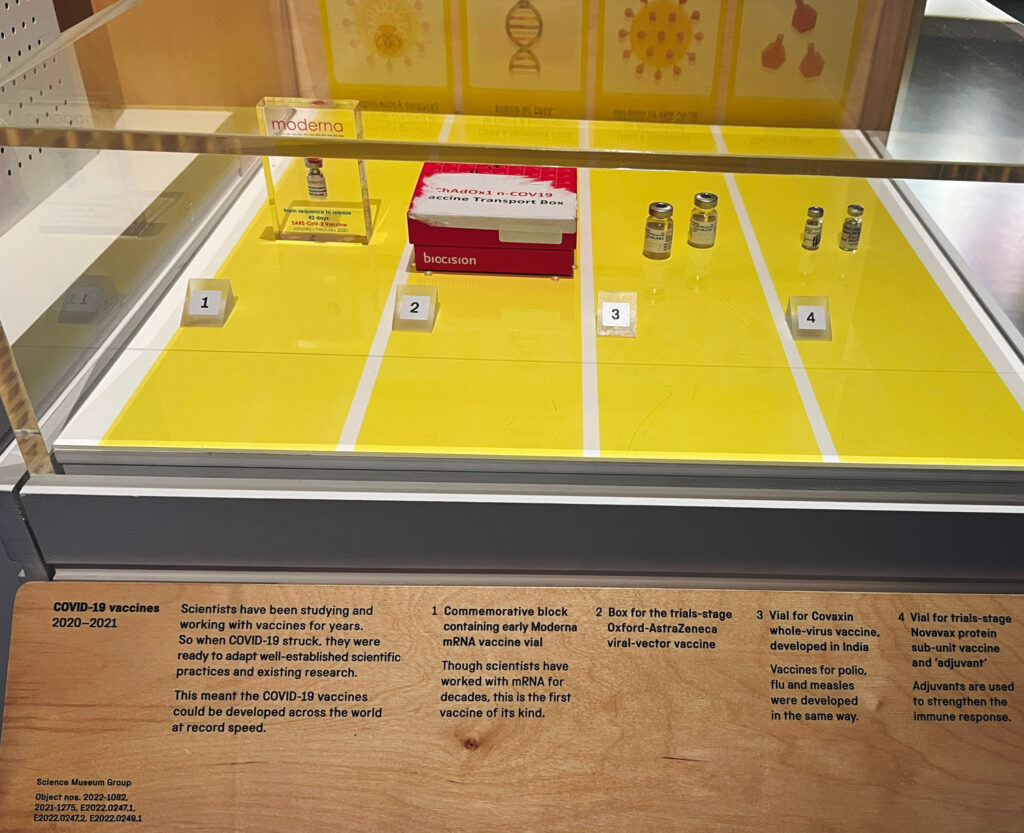
In this vein, vaccine platforms simultaneously stabilize ideas of what disease is and normative ideals about how it ought to be managed. They embed assumptions about what it means to be prepared for a pandemic, the distribution of that responsibility, and the authority to define how people should perceive disease threats in the first place. Global public health leaders imagine vaccine platforms to be capable of addressing any pathology, for any person, anywhere. Nonetheless, vaccine platforms falter when their makers’ underlying assumptions do not align with differently situated and often tacit ideas about injustice and progress.
Portrait of Disease X
The phrase “platform technology” often conjures images of social media or Silicon Valley. Like their digital counterparts, biotechnologies increasingly represent the complexities of life through code. Both are predicated on modularity; vaccine platforms target a new pathogen by swapping out one genetic sequence for another while retaining the same biochemical skeleton. These two types of platforms also take shape in relation to users who play a part in making them. For people’s immune systems to learn how to recognize a viral infection, their own cells must produce portions of the pathogen’s proteins from the genetic information encoded in a vaccine, unlike traditional vaccines that deliver pre-formed fragments of weakened or inactivated viruses.

Delivering the “flexibility and speed” applauded by the Nobel Committee also depends on new forms of epidemiological research, especially high-resolution genetic sequencing, that entail new modes of classification. R&D for vaccine platforms often groups viruses into families. These categories capture statistical relationships between genetic sequences, defining variants of viruses to track how pathogens mutate when they spread and collapsing thousands of distinct viruses into a mere twenty-five clusters.
The World Health Organization is one in an emerging group of global health institutions that champion this taxonomic approach to vaccine development. In the broadest move yet to simplify epidemic risk, these institutions have advanced the concept of a “Disease X” to represent the universe of unknown pathogens that may someday cause an outbreak.2 Imagining disease in this way, public health actors aim to prevent a potential pandemic by rapidly sequencing a pathogen sample, situating a virus within a constellation of known families, and loading a sequence into a preconfigured vaccine platform.
In Search of Lost Time
These framings of uncertainty in vaccine science gained traction following a historic Ebola epidemic in West Africa from 2013 to 2016. Responses to the epidemic provoked widespread criticism—primarily, that the World Health Organization had moved too slowly, and that market failures had delayed vaccine development that could have proceeded further prior to the crisis. With aspirations to respond more rapidly to future outbreaks, public health leaders breathed institutional life into the Disease X paradigm and founded the Coalition for Epidemic Preparedness Innovations (CEPI) in 2017.
With offices in Norway, England, and the United States, CEPI funds efforts to accelerate vaccine research, development, and distribution worldwide. CEPI links preparedness to rapid technological development: the faster vaccines can be developed and deployed, it argues, the more effectively the world can respond to emerging threats. The record-breaking speed of COVID-19 vaccine production thus represented a major victory for CEPI, but it has also underscored the institution’s conviction that the world needs to move faster. In 2022, this diagnosis gave rise to CEPI’s 100 Days Mission, with the goal of vaccines being ready for authorization and scalable manufacture within 100 days of identifying a pathogen with “pandemic potential.” The modularity of virus families and vaccine platforms—especially mRNA—is a central pillar of this initiative.
The 100 Days Mission strives to accelerate vaccine development by framing responses to any outbreak as a form of preparedness.3 Seen through CEPI’s emphasis on speed, the uncertainty of a Disease X creates opportunities to expand knowledge about viral diversity and optimize vaccine platforms for new targets, whenever and wherever the opportunity arises. Epidemic preparedness, in this framework, emphasizes the capacity of institutions to collect and leverage information about any infectious disease event, rather than predict and mitigate one specific disease at a time.
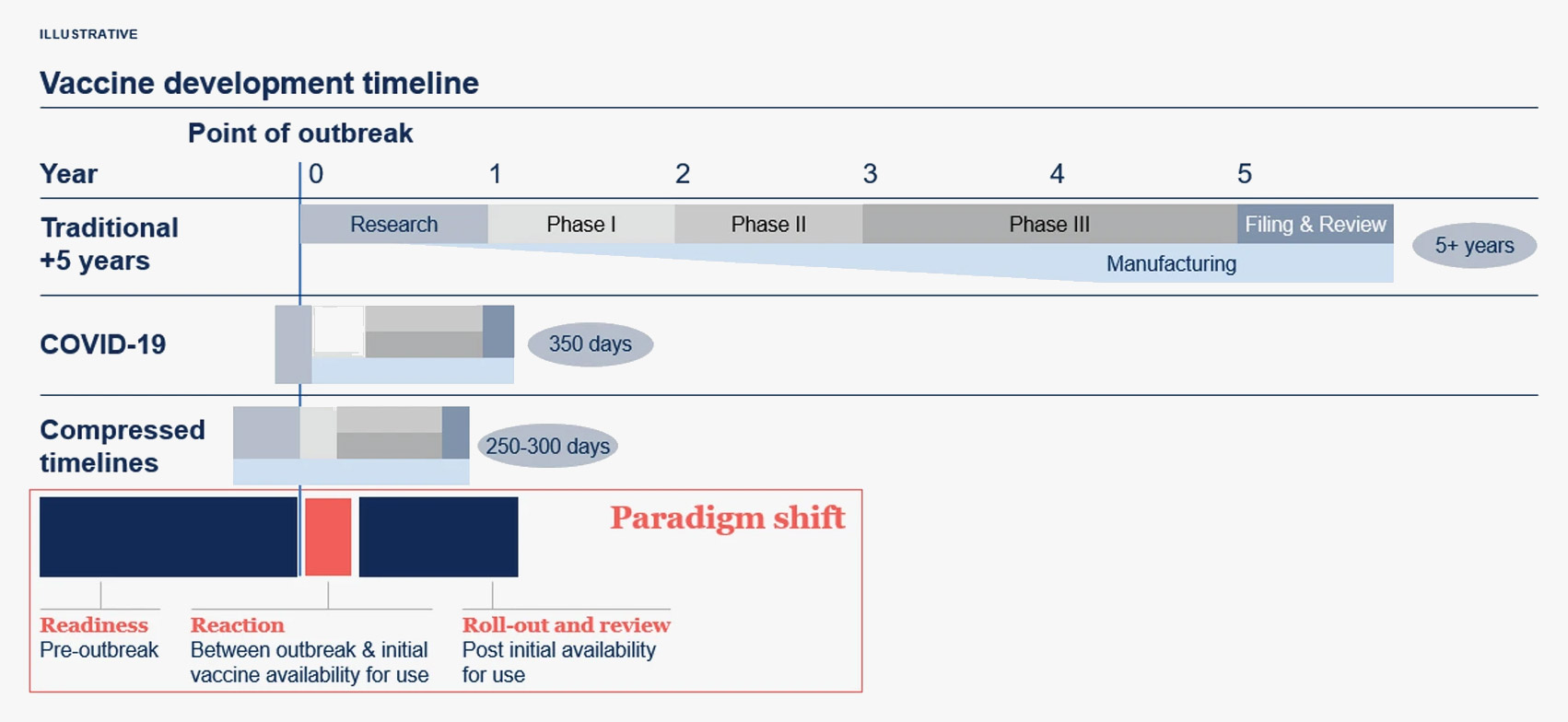
This mode of rapid containment and the accompanying representations of disease that CEPI advances are inextricable from a faith in market mechanisms as the right way to understand and redress inequity. With platform modularity, CEPI aims to eliminate global distribution problems—to address differences and challenges across space through changes in time. It attempts to guarantee access for anyone who needs a vaccine in the event of an emerging pandemic by deploying vaccines and containing the disease before demand outstrips supply. Doing so, in CEPI’s view, requires increasing and incentivizing any efforts to develop vaccine candidates—in part through the Disease X-oriented consolidation of epidemic threats.
The World as Laboratory
CEPI is not alone in seeing promise in vaccine platforms. Governments, corporations, and research institutions, increasingly on the African continent, view platform modularity as a means to address pathogens long “neglected” by the Global North, and to control the direction of vaccine research. The wish for greater choice has driven a wave of investment in designing mRNA vaccines locally, building biomanufacturing facilities, and training biotechnology workers.
Moderna, BioNTech, and Oxford have also expanded the use of their respective vaccine platforms in tandem with such initiatives, but attempts to create markets that drive rapid technology development have proven far from seamless. According to one official from the Africa Centres for Disease Control and Prevention, Moderna simply “changed their mind” about plans to build an mRNA manufacturing facility in Kenya. Moderna, for its part, described the decision as a “pause” while the company “determines future demand.”4 Meanwhile, the century-old Institut Pasteur de Dakar in Senegal negotiated a deal with BioNTech to license the German company’s mRNA platform and produce vaccines for pathogens in Africa, only for the deal to fall apart over disagreements about who would own the resulting vaccines.
These frictions suggest that representing the world’s peoples primarily as vaccine producers or vaccine consumers elides crucial questions about power and politics, as well as the concerns people have about their own lives. Vaccine platform R&D both bridges and leverages the differences between pathogens, people, and places in order to accelerate science, while demanding that these disparate parts abide by a single framework to understand and manage disease—one “time zone” for all. However, speed can obscure other ways to evaluate the virtues of a vaccine, and societies may “keep time” in different ways.
CEPI’s platform of choice is mRNA because it seemingly promises market “success” through the shortest formulation and manufacturing times, compared to other vaccine development approaches. Yet mRNA requires ultra-cold storage capacity that remains scarce in many parts of the world that CEPI aims to reach. The rapid rollout of COVID-19 mRNA vaccines also assumed a negative valence against other long-standing delays in global health. As one leader of a civil society organization in Senegal told me, low- and middle-income countries “have too many emergencies to solve … . Everything is an emergency in a low-income country.” A Senegalese scientist echoed these concerns: “When you’re waiting here for ten to fifteen years”—for efforts to address social problems that preceded COVID-19—“then there’s some guy over there in Europe with this—you want to vaccinate me with that? Am I a guinea pig?”
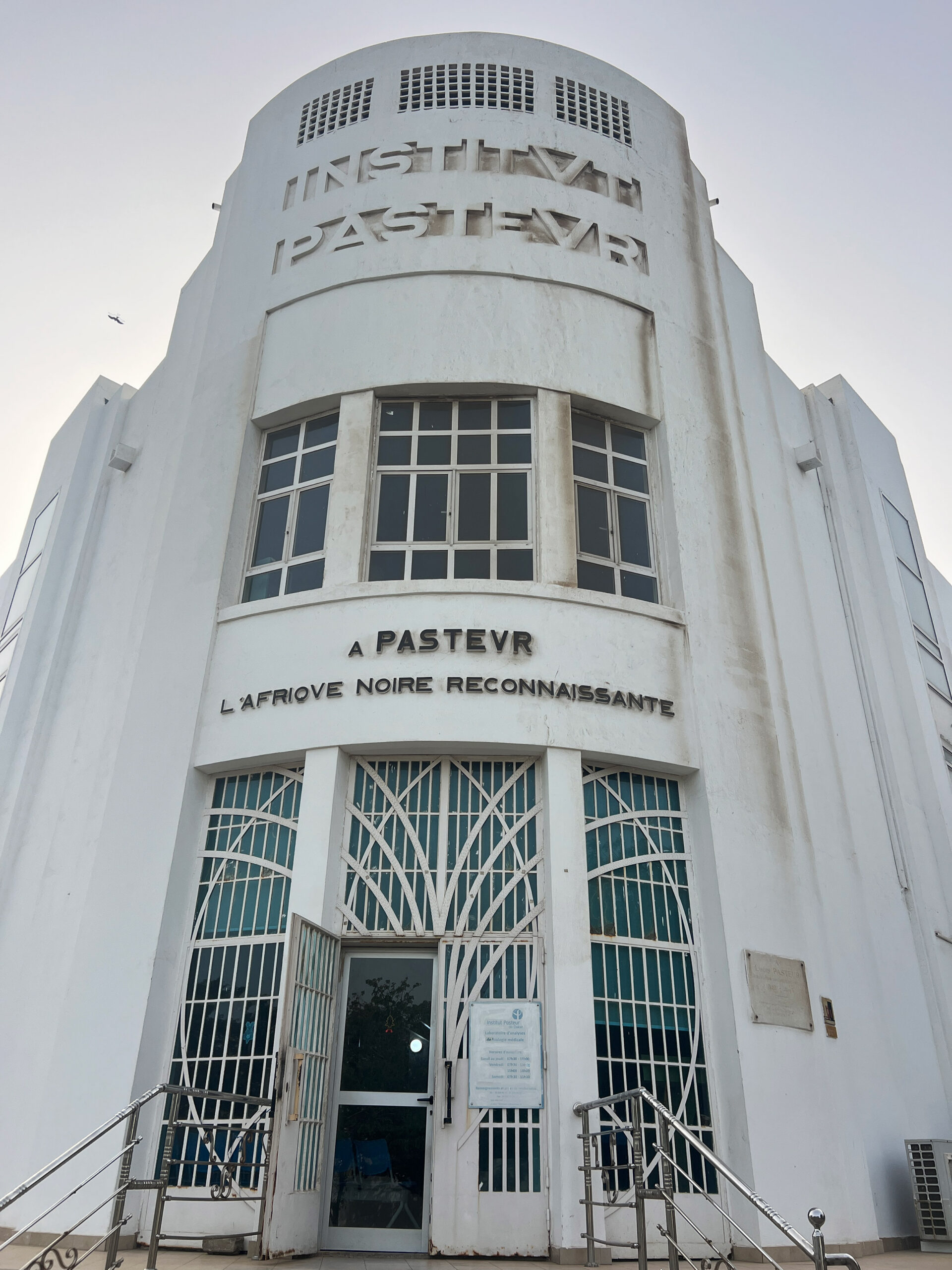
PHOTO BY AISHANI V. AATRESH
Reflecting on these dynamics, one member of the Developing Countries Vaccine Manufacturers Network (a CEPI partner) offered me another take on the limits of speed:
There is a big hype on mRNA. People are just building up the stories that mRNA will become a success story and, you know, transform the whole thing. What happened in COVID? It took six shots of mRNA vaccine to bring results, and that immunity was waning so quickly, disappearing within a few days. So I think we cannot just put all eggs in one basket and say that mRNA is the messiah for everything.
What matters is not the specific number of shots or the duration of immunity, but the fact that such concerns exist. The modularity of mRNA and other vaccine platforms is meant to universalize the problems of emerging infectious diseases and the potential to address them. Yet insofar as the entitlements that people count on and the powers they believe in remain contested, the research and understandings of risk and obligation that platforms advance—however rapidly—do not amount to a shared sense of reality.
Put differently, vaccine platforms represent and address a gap that is at once cognitive, material, moral, and political. Strife around vaccine platforms involves disagreements about the nature of this preparedness gap, and the responsibility to mind it. For these platforms to work, not only their developers but also those at the receiving end must deem a given gap worth minding in the first place. Where platforms encounter obstacles, the path forward may require a step back—to reconsider how the gap should be defined, not only how it should be closed. As a London Underground announcement reminds passengers, architects of preparedness might “stand back from the platform edge.” ✳
- The Nobel Prize Organisation, “Press Release: The Nobel Prize in Physiology or Medicine 2023,” October 2, 2023, https://www.nobelprize.org/prizes/medicine/2023/press-release/. ↩︎
- Alanna Shaikh and Paul Nuki, “Beware ‘Disease X’: The Mystery Killer Keeping Scientists Awake at Night,” Telegraph, March 10, 2018, https://www.telegraph.co.uk/global-health/science-and-disease/beware-disease-x-mystery-killer-keeping-scientists-awake-night/. ↩︎
- Aishani Aatresh, Nicole Lurie, and Richard Hatchett, “Accelerating Vaccine Development: The 100 Days Mission,” in Principles and Practice of Emergency Research Response, ed. Robert A. Sorenson (Springer, 2024), https://doi.org/10.1007/978-3-031-48408-7_16. ↩︎
- Moderna, “Statement on Kenya Manufacturing Facility,” April 11, 2024, https://investors.modernatx.com/statements-perspectives/statement-on-kenya-manufacturing-facility. ↩︎