An Elevated Walk
On making high heels work
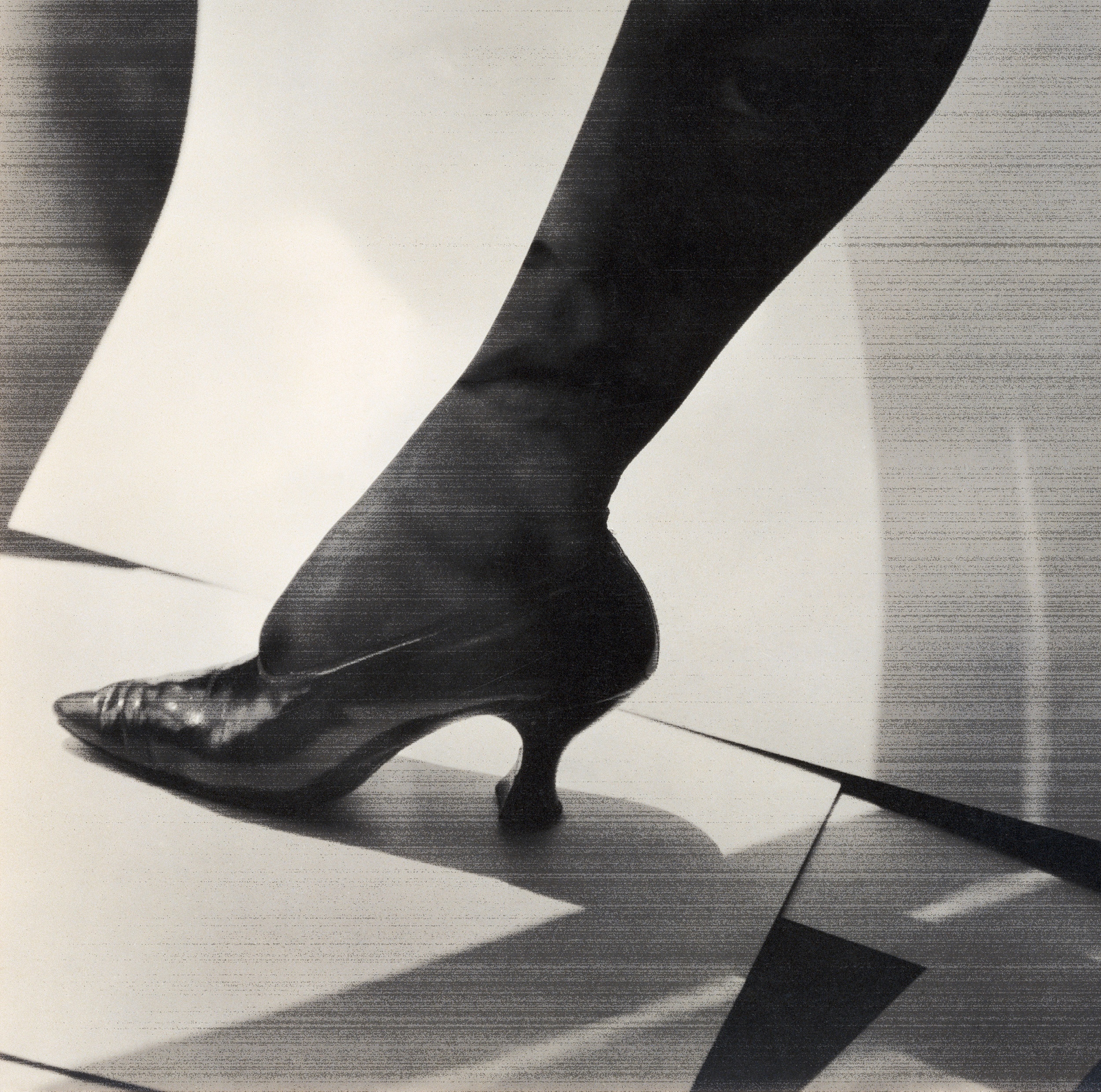
A high-heeled walk can be truly spectacular. A fashion model strutting down the runway, a drag queen doing cartwheels, a businesswoman striding down a crowded, cracked sidewalk. High-heel wearers know that their shoes are not just a visual spectacle but also a deeply corporeal and affective experience, a continual reminder that they are sensate human beings. High heels elevate the wearer to a higher plane. Legs and buttocks reshaped, spine straightened, shoulders back and head held high, the transformation is physical and psychological. At work, high heels can heighten authority; at leisure, they can signal taste, confidence, or readiness for a fun night out. That distinctive gait—poised, deliberate—indicates an embodied presence that is performed step by step.
This is true, of course, only if you’ve mastered the high-heeled walk. But how is that done? Where do you start? What is a good walk and what does it accomplish?
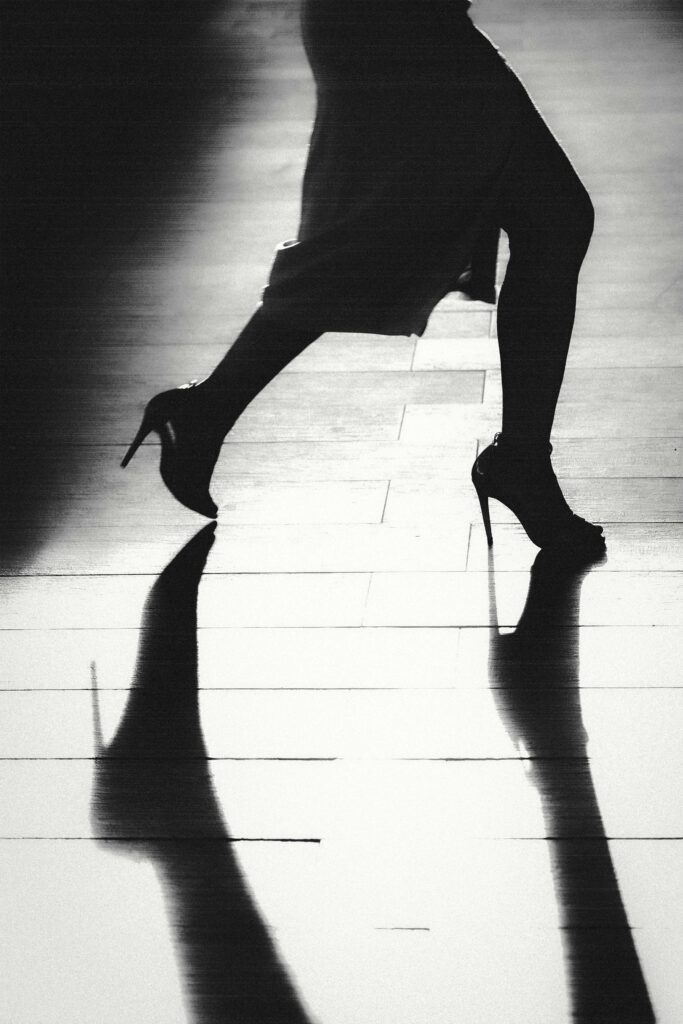
Mastering the high-heeled walk can bring joy and pain.
PHOTO BY RAFAEL LEAO ON UNSPLASH
Let’s start with the obvious. Put on high heels and you feel it immediately—first in your toes and the ball of your foot, then your entire foot. The sensation creeps up through your ankles, knees, and hips before settling in the lower back. Now walk. Not just on smooth floors, but over uneven pavement, sloping sidewalks, and slippery surfaces. Ankles wobble, calves tighten, toes burn, and balance requires constant attention. Even watching someone else struggling in high heels can make the body tense sympathetically. The elegant, upright posture forced on you by the high heels boosts your confidence. Briskly and effortlessly overtaking pedestrians while weaving your way through the city’s crowds can bring pure joy—and attract admiring glances. And, when the night ends, there is the distinct, undeniable pleasure of taking them off.
Apparel research has emphasized designers and their creative genius. Far less attention has been paid to the consumers of their products. While living and conducting research in New York, I sought to understand how high-heel wearers negotiate the sociomateriality of their shoes, their bodies, and the built environment. I began by approaching “catwalk coaches”—often former models or dancers, but also yoga instructors or bodywork therapists—who give high-heel instruction to models and others looking to improve their walk. As time went by, I found many others eager to recount their high-heeled experiences—even to a complete stranger. They opened up their closets, showed me their shoe collections and demonstrated their walks, took me shoe shopping, shared their high-heel hacks, and related deeply personal, sometimes embarrassing, and even intimate memories of wearing high heels.1
High heels come in many styles, heights, and sizes, all bringing distinct pleasures and pains. The quintessential heel is the stiletto: slender, tall, iconic, and, for many, the most demanding to walk in. At the opposite end of the spectrum is the kitten heel, its modest height often derided as a concession to ease and comfort. As this distinction suggests, “high heel” is a slippery term. And, what immobilizes one wearer feels effortless to another. For every individual, some shoes instantly feel right; others never do.
What counts as “high,” then, depends on the individual and the social context. And height, though important, is certainly not the only factor when selecting a shoe. Between the stiletto and the kitten heel lies a wide assortment of options: blocked or chunky heels, platform or wedge heels, boots both high and low. Not to mention all the brands, makes, materials, and colors. The sparkly buckle of a Blahnik. The red sole of a Louboutin. That dependable office staple, the black pump, or the towering height and imposing heft of a platform shoe, or that perennial symbol of summer, the raffia wedge. Men also wear shoes that add stature, though “elevator shoes” are designed to disguise their lift, while Cuban heels or cowboy boots advertise a particular performance of masculinity.
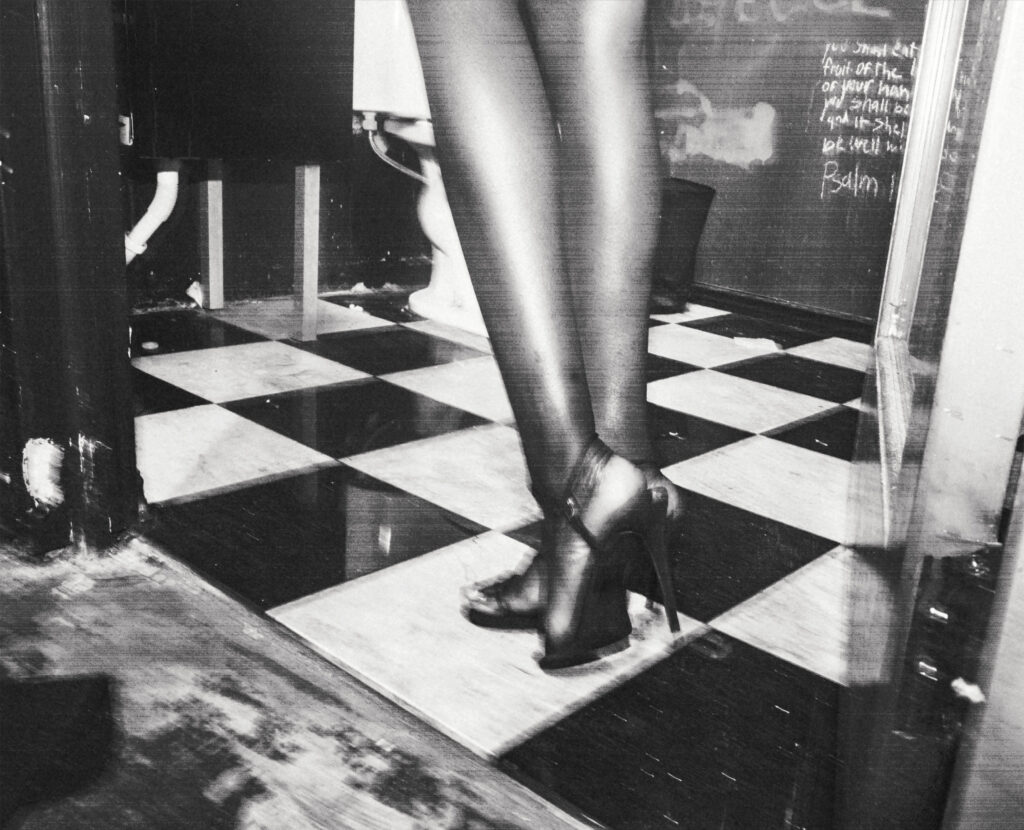
When it comes to heels, choices abound and signal a great deal about the wearer.
PHOTO BY FRANKIE CORDOBA ON UNSPLASH
Each of these has different implications. A felicitous choice enhances appearance and signals financial means, taste, and sartorial know-how. An ill-chosen heel exposes poor judgement—of the occasion, of your outfit, of what others deem appropriate. Success is possible, but failure lurks. Your identity stands—or falls—on your shoes.
High heels do not simply work; they must be made to work. The encounter between a mass-produced shoe and an individual foot is not always a happy one—especially at first. Dedicated wearers therefore employ modification techniques that can be described as “breaking in.” Even as the body shapes the shoe, the shoe also reshapes the body. This mutual reconfiguration—and its frictions—can cause all manner of discomfort, pain, and even lasting damage. Yet we persist until the shoes become our own. A broken-in pair carries both body and memory.
But why wear shoes that make walking difficult, even painful? How does such footwear, long criticized by medical experts and feminists alike, manage to hold its ground? Why do so many women persist in wearing heels, and why do drag queens and trans women often insist on wearing them? Are high heels ridiculous and unhealthy—or do they actually empower and elevate?
To be conventionally feminine means not only buying and loving high heels but knowing when to wear them and, above all, how to move in them.2 Many learn high-heeling early through the visual regimes of fashion and popular culture—the examples set by the likes of Naomi Campbell, Bugs Bunny in drag, and Carrie Bradshaw. Equally formative are grandmothers and mothers, or that aunt, family friend, or teacher who tells you it’s time to start walking like a real woman. Certain life events and transitional moments are expected to be navigated in heels; some workplaces and social occasions require them. Women in positions of power are rarely seen without them. High heels are nothing short of paradoxical: they are as showy, artificial, and spectacular as they are demure, natural, and mundane.
Research on the body and clothing may provide additional insights. Writing in the 1930s, the anthropologist and sociologist Marcel Mauss famously observed that “the body is man’s first and most natural instrument.” Although Mauss did not elaborate on the relationship between bodily techniques and apparel, he did observe that Parisian women had started to walk more like American women because of the nascent film industry. Alert to the influence of new media technologies on embodiment, Mauss was less perceptive when it came to other technologies. Several pages later he observed, “Nor can I understand how women can walk in high heels.”3
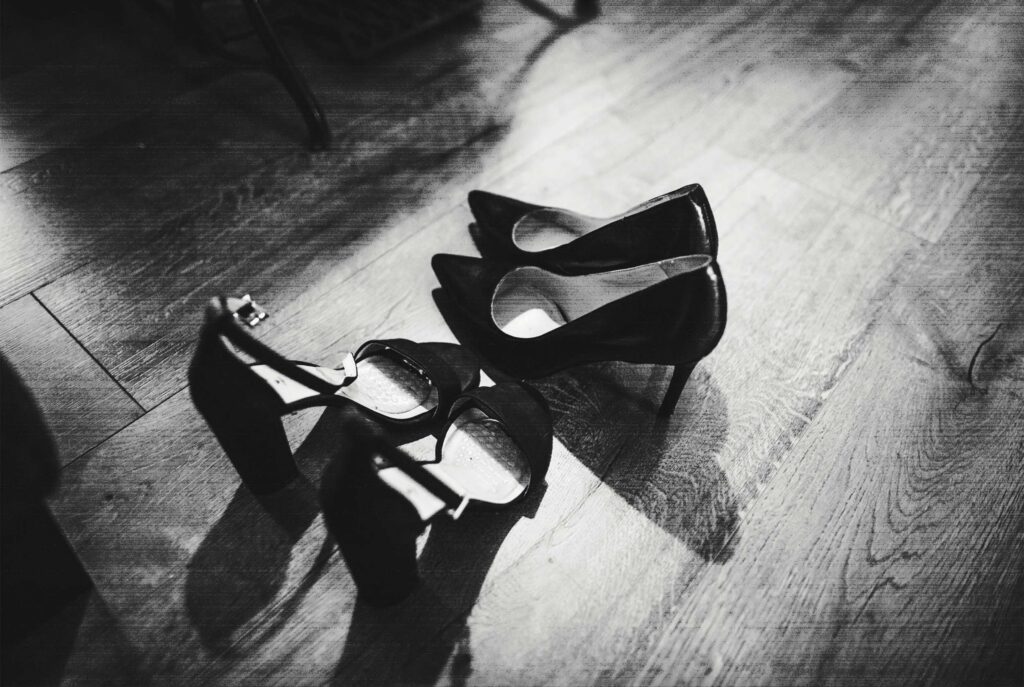
When the night ends taking high heels off is a distinct, undeniable pleasure.
PHOTO BY JESSICA JOHNSTON ON UNSPLASH
In fashion studies, clothing and shoes are no longer treated as mere protection from the elements but as culturally charged, gendered commodities. Fashion and footwear are unapologetically capitalist forms of production and consumption. Why else would we have millions of types of shoes, more than could ever be justified by their utility? Why are women, in particular, expected to own so many shoes and care for them so deeply? Perhaps it’s because high heels can make women feel authoritative yet feminine, powerful yet fashionable, able to cast themselves in different roles and embody different affects merely by changing their shoes. The paradoxes of the high heel mirror the many contradictions of feminine embodiment.
Walking in high heels is no easy feat. It involves obstruction and friction. It demands attention, endurance, willpower, and a certain amount of irrational exuberance. Yet, for many, this is precisely the point. High heels compel corporeality, forcing you to acknowledge weight, balance, surface, vulnerability. They sharpen your awareness of ability and limitation, of posture and perception, of attitude and discipline. They alter not only how one walks but how one is seen, and how one sees oneself. In this way, high heels make palpable the points where body meets world. They lift the body even as they expose its precarity. This is how culture gets under our skin—step by step, for better or worse—becoming an enduring yet ever-changing part of our selves. Objects that intensify embodiment rarely go out of fashion. They endure because they elevate sensation as much as stature. ✳
- Chris Hesselbein, “Walking the Catwalk: From Dressed Body to Dressed Embodiment,” Fashion Theory 25, no. 3 (2001): 367–393, https://doi.org/10.1080/1362704X.2019.1634412. ↩︎
- Iris M. Young, On Female Body Experience: “Throwing Like a Girl” and Other Essays (Oxford University Press, 2005), https://doi.org/10.1093/0195161920.001.0001. ↩︎
- Marcel Mauss, “Techniques of the Body,” Economy and Society 2, no.1 (1973): 70–88, https://doi.org/10.1080/03085147300000003. ↩︎