Duty-Free Art
The Limn interview with novelist and art critic Ben Eastham
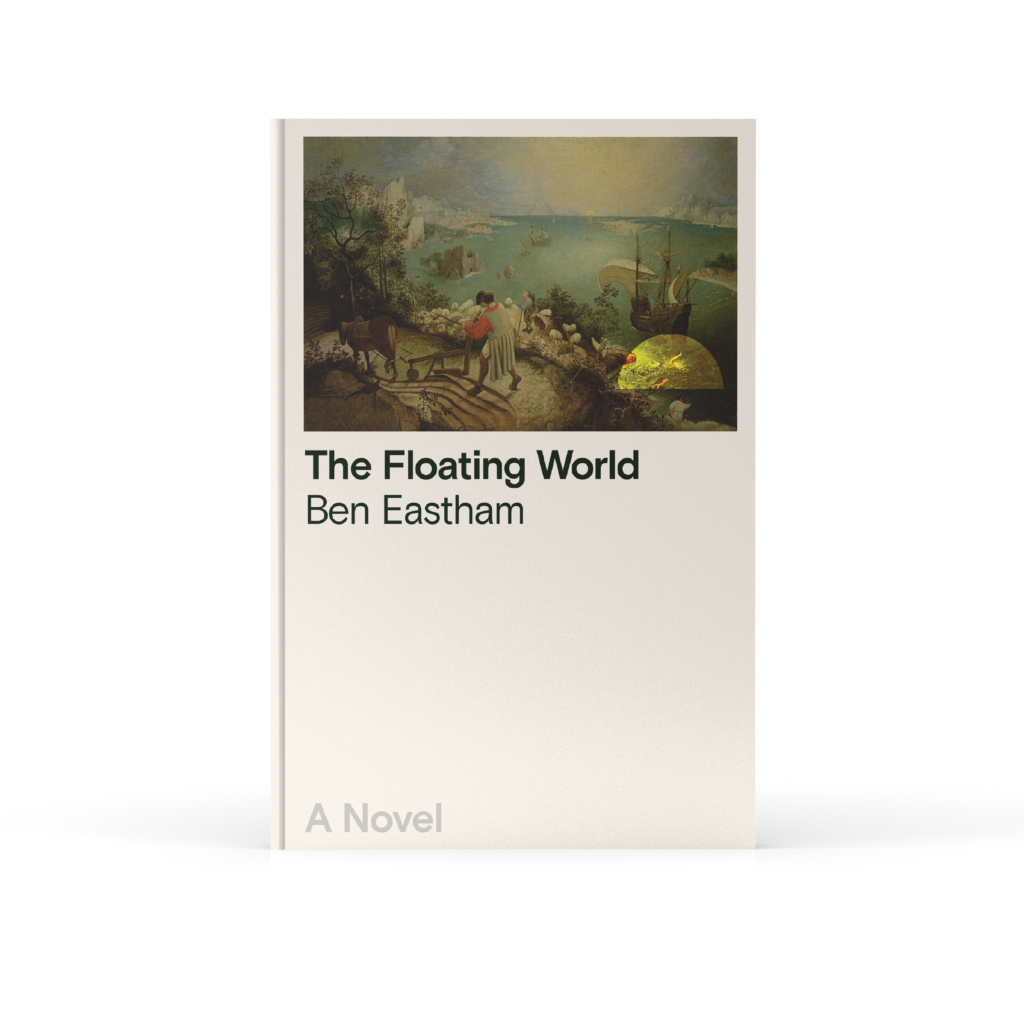
Ben Eastham’s 2026 novel The Floating World is set on an island lair off the coast of Greece. There, a fictional billionaire named Morel is building a luxury bunker where he and his rich cronies plan to ride out “the crash,” a familiar-sounding cascade of political, economic, and environmental crises. The island’s history is a catalog of offshore activities: at various points, it has been a site for mineral extraction, a labor camp, a secret political prison, a utopian community, and a waypoint for migrating refugees. In its iteration as the Floating World, it is a luxury housing development, a tax shelter, and what the delusional billionaire hopes will be the civilizational equivalent of a seed vault.
The book’s narrator is an art critic in a fog of grief. He is hired to assist a celebrity artist commissioned to create the island’s signature amenity: a site-specific art installation that “served to signify the Floating World’s membership of that globalized, mobile, free-market economy of which contemporary art was the cultural expression, like a Balkan city on the fringes of the Roman Empire building a temple to Augustus.”
The Floating World is Ben Eastham’s first novel; he is also editor-in-chief of e-flux Criticism, art critic for The Guardian, and author of nonfiction books such as The Imaginary Museum. Limn sat down with Eastham to talk about art, criticism, and the versatility of the literary island.1
Jamie Jones What is it like to write fiction after working in criticism?
Ben Eastham Difficult! I had ideas that didn’t fit any of the forms in which I normally write, and I’ve always loved the novel as this capacious literary format, which can accommodate different modes and styles. I could attribute ideas and feelings to characters, and create a world with its own rules and principles. It took me to deeper and murkier waters than I had anticipated. In some ways, that was liberating and exciting; in others, terrifying and dispiriting. I don’t think the book I’ve written is the book I expected to write.
Gökçe Günel What were some of your main inspirations in writing the book?
Ben I started writing during the COVID-19 lockdowns, when I was living in Athens. Someone I was very close to had died a few years prior, and I was trying to process my relationship to their death, and to the situation around me. I was interested in utopian and escapist ideas, and in the possibility, or impossibility, of creating worlds insulated from both personal grief and from the crises we’ve brought upon ourselves.
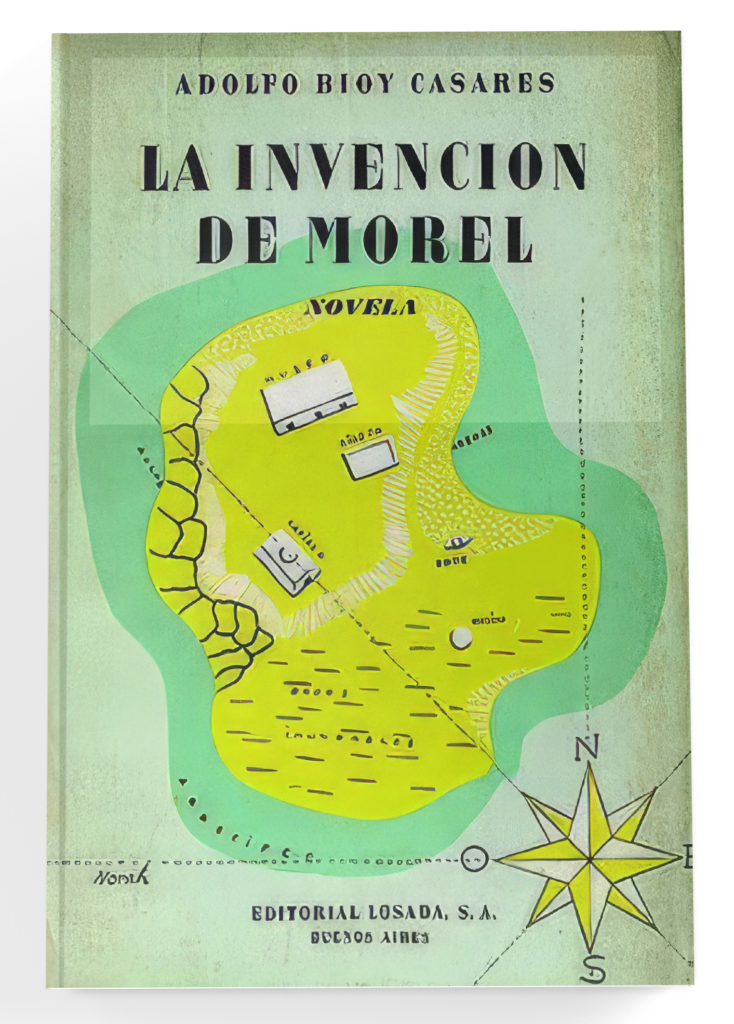
I was reading a few things that seemed to overlap: Anna Tsing, in terms of living amongst the ruins and in a haunted age; Karen Barad’s model for reality as predicated on “cuts” between what we can and cannot perceive; Elizabeth Povinelli’s blunt insistence that we have to lie in the bed we’ve made rather than wish away the problem. As a critic, I’ve always been influenced by John Berger’s insistence that how we see what we see conditions our political choices. The reference to Adolfo Bioy Casares’s The Invention of Morel in one character’s name is really about the atmosphere of that novel, which is dreamlike, unsettled. Then there’s Mount Analogue by René Daumal, which is a very strange, unfinished, surrealist novel. Another island story about the possibility of self-knowledge.
Jamie What function do you think the island serves in your book?
Ben The island, as a location, has a great literary history as a place outside reality, beyond civilization, where the rules no longer apply. You can trace that lineage from Plato’s Atlantis, through Shakespeare’s The Tempest, right up to the many present books set on islands or archipelagos or anywhere cut off from the world. The literary island is offshore in exactly the same way that the various islands that now serve as tax havens or black sites are offshore.
In the continental imagination, the island is a place of unreality. You can invent your own rules and exist outside of the established systems. This is potentially utopian and liberatory, of course, but also potentially horrifying; think of William Golding’s Lord of the Flies. The freedom of an island gives license to new forms of communal self-organization, but also to the unconstrained exercise of power.
Jamie Could you tell us about art? What are its limits, from your perspective?
“The freedom of an island gives license to new forms of communal self-organization.”
Ben I believe that the ultimate aim of art is to make possible a society in which art, as a form of thinking or making which is distinct from everyday life, no longer exists. I think T.J. Clark wrote that, after the revolution, we should burn down the museums—they will no longer be necessary. It’s a rhetorical way of making the point that the production of art should ideally not be separate from how people live in the day-to-day. It should be so integrated into everyone’s existence that it no longer functions as an independent category. It’s not hard to imagine: art as something that we each experience in our domestic and professional environments, that we produce ourselves, rather than going to a museum once every so often to gawk over it.
Of course, the stated ideals of the art world can seem hilariously at odds with the political structures and economic markets by which it operates. This is partly because that world is vast and disconnected. Actual artists have barely anything to do with auction houses selling million-dollar paintings to collectors who then store them in tax-free zones as speculative investments.
There are still people working within museums who are sincerely committed to these principles. But they’re under pressure. There’s less pretense now that art—in the sense of an asset, an investment, a marker of status—is a province of the enormously wealthy. Take for example the enormous new 800-million-dollar extension to LACMA [the Los Angeles County Museum of Art], called the David Geffen Galleries. It’s pitched as a lifestyle playground for the rich, and costs 60 dollars for a single adult to access, including the ticket and parking fees.
But given that we’re speaking about “offshore,” perhaps the most perfect expression of the transformation of art into an asset class is the storage of paintings and sculptures in free ports. Take Geneva Freeport, for example, which is estimated to contain about 100 billion US dollars’ worth of art that is unlikely ever to be seen by the public. The works within it are traded without ever leaving its confines, because that would incur tax. The facility contains exhibition spaces; if you want to buy a Magritte, you can go there, see it hung in a dedicated gallery, buy it, and then move it to your storage facility in the same complex without it ever seeing the light of day. Art exists completely removed from the world in these perfectly insulated spaces and serves no purpose other than being a convenient vessel for financial speculation.
The Floating World scenes in Ireland are set in the west of the country, where my family lives. The nearest airport is at Shannon, which was the first duty-free zone in the world and, as such, the precursor for Geneva’s high-security, tax-exempt warehouse system for luxury asset hoarding. During the extraordinary rendition program, the US military flew captives through Shannon on their way to the black sites where they would be tortured. All of this was on my mind, even though it won’t show on the surface of the book.
May Ee Wong Art is insular in this sense, but many also use it to build geopolitical connections.
Ben Yes, that’s true. I do a lot of work in South Korea, which invests heavily in its contemporary art, to the extent that Korean artists are now well represented worldwide, at major institutions from New York to London or Dubai. This is because art is understood to be an instrument of cultural soft power. There’s a genuine sense that participating in the globalized practice of contemporary art is a way of staking a claim to belong to an international cultural network. If you wanted to be part of the Roman Empire, you built a temple to Augustus. If you wanted to be part of this globalized network of free circulation of money and ideas, then you would build a contemporary art center.
But again, this can be for show. I remember going to Istanbul in 2017 for the Biennial. There were tanks on the streets, and Erdoğan had just instituted the latest in a series of repressions of free speech. So I was surprised to find that the exhibition, and the artworks contained within it, were explicit in their anti-totalitarian statements and pro-democracy sentiments. It was pointed out to me that this was tolerated because the kind of people who would visit the exhibition would, almost by definition, be foreigners or liberal residents of the Turkish metropolis. The show would not be visited by Erdoğan’s conservative supporters from outside the capital, so would neither inflame anyone nor change anyone’s minds. It’s an example of how certain cultural events can give the illusion of freedom because they operate within a very narrow bubble.
Gökçe What do you want the takeaway of the novel to be?
Ben At the beginning of the book, the narrator is trying to rebuild his world after it has collapsed. I wanted to use the novel as an opportunity to explore what happens when the world around us falls apart, to create a scenario in which different possibilities might play out. As it happens, the novel took turns that I didn’t expect. I think it’s up to the reader to decide whether its conclusions are hopeful or otherwise. There’s ambivalence, certainly. But there is no truth without ambivalence and uncertainty. That’s one possible takeaway. ◆
- This interview comprises edited excerpts from our conversation on June 12, 2026. ↩︎