Energiø
Future-Proofing the North Sea
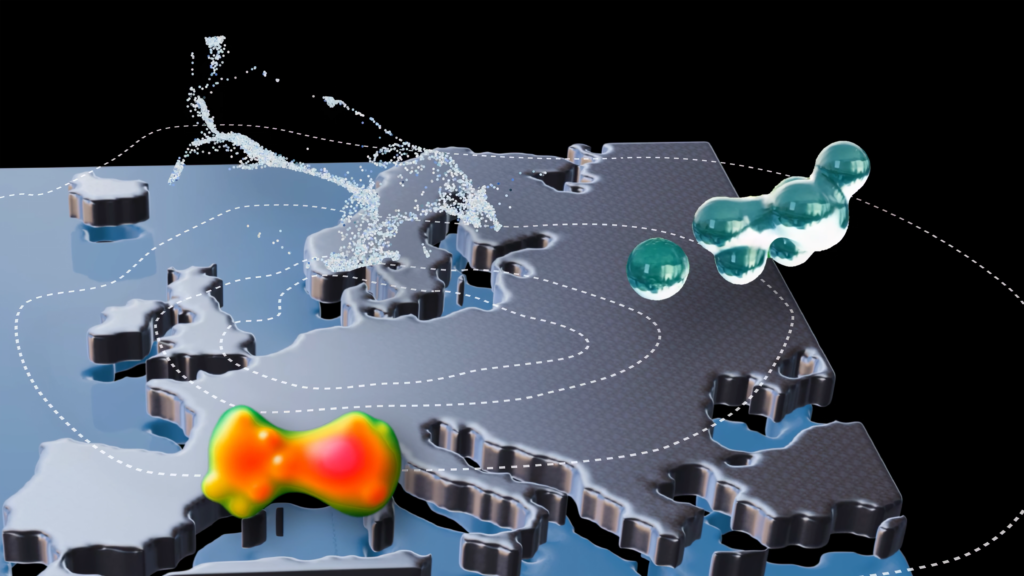
The thirteen-minute film energiø examines current proposals to construct energy islands in Europe. These large-scale offshore infrastructures are designed to aggregate electricity from dispersed wind farms, convert it into green hydrogen via electrolysis, and redistribute it across neighboring European states. At the intersection of climate crisis governance, geopolitical realignment, and techno-economic optimism, energy islands territorialize offshore space in order to boost renewable energy production while strategically maintaining energy sovereignty.
Since the onset of the war in Ukraine, European governments have accelerated such projects in the North Sea and the Baltic Sea, framing them as sustainable futures and instruments of energy security. In response, energiø considers these developments within a broader landscape of infrastructural speculation and libertarian imaginaries of breaking free from fixed territorial, political, and regulatory constraints. Drawing on real-world design proposals, the film appropriates the salvation aesthetics of energy island promotional campaigns utilizing Blender, a software typically used to create glossy architectural renderings and animations. Images like these do more than just represent speculative infrastructures—they actively participate in producing their plausibility and authority. Through critical montage, energiø thus reflects on shifting energy geographies, the alliances and power relations that bring them into being, and the role of images and design in shaping them.
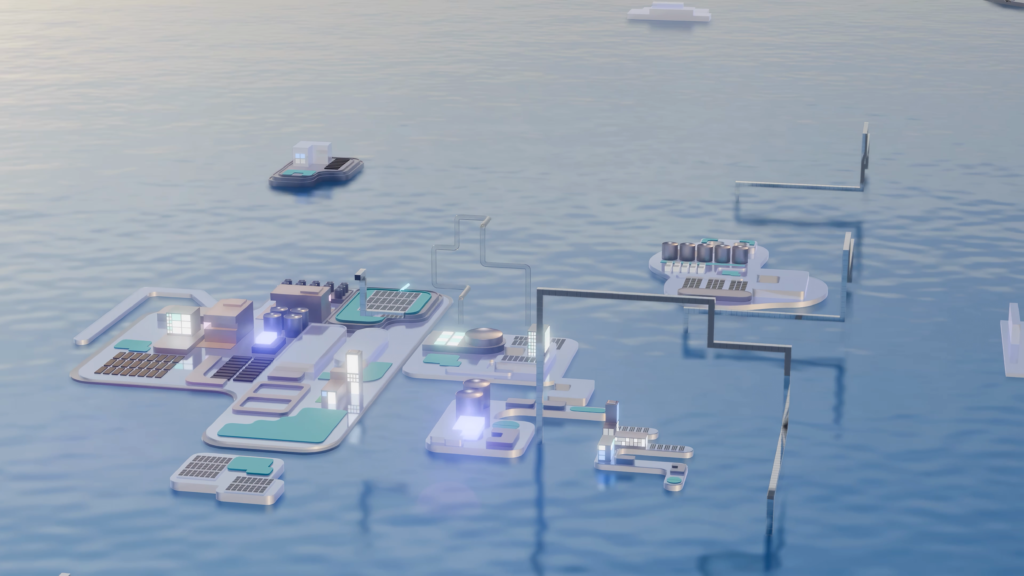
In Central Europe, where sun and wind are limited and inconsistent, building renewable energy systems presents a substantial challenge. The Russian invasion of Ukraine in February 2022 exacerbated these difficulties and starkly exposed the vulnerabilities of Europe’s energy dependency. The Esbjerg Declaration of the same year marked a decisive shift in energy policy by framing the North Sea as the “Green Power Plant of Europe.” Signed by the heads of government of Denmark, Germany, Belgium, and the Netherlands, the declaration highlighted the “untapped potential” of the North Sea, and it advanced a vision of interconnected offshore hubs and islands that would enable energy production under cross-border governance.
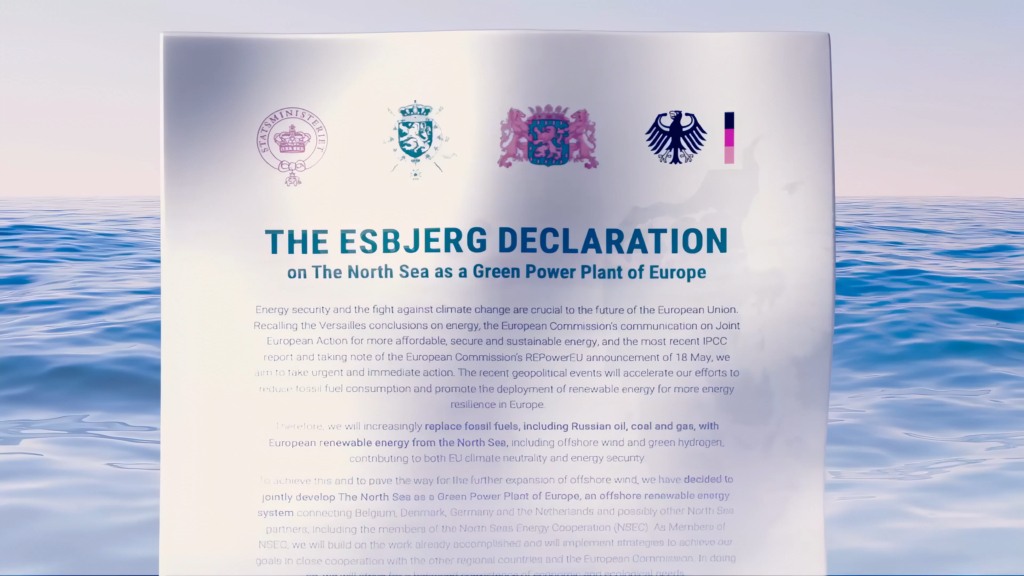
Two years earlier, a consortium of Danish investors including PensionDanmark, Denmark’s own pension fund company, had proposed the energy island as a groundbreaking solution to accelerate Europe’s energy transition. Before the feasibility study had even started, highly polished promotional videos, renderings, and even an interactive 3D model circulated in the press, presenting the energy island as not only functional and futuristic but also design-forward.
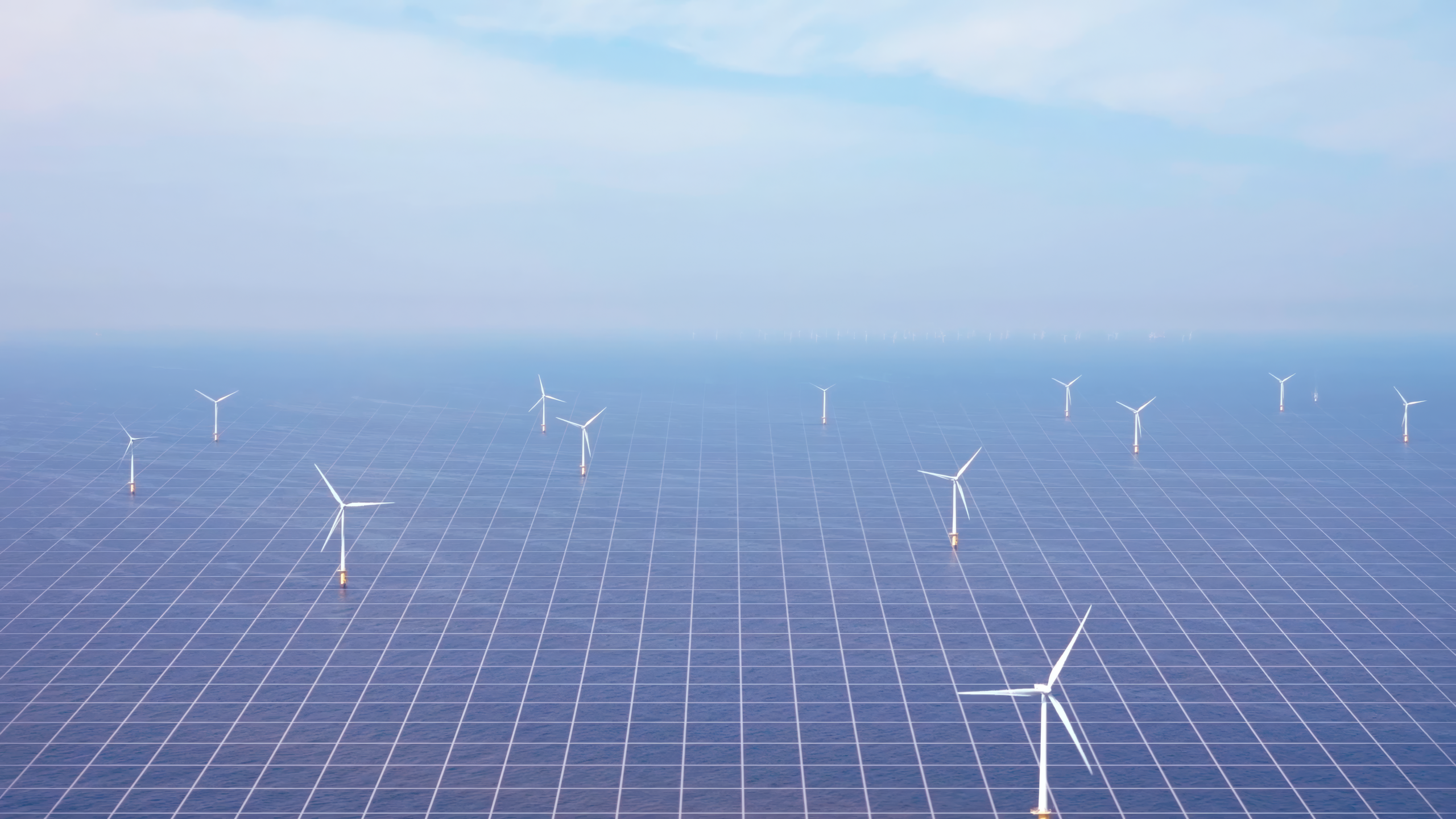
Leveraging the techno-solutionist appeal of this material, energiø references speculative architecture and the platform economy, both of which are significant to the energy island aesthetic. Technical grids, bathymetric scans, and metallic color palettes render the ocean as an infrastructural space.
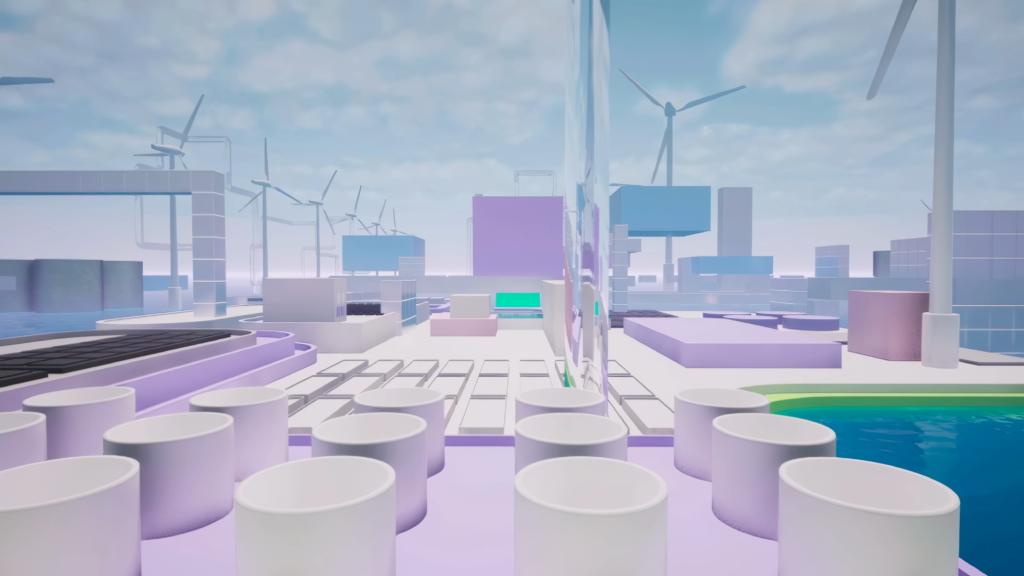
As yet, energy islands exist only on the drawing board, imagined and communicated through media such as policy and tender documents, maps, seabed scans of possible sites, visualizations of their structures, and presentations of their potential capacities. These documents sell a promise that is detached from these projects’ complex material surroundings and even from what is technologically feasible. But although many industry players assume the energy island will never become a reality, the proposal continues to appeal to governments.
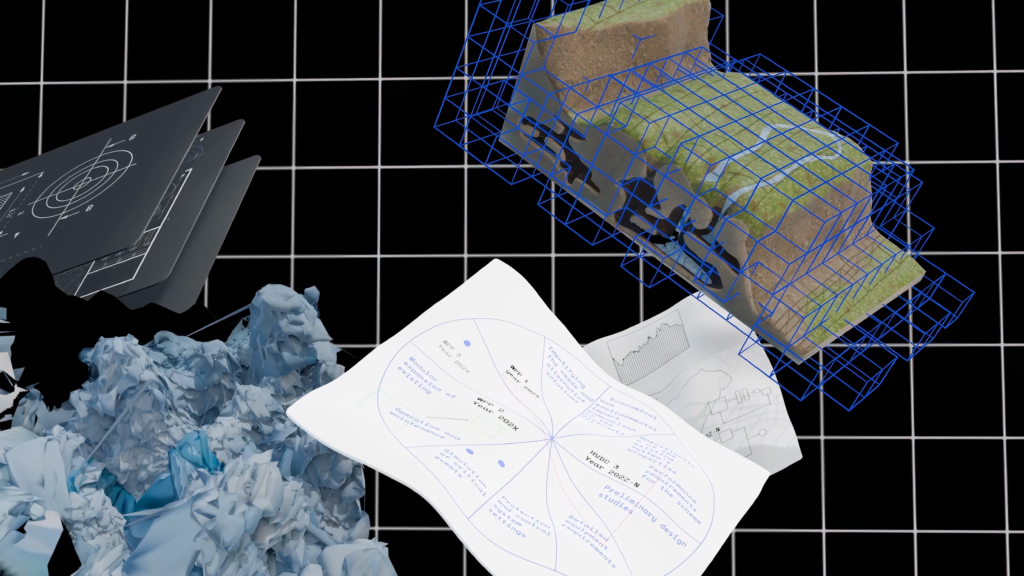
The energy island is intriguing because it offers an all-in-one solution to both the energy crisis and the quest for energy sovereignty. Its spatial configuration is built upon longstanding tropes of the offshore and the island as experimental zones; at the same time, it translates the dispersed and often unruly geographies of offshore renewable energy into a legible territorial form. Proponents of energy islands, such as Copenhagen Infrastructure Partners, which claims to have a series of energy islands in development, extol their cost-effectiveness, their modular design, their efficient use of marine space, and their capacity to integrate emerging technologies as they mature, such as floating solar, wave, and tidal power. As an expandable platform, the energy island promises resilience, flexibility, and future-proof investment.
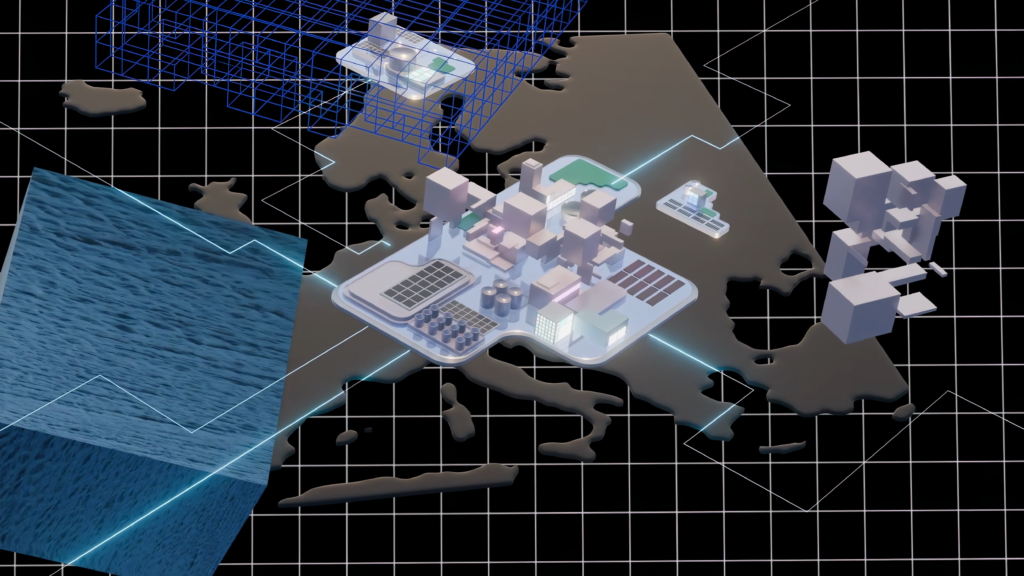
But this promise relies on a convenient reframing of the ocean as a limitless, uninhabited resource frontier awaiting technological conquest. Marketing materials for energy islands frequently depict the sea as a blank slate, an empty, neutral expanse where sleek wind turbines and hydrogen production facilities rise seamlessly from the water, isolated from all forms of life or human activity. This perspective reduces the ocean to a mere backdrop for industrial development, ignoring its complex ecological systems, its cultural significance, and the human and non-human communities that depend on it.
While large-scale artificial energy islands remain speculative, start-ups and national research initiatives are already testing small-scale pilot projects. In the Baltic Sea and off the coasts of the Netherlands and Belgium, existing islands and decommissioned gas platforms are being repurposed to host experimental facilities. These prototypes, strategically positioned within national offshore zones, aim to demonstrate the feasibility of wind, solar, and hydrogen production systems in marine environments, while aligning with national and corporate energy strategies. Success in these trials might accelerate the energy island’s shift from conceptual design to reality.
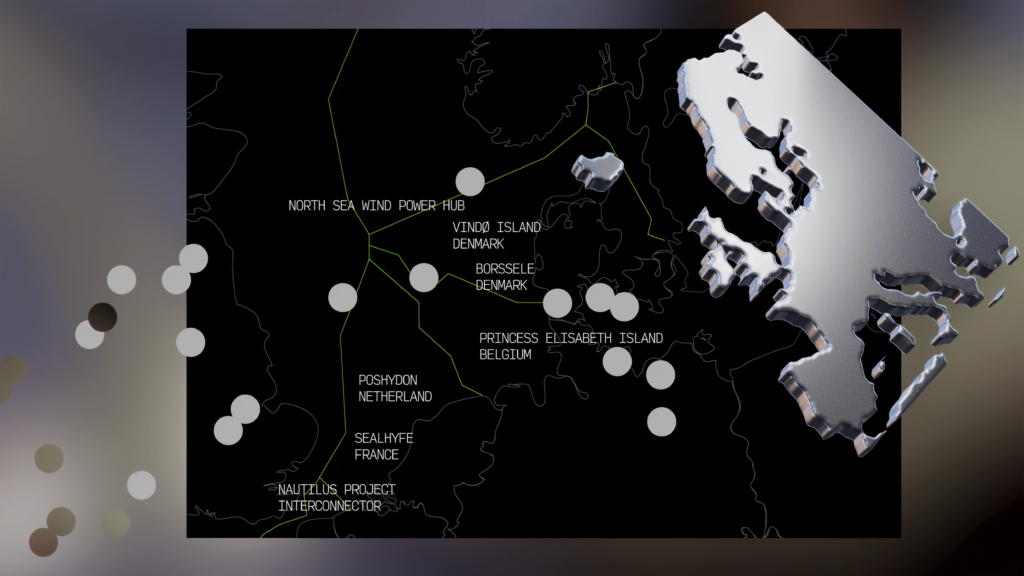
In the Ostend Declaration of 2023, France, Ireland, Luxembourg, Norway, and the UK joined the Esbjerg consortium, reaffirming a shared mission to turn the North Sea into the Green Power Plant of Europe. While the energy island may or may not ever become a reality, its existence as a media object already has significant effects on national agendas, funding streams, and research programs. By revealing how images produce the offshore as an object of design, energiø investigates how the energy island is turned into a politically plausible and governable future.