Mutations at Sea
Artists imagine the synthetic offshore
In 1997, Charles J. Moore discovered the Great Pacific Garbage Patch in the calm waters midway between Hawai‘i and California. Here, far from shore, ocean currents bring together waste from countries around the Pacific rim, where, mostly submerged, it forms a vast mass described as a “plastic soup.”
Meanwhile, in the Mediterranean and Adriatic Seas, locals have noticed increasingly frequent jellyfish blooms, even during cold winter periods previously considered inhospitable to jellyfish. Indeed, worldwide, scientists have confirmed a 42 percent increase in jellyfish caught in fishing nets since the 1950s.1
Both of these phenomena are indicators of a new synthetic offshore: a space that, through unprecedented numbers of both inorganic and organic occupants, is transforming. This mutating seascape that we share with changing ecosystems and emerging life-forms is not yet fully understood, imagined, or critically addressed. New forms of cultural representation and production are required to forge cultural links to this synthetic offshore. The two speculative projects that follow promise to draw us closer to that goal.
Plagptera—A Creature of the Sea
Microplastics penetrate life at the microscopic level and enter the digestive systems of most living creatures along the oceanic food chain, including humans. Ocean water now contains a complex library of suspended “invisibles”—chlorophyll, microplastics, caffeine, acids, and heavy metals, among others. A series of microscopic views of water samples collected at eight locations around the Northern Adriatic, from the Po River delta in Italy to the Rječina River delta in Croatia, revealed microplastics at every site, often interwoven with plant tissue.
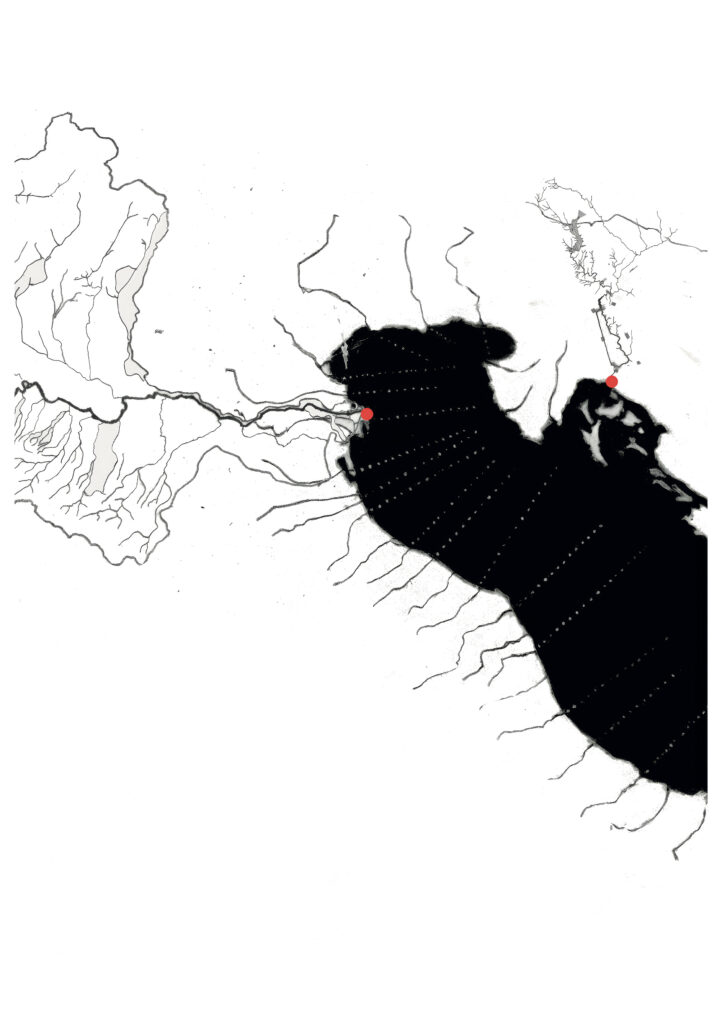
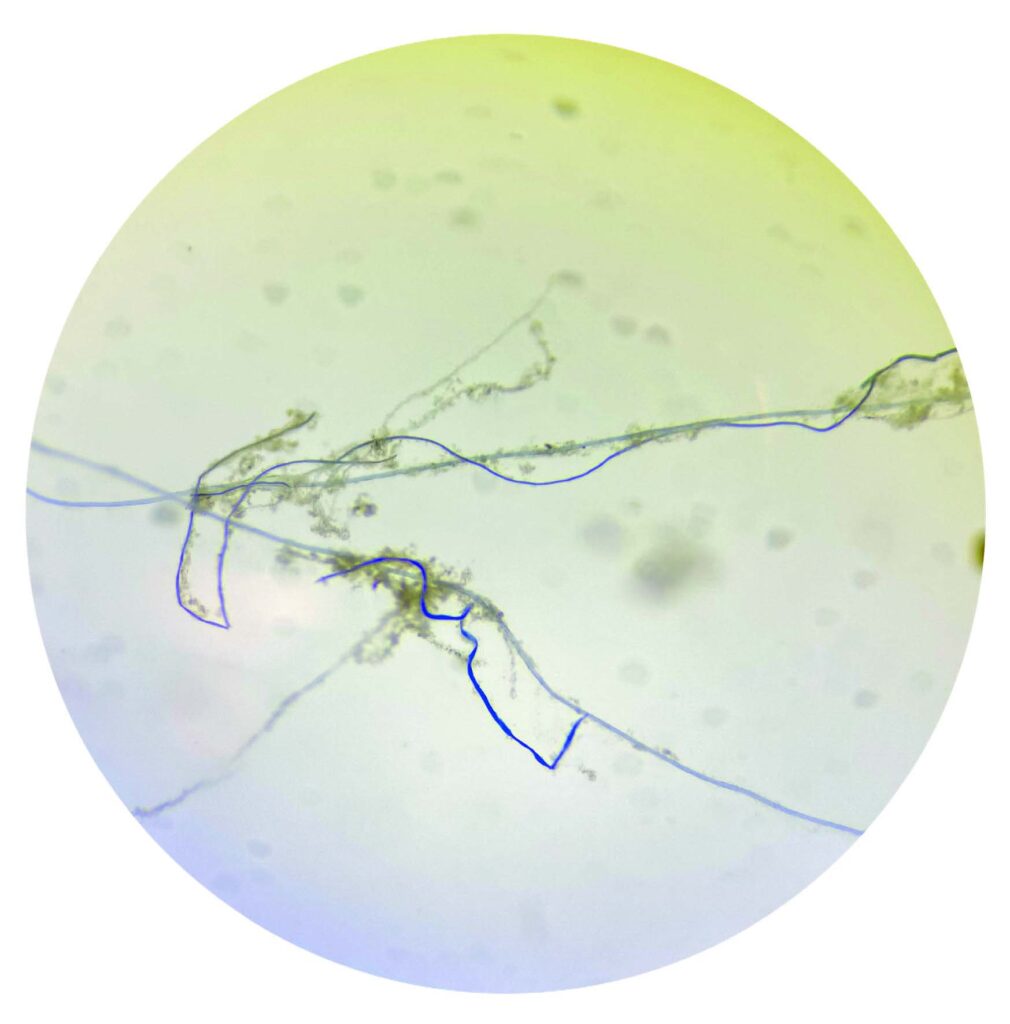
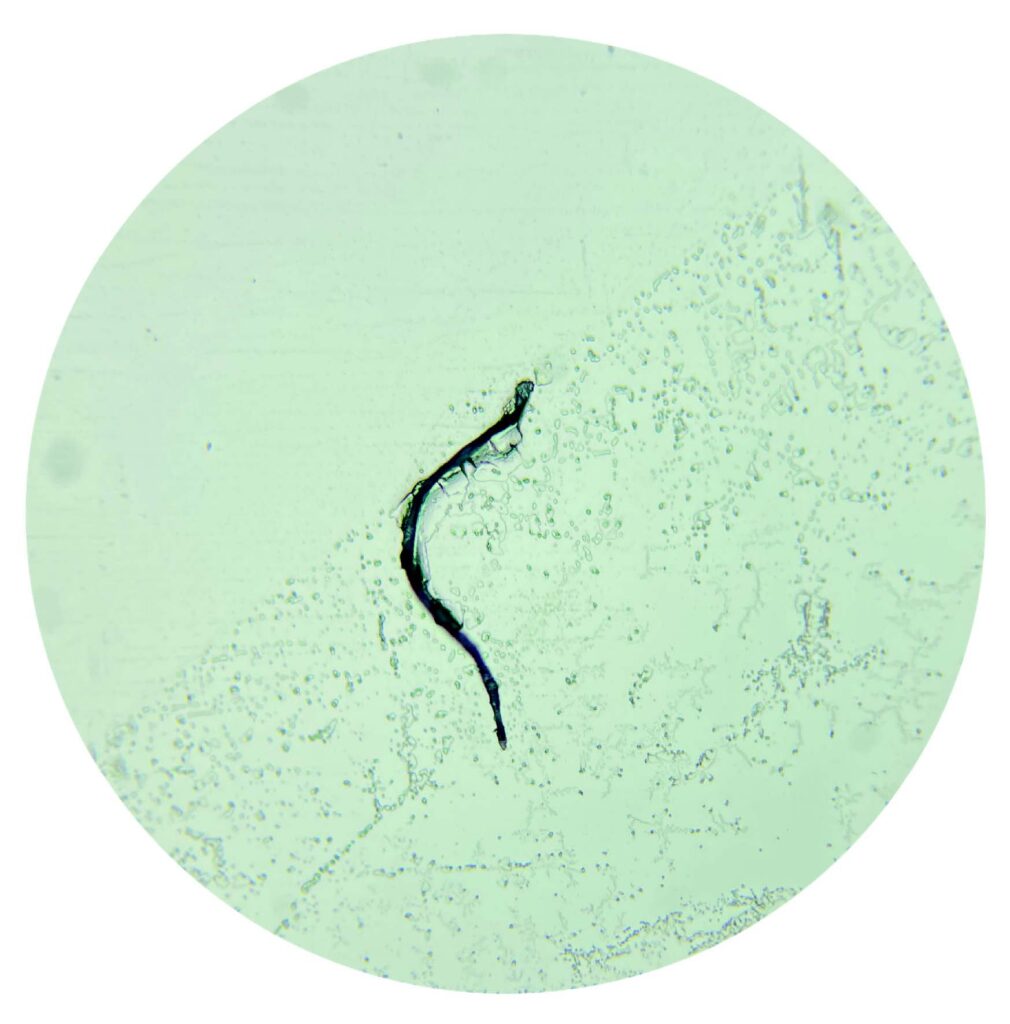
How does one make legible the invisibility of microplastics? How does one demonstrate the effects of plastic in the undersea world and link its accumulating shoreline presence to the currents at the larger scale of marine basins?
Plagptera—A Creature of the Sea is a ten-minute video by Judith Krüger that speculates on species mutation in the North Sea.2 It portrays an undefined moment in the near future when the twelve million tons of plastic that end up in the ocean every year cause the Trichoptera caddisfly to mutate into a fictional protagonist—the Maritimus plagptera, or plastic water fly.
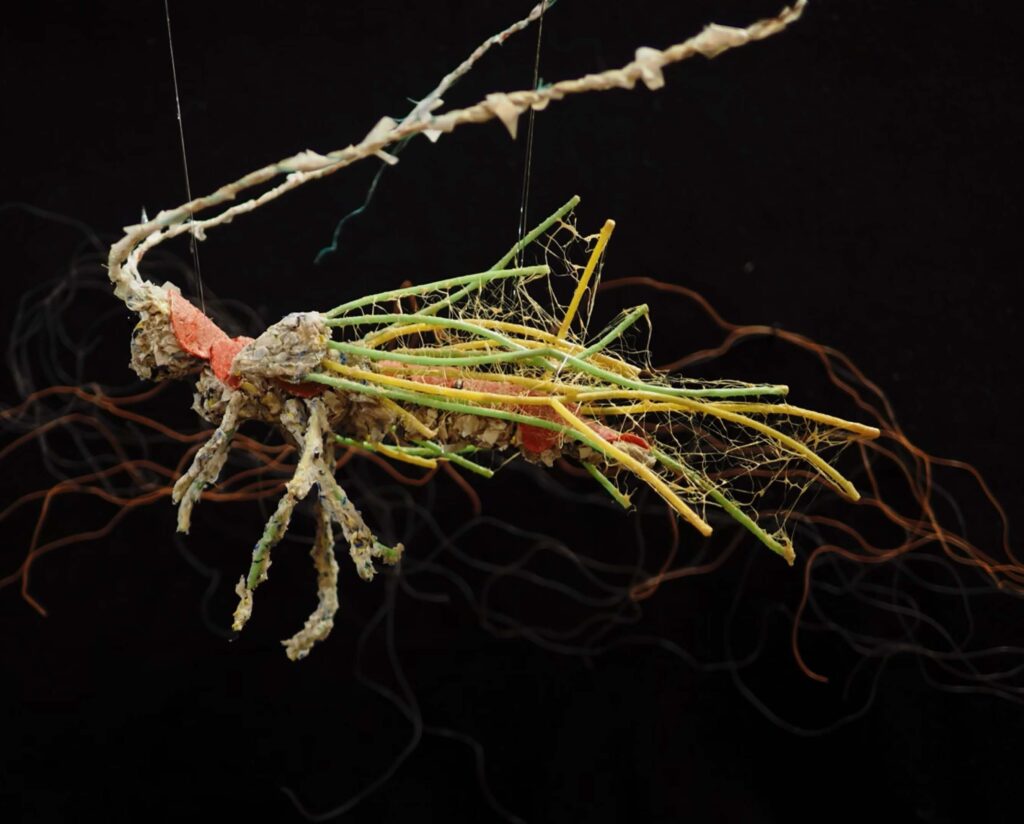
The adult caddisfly is terrestrial, but its larvae are aquatic, and can be found in streams, rivers, lakes, ponds, spring seeps, and temporary waters. The larvae of many species use silk to make protective cases, which are often reinforced with gravel, sand, twigs, chewed-off plant parts, or other debris.
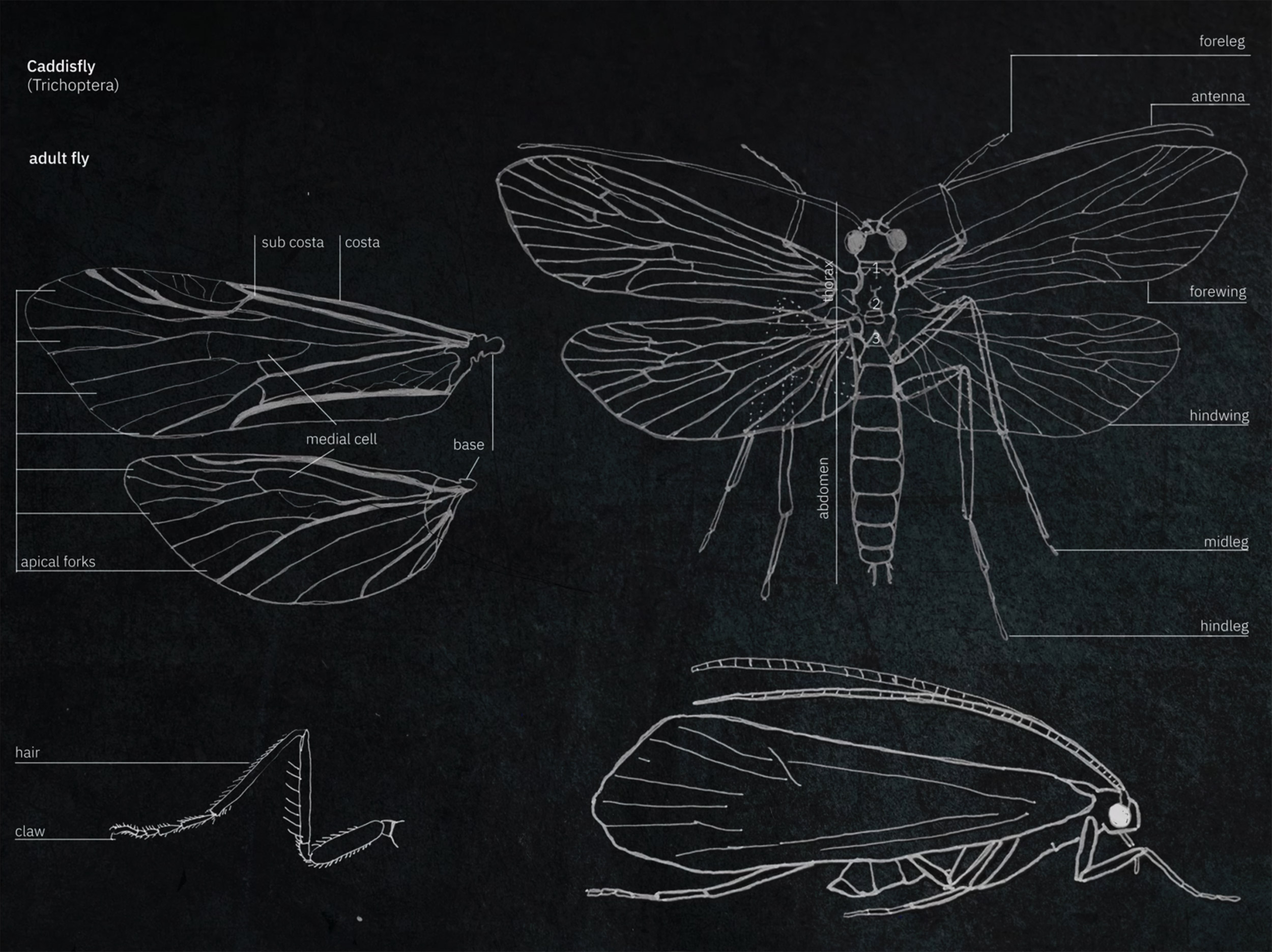
In this project, the caddisfly’s mutated cousin, the Maritimus plagptera, evolves in inland Norway and then migrates toward the North Sea. It has three pairs of legs for swimming, two sensitive antennae for locating plastic, and two pairs of sticky net wings for collecting floating plastic particles. Plastic water flies incorporate microplastics into their hard shells, continuously absorbing and breaking down plastic molecules as they shed their skins several times during their long lifespans.
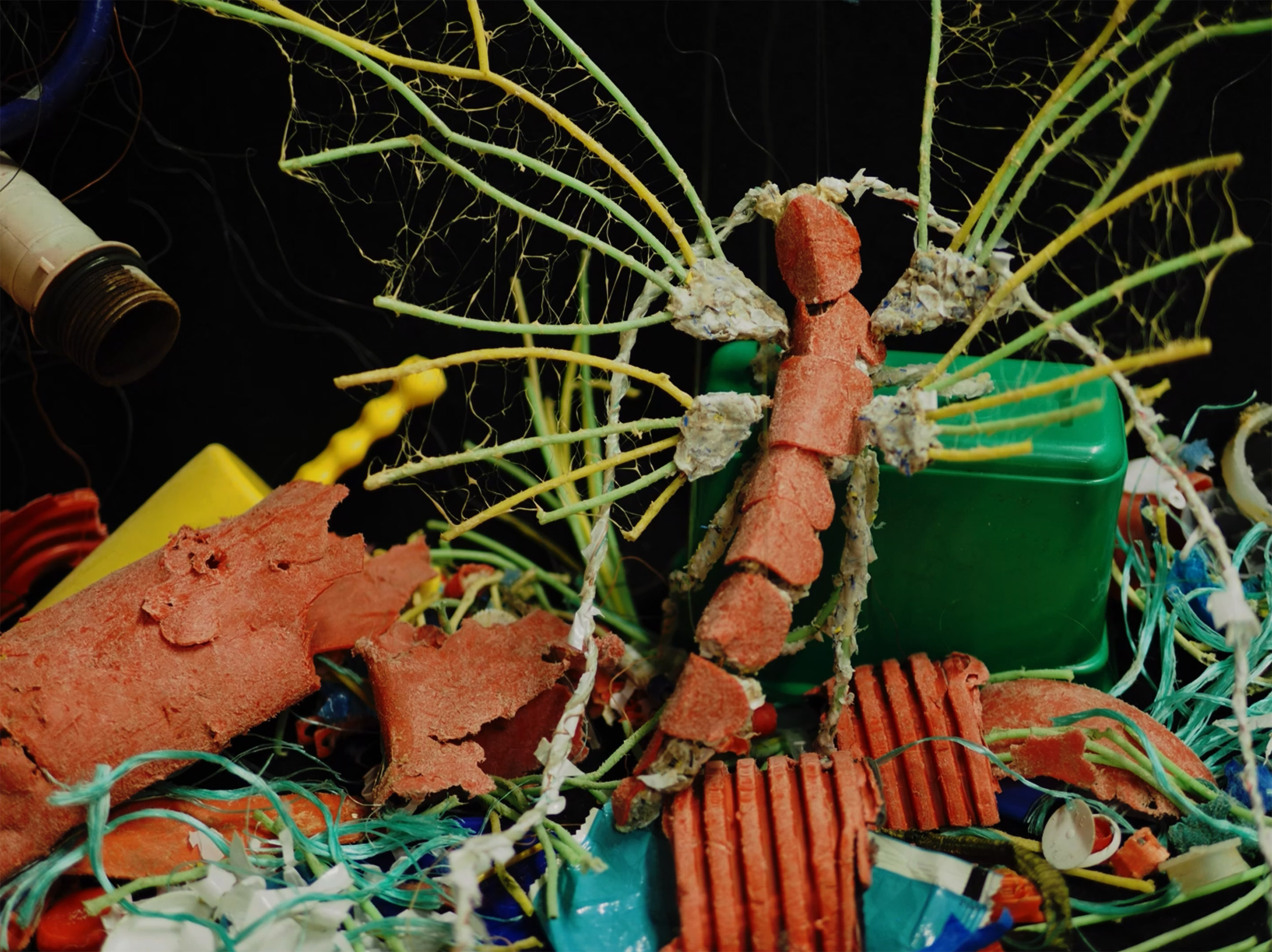
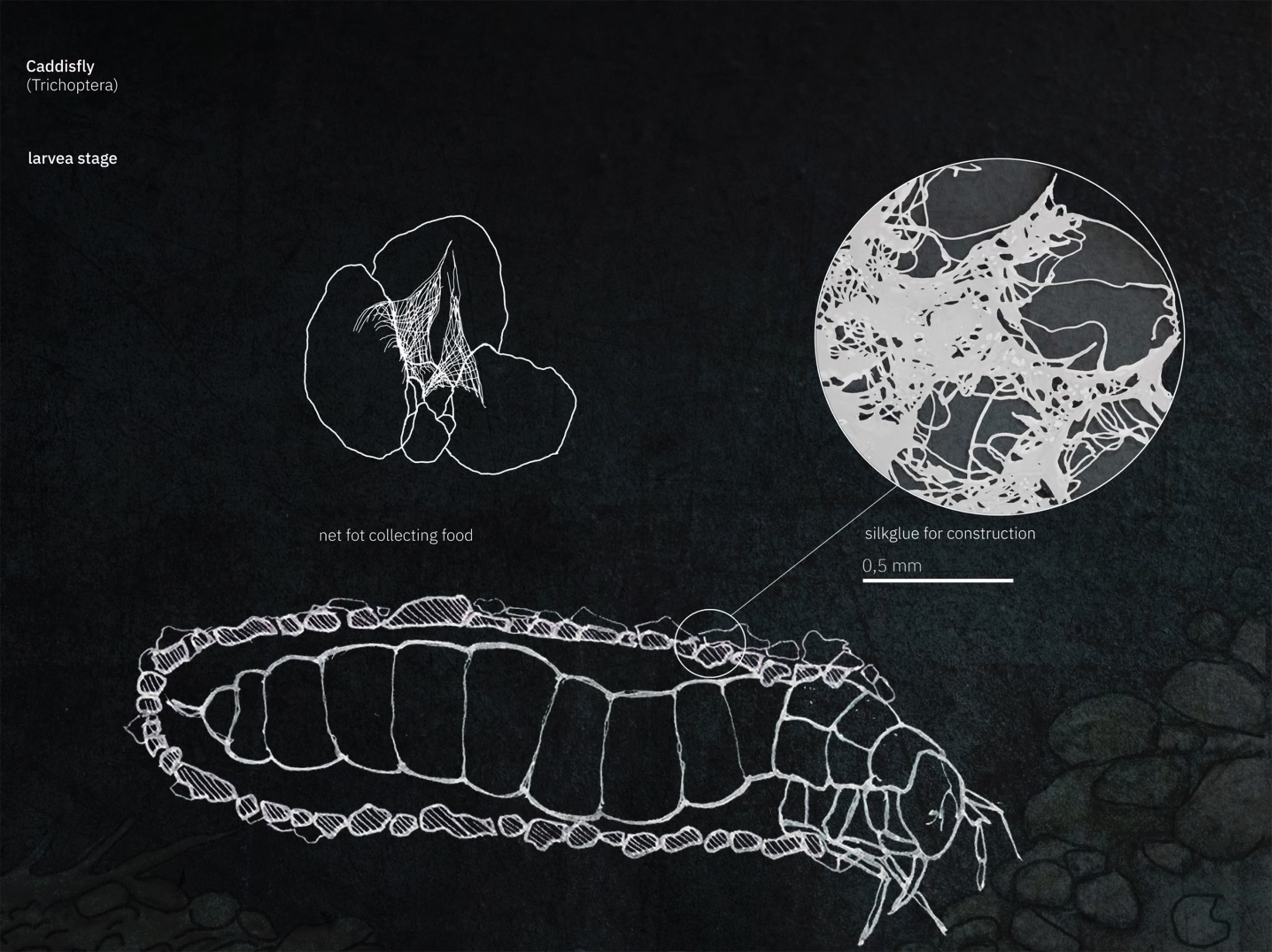
In the style of a David Attenborough nature documentary, the video explains how swarms of plastic flies will operate on a global scale, and it describes in detail the intricate life cycle of the larva, the cocoon, and the adult plastic water fly—illustrated with hand drawings and models made from marine litter. Merging science and narrative, this work shifts away from the meta-narrative of victim and perpetrator, revealing instead the ambiguity of metamorphosis in a fascinating, absorbing, and horrifying way.
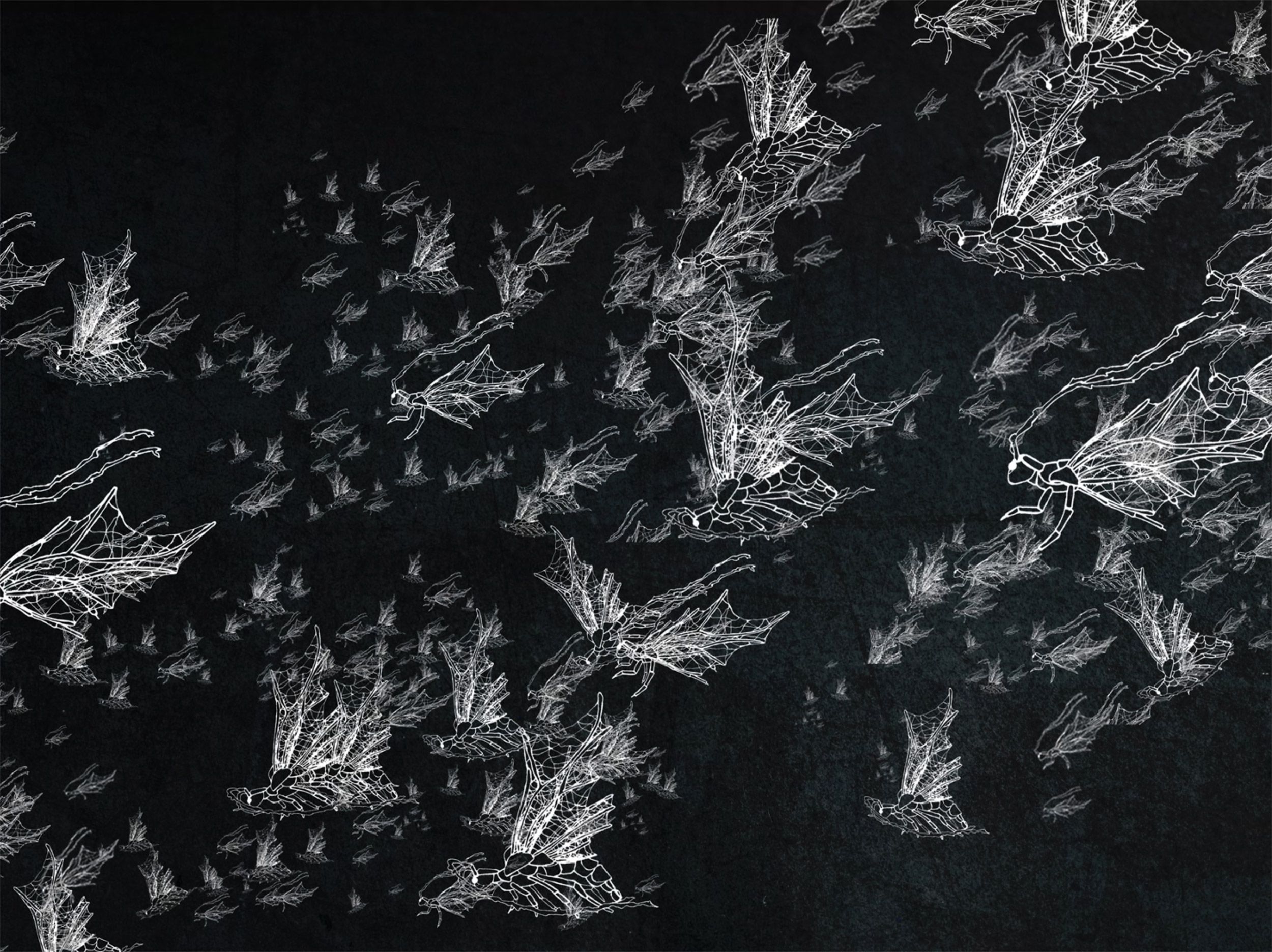
How close to reality is the plagptera? The new synthetic offshore is full of metamorphosis. A 2016 report by the World Economic Forum claimed that “by 2050, on the current track, oceans are expected to contain more plastics than fish (by weight).” Plastic production is expected to double by then, creating new revenue streams for the fossil fuel industry at a time when oil and gas demand for transportation is declining.3
Planet of the Jellyfish
The synthetic offshore is close to home. Destined to drift with the currents, large numbers of jellyfish are appearing ever more frequently in our liminal contact zones, transported there by local maritime conditions.
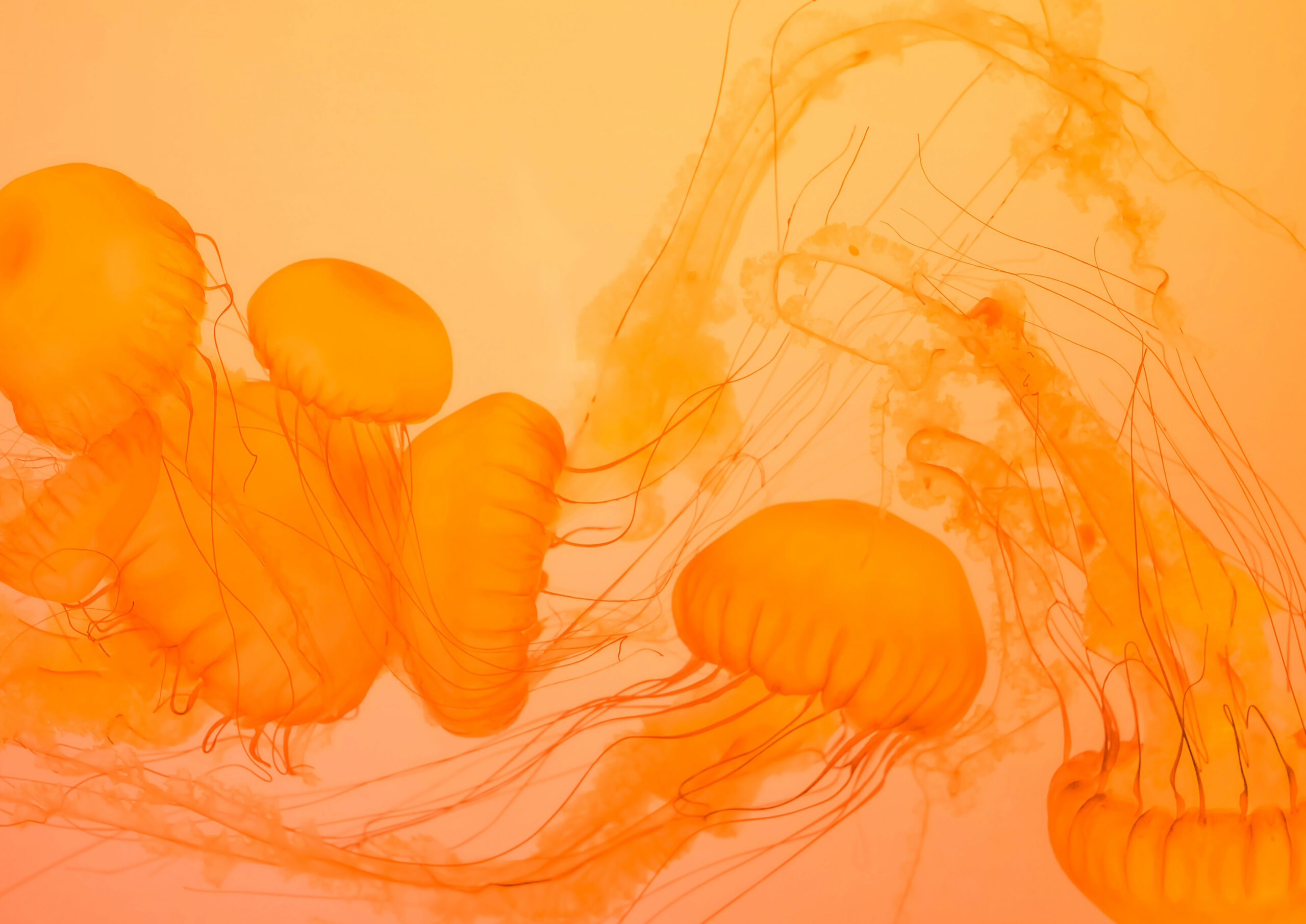
Jellyfish are ancient, omnipresent, resilient, and fascinating creatures. Fossils testify to their existence over 500 million years ago, making them some of the oldest living creatures. In the Northern Adriatic and other seas worldwide, jellyfish populations are increasing and threatening to tip the ecological balance. This is partly due to habitats depleted by overfishing, as well as the increase in hard surfaces available to polyps such as oil rigs, wind parks, and other marine infrastructure. The urbanization of the sea is therefore unwittingly promoting jellyfish reproduction.4
Science has been hampered by the difficulty of capturing jellyfish without damaging them, but research is accelerating to address the growing number of blooms. Among the multiple avenues being pursued is the use of jellyfish biomass for fodder, biofuel, biofertilizer, and cement additives, as well as the use of jellyfish mucus to capture marine microplastics.5
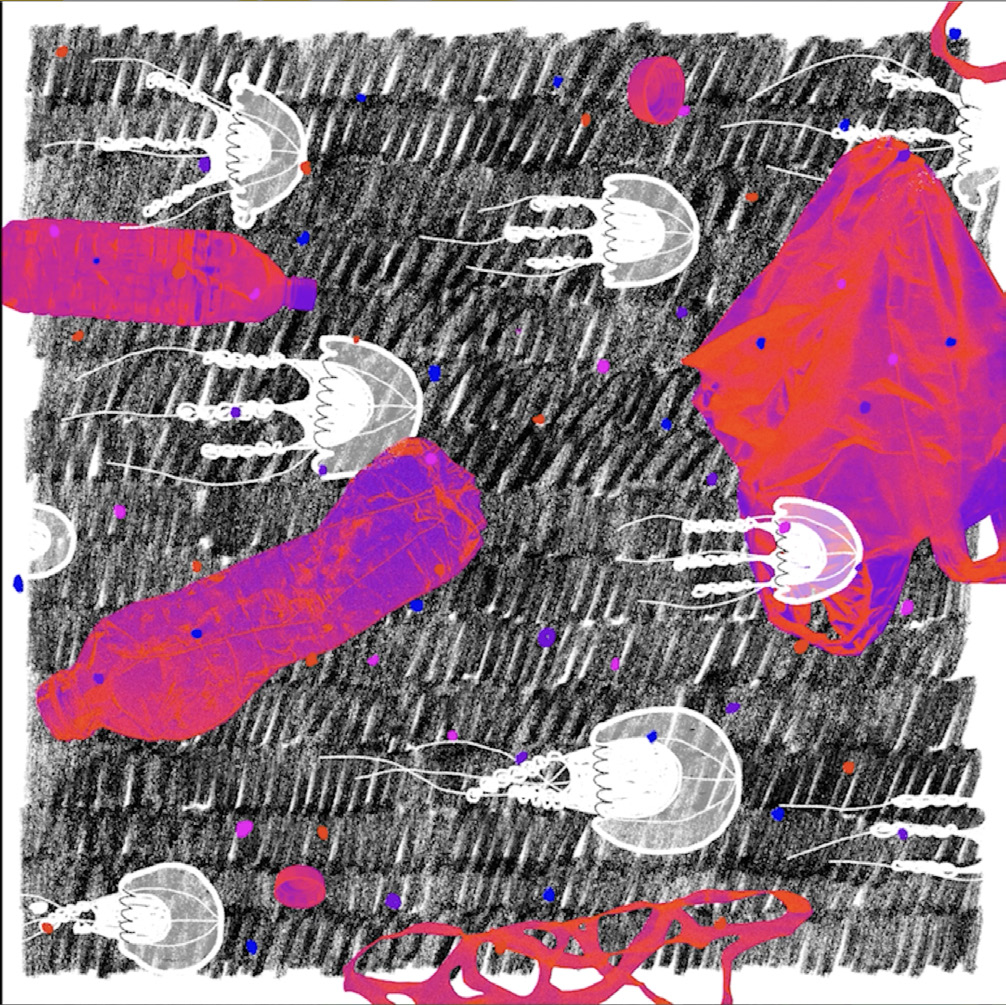
Planet of the Jellyfish is a thirteen-minute, five-chapter stop-motion video by Vida Boogh, Amalie Knutsvik, Petra Kovačic, and Adam Riaboff.6 Its hand-drawn images set the stage for reimagining a world where jellyfish are major protagonists. The film traces their existence from 500 million years ago to a speculative future 150 years from now. Due to the introduction of jellyfish through ballast water in the twentieth century, the Northern Adriatic Sea has now become the Jellyatic Sea, with dense jellyfish populations at ports, and hotspots of jellyfish reproduction on oil-rig foundations. Vacation zones have become “stungation” areas, where large-scale jellyfish control is needed to prevent stings. Steered by the currents, jellyfish move along natural highways, ultimately arriving at a seabed graveyard where jellyfish biomass is returned to the Earth.
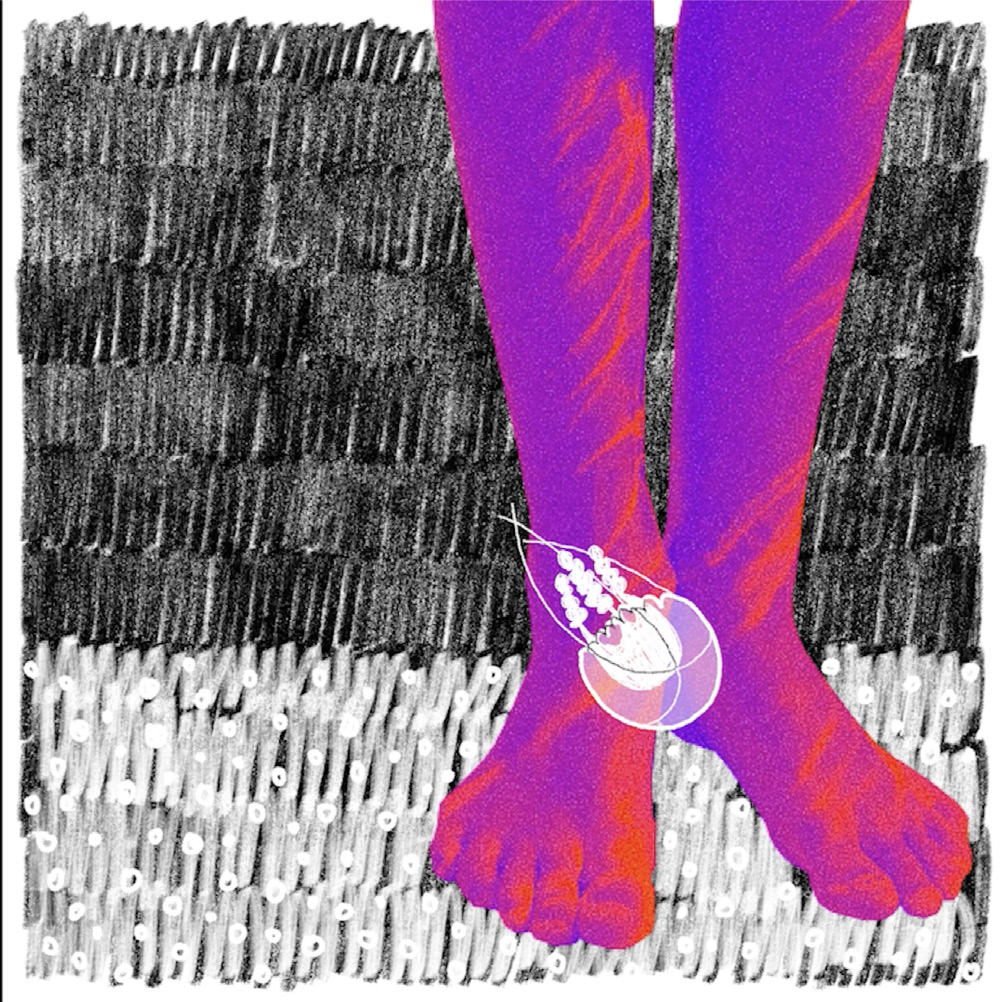
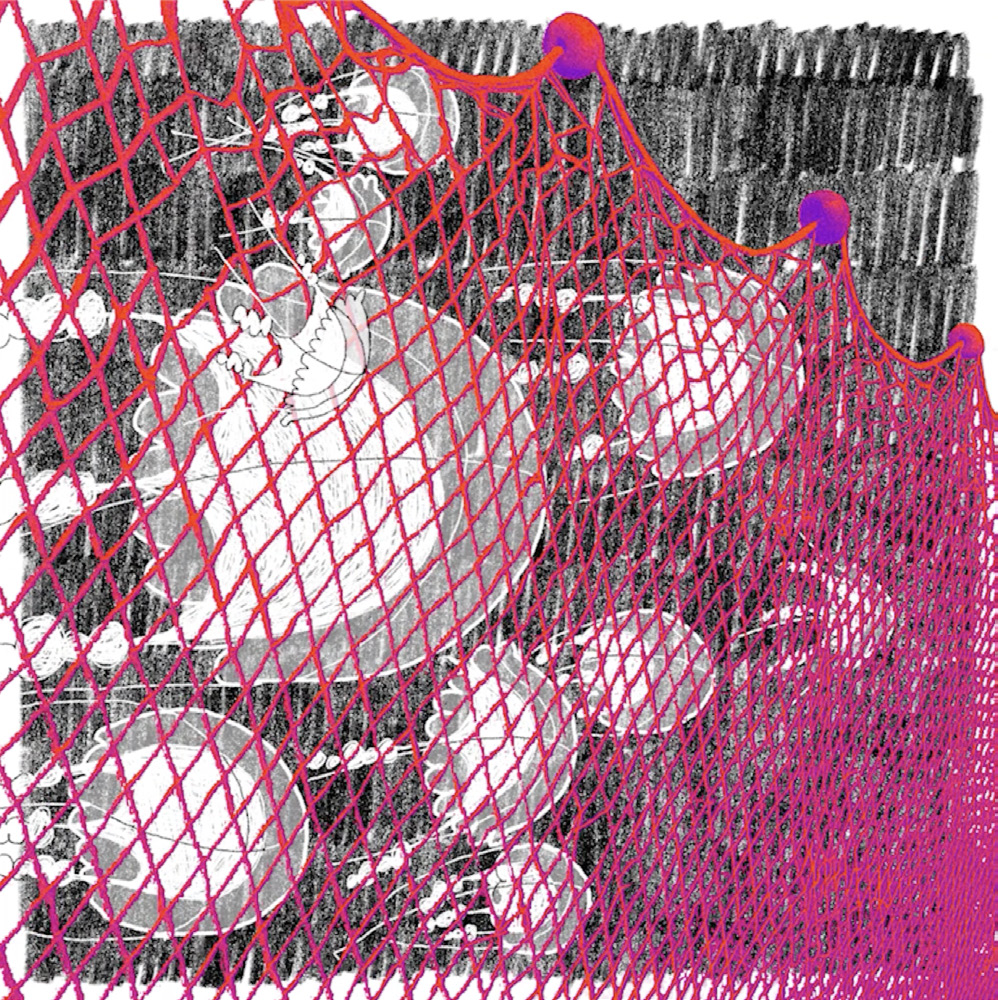
While chapter four depicts a near future when jellyfish are exploited for various scientific and industrial uses such as biotech cosmetics, chapter five describes a world where humans practice a type of animism, living in symbiosis with jellyfish.
The film proposes a radical review of the human position in relation to the offshore environment—an environment that has been fundamentally altered. The jellyfish are sensors of this change, visibly shedding light on it. As the filmmakers describe:
At this pressure point an unexpected species emerged. The one that we all know, but don’t know enough. Jellyfish, an ancient creature, older than dinosaurs, with a body so simple that it can perfectly adapt to survive the warmer climate that we are creating.
… Who is invasive? As the blooms of the jellyfish are increasing and expanding in quantity, they are often viewed as invasive. But throughout our exploration it became apparent that our own actions have set this ball in motion. We … ask ourselves if we are in the end the invasive ones?


Synthetic Futures
Over the past century, overfishing, the influx of fertilizers, the expansion of maritime transport, and offshore petroleum extraction have radically transformed the ocean. While the inherent character of this synthetic offshore—merging the natural and the human-induced—is not new, it is now reaching unprecedented thresholds. And although almost every marine species is likely to have encountered plastic pollution, the United Nations resolution to forge an internationally binding agreement on global plastic pollution has not yet been achieved.
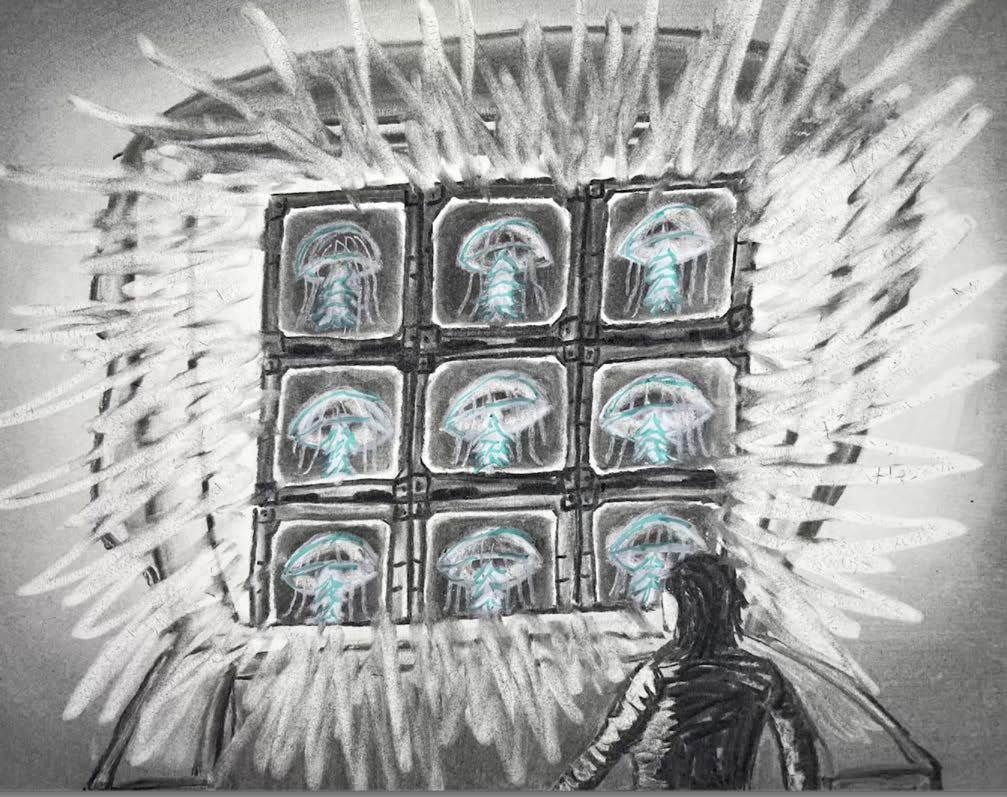
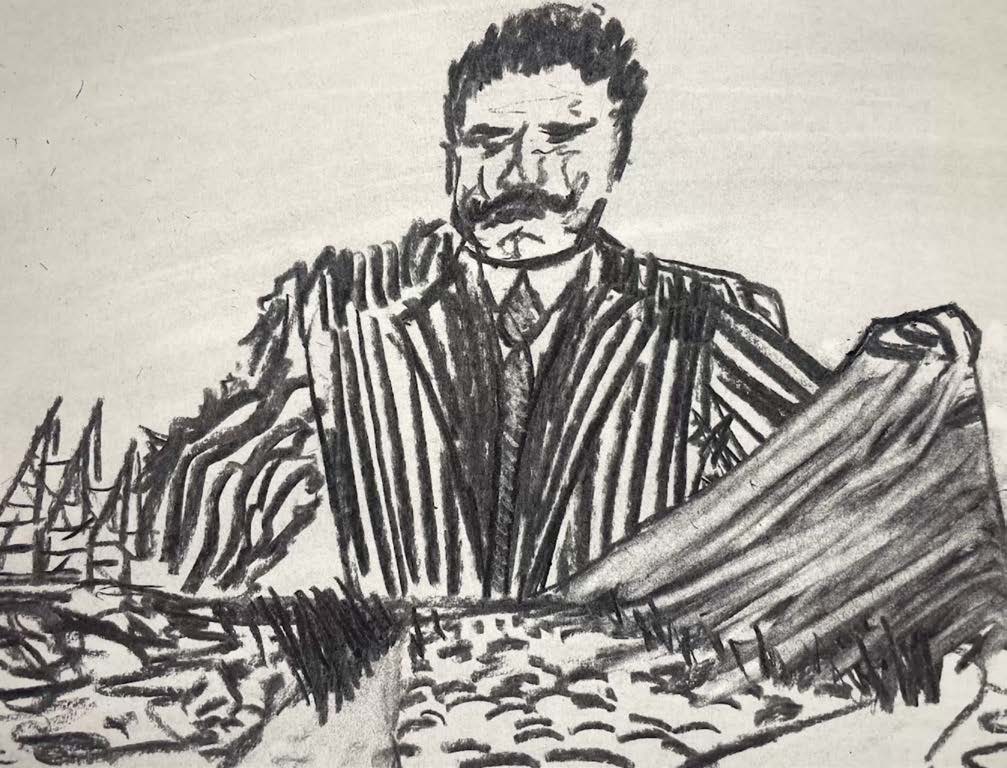
Plagptera—A Creature of the Sea and Planet of the Jellyfish investigate how the offshore may be inhabited in a more-than-human future when the environment is rendered synthetic by human interventions. Tipping points for the offshore habitat result here in biological mutation on the one hand and forced cohabitation on the other. Both protagonists are simple, yet resurgent species whose survival and resilience may outstrip our own. ◆
- Lucas Brotz et al., “Increasing Jellyfish Populations: Trends in Large Marine Ecosystems,” Hydrobiologia 690 (2012), https://doi.org/10.1007/s10750-012-1039-7. ↩︎
- Judith Krüger, Plagptera—A Creature of the Sea, 2020, https://explorationsinoceanspace.cargo.site/Plagptera-A-Creature-of-the-Sea. ↩︎
- World Economic Forum, “The New Plastics Economy: Rethinking the Future of Plastics,” 2016, accessed July 20, 2026, https://www3.weforum.org/docs/WEF_The_New_Plastics_Economy.pdf. ↩︎
- Nancy Couling and Carola Hein, eds., The Urbanisation of the Sea: From Concepts and Analysis to Design (nai010, 2020). ↩︎
- Živa Lengar et al., “Sequestration of Polystyrene Microplastics by Jellyfish Mucus,” Frontiers in Marine Science 8 (2021), https://doi.org/10.3389/fmars.2021.690749. ↩︎
- Vida Boogh et al., Planet of the Jellyfish, 2024, https://explorationsinoceanspace.cargo.site/Planet-of-the-Jellyfish. ↩︎