The Island Prison
Twisting the law in the Everglades
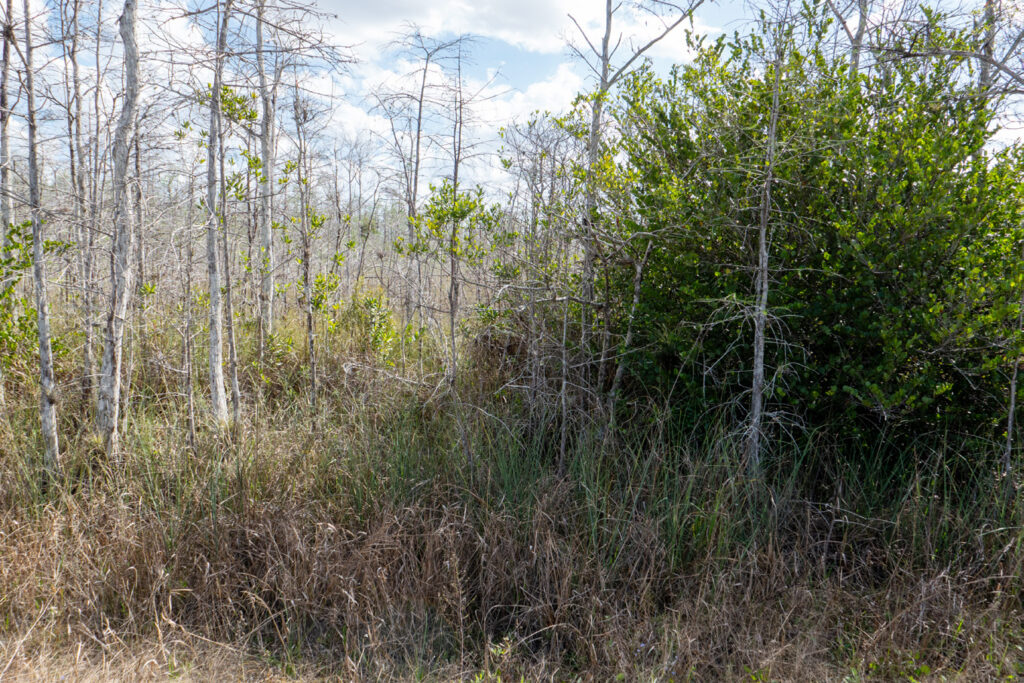
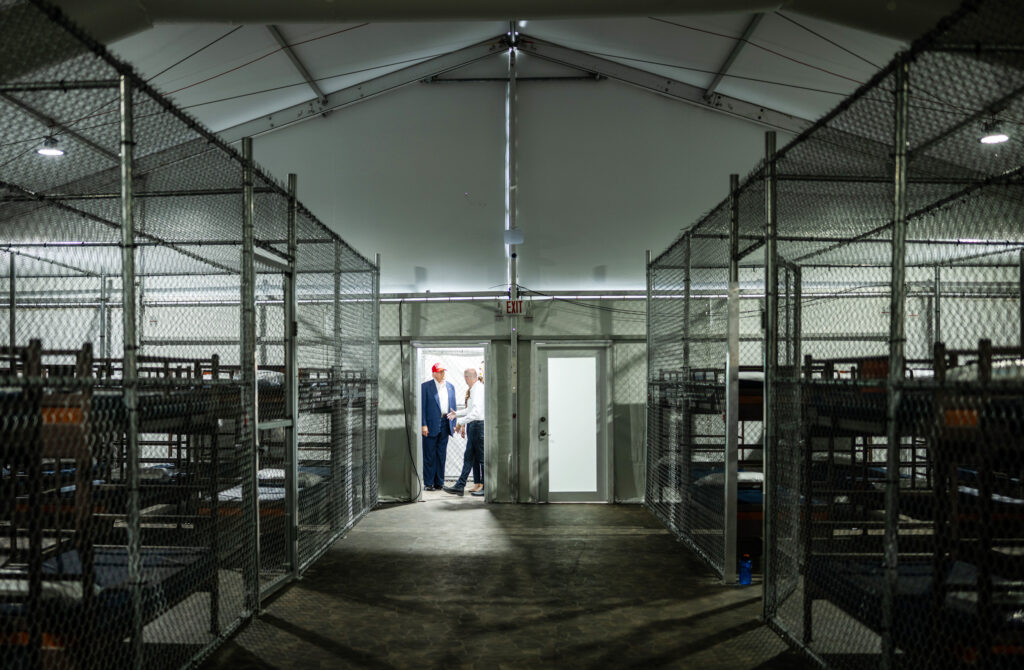
In June of 2025, the state of Florida built a detention camp in the heart of the Everglades, on an abandoned airstrip thirty-seven miles west of Miami. The state commandeered this land using a 2023 state emergency order that allows the governor to suspend “any statute, rule, or order” seen as slowing the response to the so-called migration “emergency.”1 Construction of the camp was fast-tracked without environmental review: in just eight days, the Florida Division of Emergency Management filled in swampy wetlands in the federally protected Big Cypress National Preserve, put up massive soft-sided tents and chain-link cages, and installed industrial lighting and diesel generators.
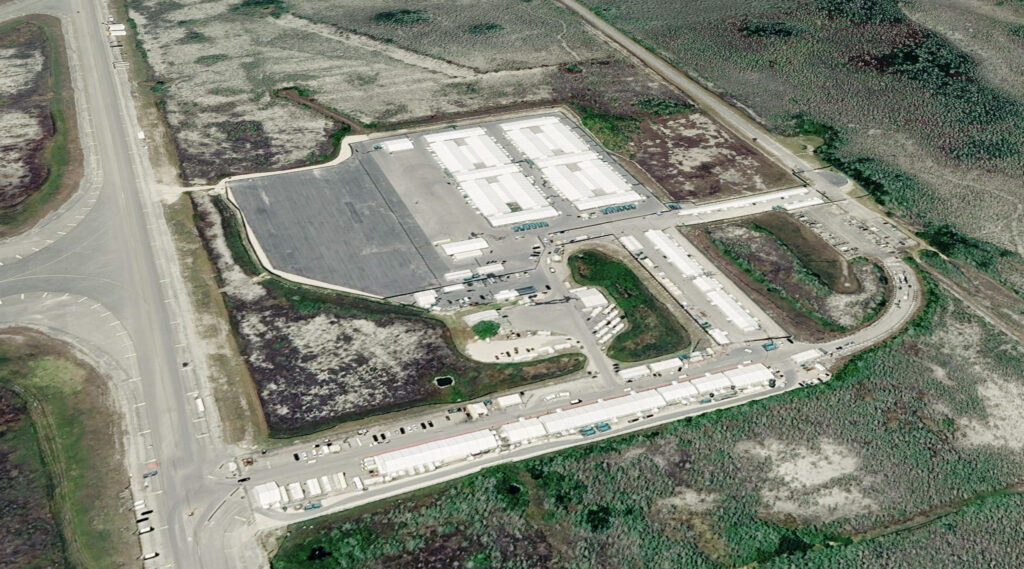
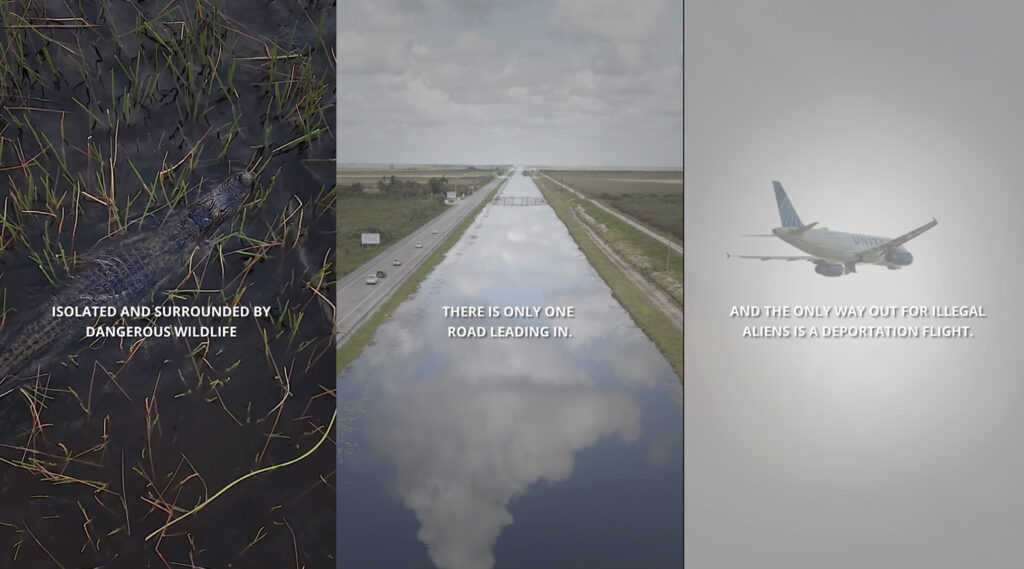
The Everglades Detention Facility—also known cruelly and colloquially as “Alligator Alcatraz”—opened with the capacity to detain three thousand people and plans to expand to five thousand. Isolated and makeshift, confinement here was a form of torture: detained people were exposed to flooding, overflowing port-a-potties and waste buckets, maggot-infested food, mosquitoes, and extreme heat and cold. From the cages inside the tents, as one detained man told me, it was impossible to tell if it was day or night.
This swamp imitation of the original Alcatraz—the notorious island prison a mile offshore of San Francisco—was an attempt to create a terrestrial island, close enough to be a spectacle and far enough to disappear. It was a place where vicious fantasies of racist violence were made material and meme-able, part of a broader suite of Florida innovations in redirecting state and municipal resources to torture and terrorize US noncitizens.
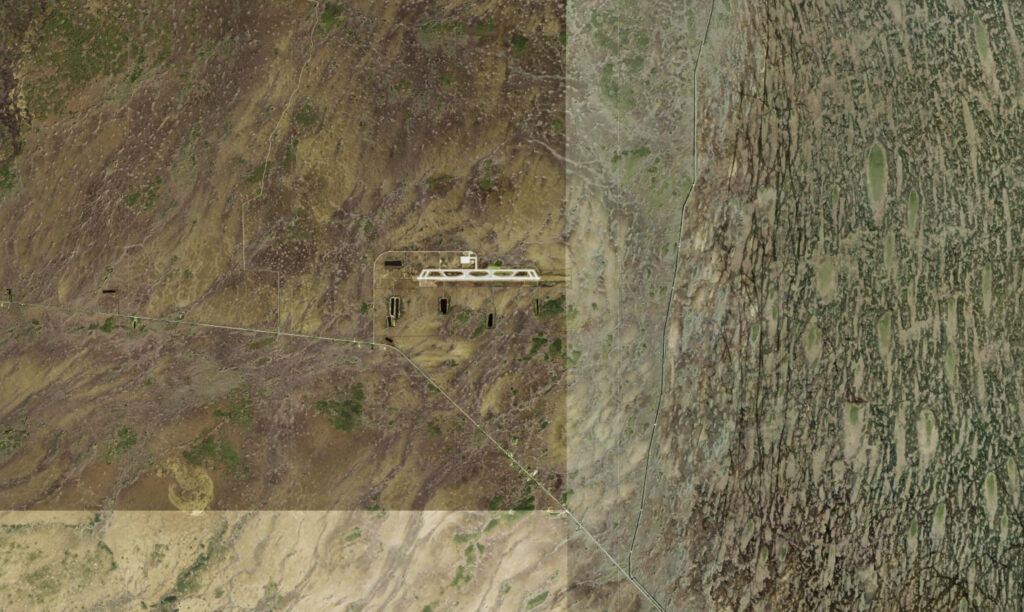
As a state facility that claimed to enforce federal immigration law, the Everglades Detention Facility relied upon what Thomas Kennedy of the Florida Immigrant Coalition called a “legal pretzel”: the twisting and layering of state and federal authority. It was the strategic (if unsustainable) devolution of federal authority to the state that made “Alligator Alcatraz” possible, and this jurisdictional trick created a murky and proximate offshore prison. As Hannah Appel wrote in her 2019 book The Licit Life of Capitalism, in offshore spaces, “oversight, liabilities, and ties to terrestrial communities are intentionally stretched thin.” Florida Governor Ron DeSantis summarized this particular island-making project simply: “Good luck getting to civilization.”
The primary mechanism for Florida’s revanchist anti-migrant project is section 287(g) of the US Immigration and Nationality Act, which allows immigration enforcement—which is federal in the US—to be delegated to state and local law enforcement. During my fieldwork in South Florida in 2018 and 2019, 287(g) agreements were most often used to allow a jail or prison to hold an unauthorized migrant for an additional forty-eight hours beyond their normal release time, allowing Immigration and Customs Enforcement (ICE) time to take that person directly into their custody—a practice known as an “ICE hold.” 287(g)s have since been widely expanded to deputize state and local law enforcement to act as federal immigration police, leading raids and making arrests solely on suspicion that a person is unauthorized.
In Florida, 287(g) agreements have been established with a staggering array of state agencies, including the Highway Patrol and the Department of Corrections, but also, less intuitively, the Fish and Wildlife Conservation Commission, the Division of Alcoholic Beverages and Tobacco, and the Florida Lottery. A 287(g) agreement transforms any encounter with law enforcement directly into the hungry mouth of the deportation pipeline.
The Everglades Detention Facility, as well as another state-run facility outside of Jacksonville dubbed the “Deportation Depot,” are experiments in expanding 287(g) agreements even further, enabling long-term, state-led confinement. The state of Florida wagered that 287(g) agreements could allow the state to enforce federal immigration law, but without complying with the laws that govern federal detention facilities.
“It was a place where vicious fantasies of racist violence were made material and meme-able.”
This strategic devolution of federal power is what allowed the hasty construction of a prison camp in the federally protected Everglades: as a state facility, authorities claimed that it could circumvent federal environmental law, which would have required a National Environmental Policy Act review to allow construction. The project threatened the sovereignty of the Miccosukee Tribe, for whom this land is home, and endangered the sensitive habitats of Florida panthers and bonneted bats. Federal legal authority was distributed downward to the state, but federal environmental regulation ostensibly did not accompany it.
This pattern was not limited to environmental law. People detained at the Everglades Detention Facility were purportedly held because they had violated federal immigration law, but they were being kept captive at a state facility. This allowed the state of Florida to, in effect, administratively disappear detained people. As Mark A. Hamburger, a lawyer in private practice who represented people at the facility, explained:
We would file bond motions at the Krome Detention Center [an ICE facility on the western edge of Miami] and the Krome Immigration Court would say, “No, this isn’t us.” And then we would go back and ask, “Well, then who is it? Who has jurisdiction here?” I mean, literally, they would tell us, “We don’t know yet,” or, “We can’t tell you.”
Because of this confusion, people were held for weeks without being charged or given the opportunity to petition for release. Fernando, a Mexican man who lived in the US for twenty-one years, was arrested while driving in Homestead, Florida. He spent more than a hundred days in early 2026 at “Alligator Alcatraz.” While detained, he did not once appear in ICE’s online locator system. After weeks of daily searches with Fernando’s frantic family, I spoke to an ICE call center operator, who insisted that he was not in custody and could not be in immigration detention. When I replied that he had just called from “Alligator Alcatraz,” she told me to call the facility directly, but she did not have a phone number and suggested looking online (no such number exists).
A 2025 lawsuit filed by the American Civil Liberties Union described people detained at the Everglades Detention Facility as “effectively ‘off the grid’ of the immigration tracking system”—meaning that their attorneys and families did not know where they were or how to contact them. Advocate and organizer Thomas Kennedy explained:
That created a lot of chaos in the community and just confusion because people legit thought that they were disappearing people, Pinochet-style, you know, like dropping them off helicopters into the Gulf of Mexico or something. They’re not literally disappearing people. What they’re doing is administratively disappearing people.
This haphazard bureaucratic offshoring also extended to how the camp was funded. Despite the state’s contention that the detention center was a state facility, the state of Florida is in the process of being partially reimbursed by the federal government for the cost of the facility. In September 2025, Florida was awarded 608 million dollars from the Federal Emergency Management Agency’s new Detention Support Grant Program. This covers roughly half of the 1.2 billion dollars that the state of Florida spent on the detention camp, which cost roughly 3,500 dollars per detained person per day.2 These funds were primarily drawn from state emergency and disaster relief appropriations.3
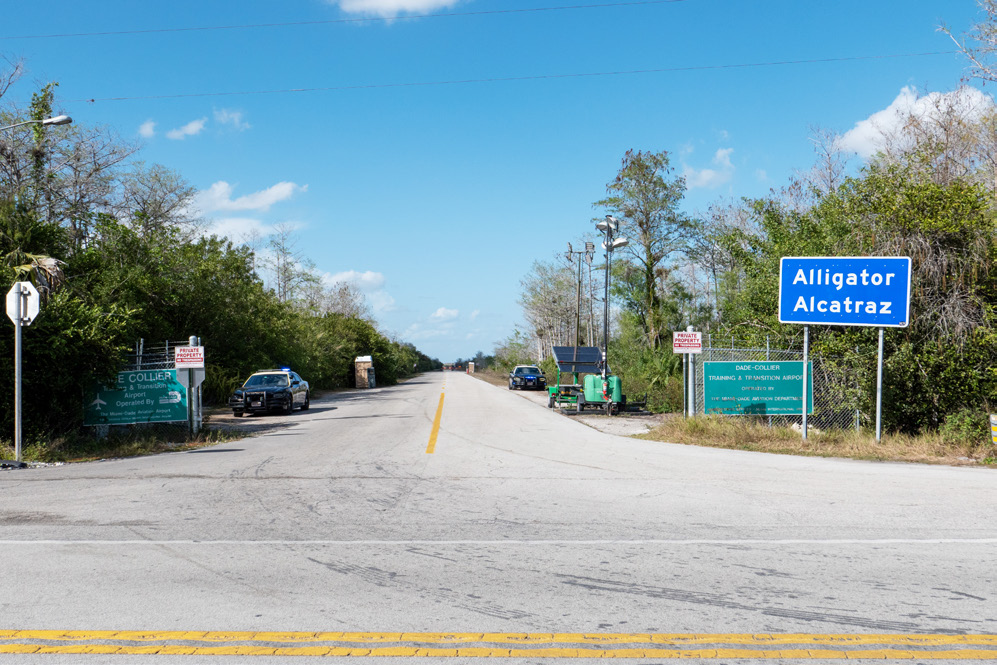
The Trump administration hailed “Alligator Alcatraz” as a replicable model for the punishment of noncitizens, a novel spatial and juridical project that strategically layers state and federal authority. However, the detention facility was neither a coherent nor a sustainable legal project. In June of 2026, in the face of sustained protest and lawsuits that challenged the collapse of state and federal power, “Alligator Alcatraz” closed.
Despite the creative legal strategies that organized it, “Alligator Alcatraz” was unexceptional. The devolution of race management to the state level and the assertion of states’ rights—to torture, to terrorize, to exclude, and to dispossess—have long been central to the maintenance of white supremacy in the United States. And, as the geographer Alison Mountz argues, migrant detention in the US has always relied upon the “creation and creative uses of islands.”4 A terrestrial island in the Everglades, “Alligator Alcatraz” was like other detention facilities: punishing, isolating, and environmentally and administratively remote—even though it can be reached in under an hour’s drive from a major airport.
The legal ambiguities and open cruelty of “Alligator Alcatraz” invite us to consider domestic detention camps and jails within the US as nodes within a transnational archipelago of offshore confinement, which includes migrant detention camps at Guantánamo Bay and CECOT in El Salvador. These places were purpose-built to torture and terrorize those who have been rendered noncitizens. At “Alligator Alcatraz,” authority was organized for maximum impunity: Florida attempted to onshore the offshore detention camp. ◆
- Florida Office of the Governor, Executive Order no. 23-03, Emergency Management—Illegal Migration, January 6, 2023, https://www.flgov.com/eog/sites/default/files/executiveorders/2024/EO-23-03-1.pdf, 4. ↩︎
- Dave Elias, “Florida Taxpayers Spent $3,500 per Detainee Daily at Alligator Alcatraz,” Gulf Coast News, July 1, 2026, https://www.gulfcoastnewsnow.com/article/alligator-alcatraz-tax-detain-florida-cost-us/71799433. ↩︎
- Earthjustice, “Florida Banked on $1.4 Billion in Federal Funds for Everglades Detention Center,” March 3, 2026, https://earthjustice.org/press/2026/florida-banked-on-1-4-billion-in-federal-funds-for-everglades-detention-center. ↩︎
- Alison Mountz, “Mapping Remote Detention: Dis/location Through Isolation,” in Beyond Walls and Cages: Prisons, Borders, and Global Crisis, ed. Jenna Loyd, Matt Mitchelson, and Andrew Burridge (University of Georgia Press, 2012), 92. ↩︎